EIGHT LEGS OF TERROR: JOSH GATES’ BRUSH WITH DEATH IN THE FORBIDDEN CAVE
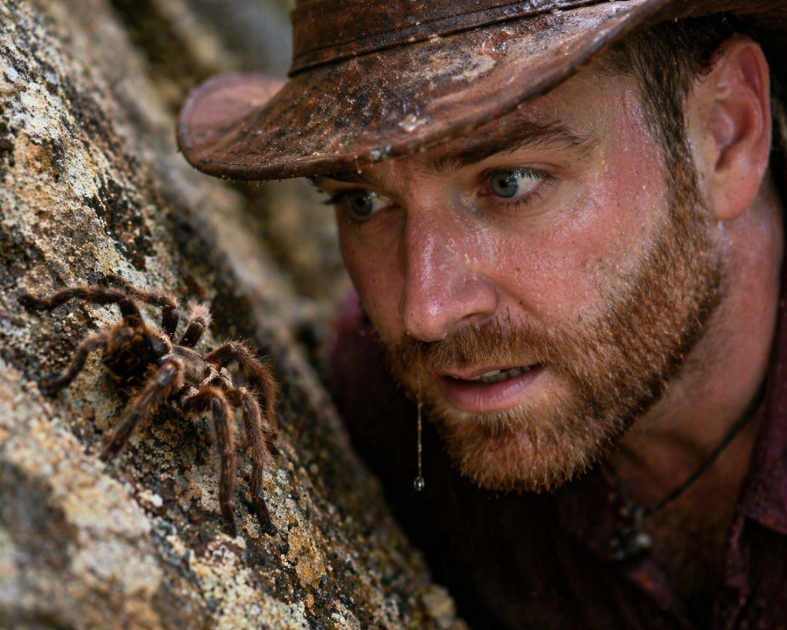
In the world of high-stakes exploration, the most dangerous enemies are often the ones you don’t see until it’s too late. This week, while trekking through the dense, primary rainforest of the Darien Gap in search of a lost pre-Columbian gold cache, Josh Gates came face-to-face with a predator that sent a chill through even his veteran bones. In the claustrophobic confines of an unnamed limestone cavern, Gates encountered a Brazilian Wandering Spider (Phoneutria), widely considered the most toxic arachnid on the planet. For several agonizing seconds, the life of the world’s most famous explorer hung by a literal thread.
The Heart of the Shadow
The mission began as a standard deep-jungle survey. The crew was navigating a “dead zone”—an area so remote that GPS signals fluctuate and the canopy blocks out 90% of the sunlight. The team had discovered a narrow aperture in the earth, leading to a chamber that local legends claim was used by indigenous shamans to hide sacred relics during the Spanish conquest.
As Gates squeezed through a tight “squeeze” in the cave wall, his headlamp illuminated a sight that caused him to freeze mid-motion. Less than twelve inches from his exposed forearm, perched on a jagged stalactite, was a specimen of Phoneutria—the Wandering Spider—in its classic “threat posture.”
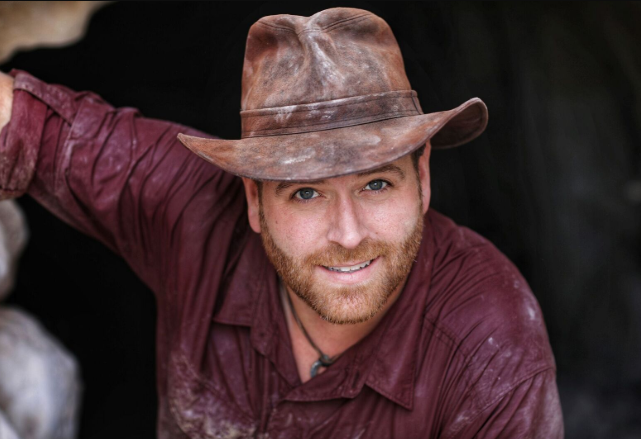
A Lethal Standoff
“Everything went silent,” a cameraman who was positioned behind Gates recalled. “Josh didn’t even breathe. We all know the stats: a single bite from that thing causes systemic paralysis and respiratory failure within an hour. In a place this remote, an hour is a death sentence.”
The Wandering Spider is unique among arachnids; it doesn’t wait in a web. It hunts. Its venom is a complex cocktail of neurotoxins that attack the nervous system with brutal efficiency. As the spider shifted its weight, Gates was forced to maintain a grueling, static position, his muscles screaming from the effort of not flinching.
“I could see its chelicerae—the fangs—glistening in the LED light,” Gates noted in a voice memo recorded shortly after the incident. “I’ve been in rooms with King Cobras and walked through minefields, but there is something uniquely primal about the fear of a spider that is actively tracking your every movement.”
The Escape
The tension in the cave was thick enough to suffocate. Because the “squeeze” was so tight, Gates could not move backward without risking a sudden jerk that might trigger the spider to leap. Using a technique he learned from entomologists in the Amazon, Josh slowly—almost imperceptibly—began to exhale, lowering his body heat and heart rate to appear as an inanimate object.
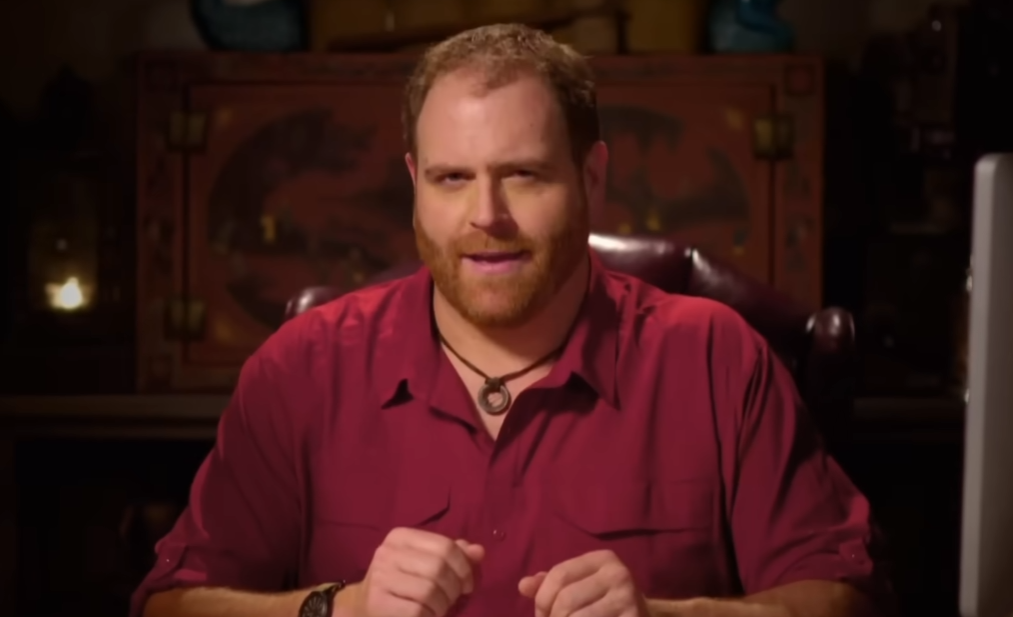
After what felt like an eternity, the spider lowered its front legs and slipped into a dark crevice in the rock. Gates waited another sixty seconds before slowly sliding out of the passage. Upon reaching the surface, the adrenaline hit like a freight train.
The Price of the Path
The encounter serves as a sobering reminder of the physical and psychological toll of the “Unknown.” While Gates has survived shipwrecks and shark attacks in this “Month of Peril,” the spider encounter was a reminder that in the wild, size doesn’t correlate with danger.
“People ask me why I keep doing this,” Gates concluded, standing in the drenching rain outside the cave. “It’s for the moments when the world reminds you that you’re just a guest here. We didn’t find the gold today, but we found a very clear message: the jungle keeps its secrets for a reason.”
As Josh Gates prepares for his next leg of the journey, the “Gates-Nation” is left to wonder: how many lives does one explorer truly have?