A crazy idea: Jeremy Clarkson tried to replace Kaleb Cooper with a robot to manage agriculture.
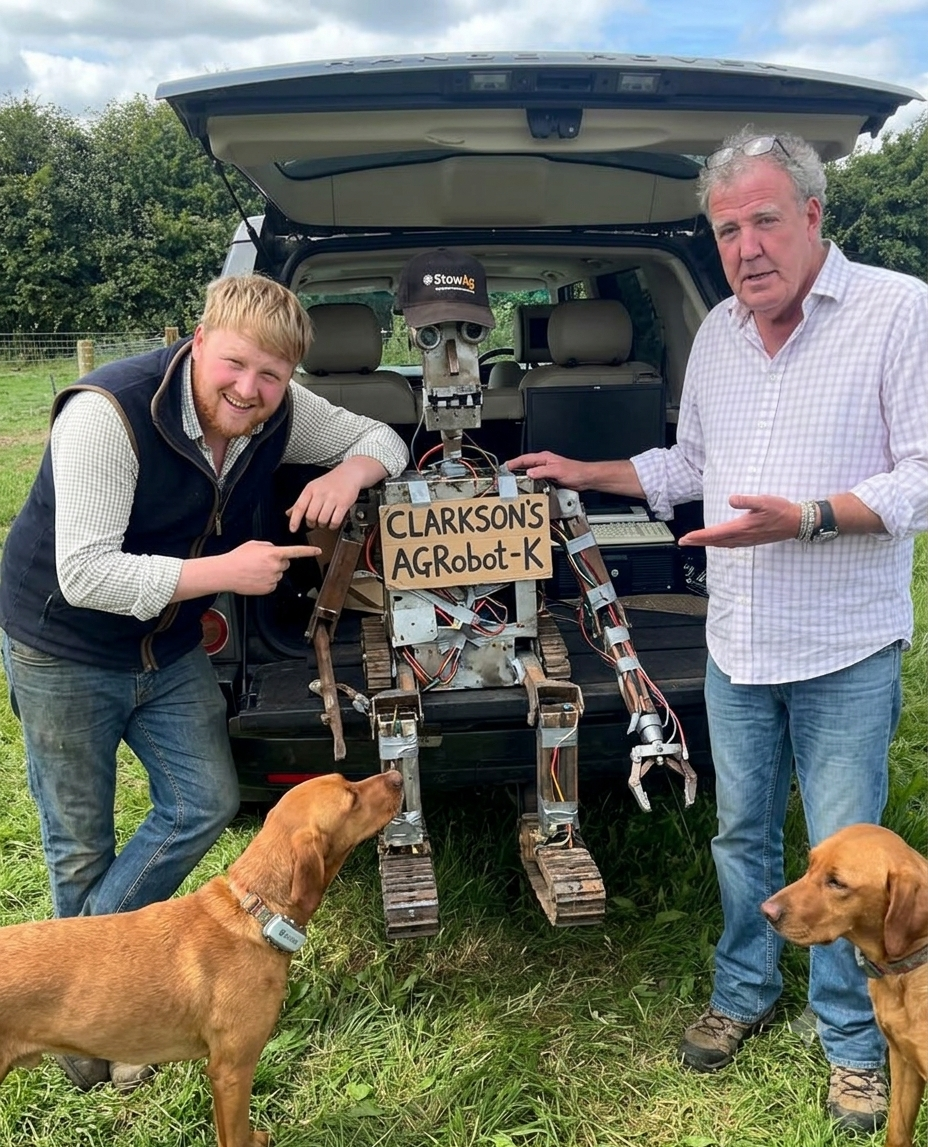
In a season five episode of Clarkson’s Farm, Jeremy Clarkson attempted what many might call a radical leap in agricultural management: replacing his trusted farmhand, Kaleb Cooper, with a robot to oversee critical aspects of farm operations. Dubbed “Caleb’s P45” or “the Agribot,” the self-driving tractor was introduced as an innovative shortcut meant to automate routine tasks, reduce human labor, and possibly accelerate productivity across the 1,000-acre Diddly Squat Farm. Yet, as viewers soon discovered, the technology was no match for the depth of experience, intuition, and decision-making that Cooper brings to the operation .
Clarkson’s idea, in theory, reflected a growing trend in modern agriculture: mechanization and smart farming. Automated tractors, drones, and robotic systems are increasingly used to optimize planting, tilling, and harvesting, often providing precise soil management and labor efficiency. On paper, replacing Cooper’s daily oversight with a robotic system seemed like a viable experiment—especially during busy periods when the team juggled livestock care, crop maintenance, and equipment management. It was also pitched as a potential solution when Clarkson himself needed to respond quickly to personal matters, such as the birth of his third child, without compromising the fieldwork .
However, the experiment quickly highlighted the limitations of technology in a real-world, complex farming environment. While the tractor was capable of completing some tasks, it could not replicate Cooper’s judgment on nuanced agricultural issues, such as assessing soil conditions, evaluating livestock behavior, and responding to unpredictable weather patterns. As Caleb himself noted, there will always be a space for a skilled human driver on the farm, particularly for tasks that require instinctive responses and rapid problem-solving in ways that no programmed system can match .
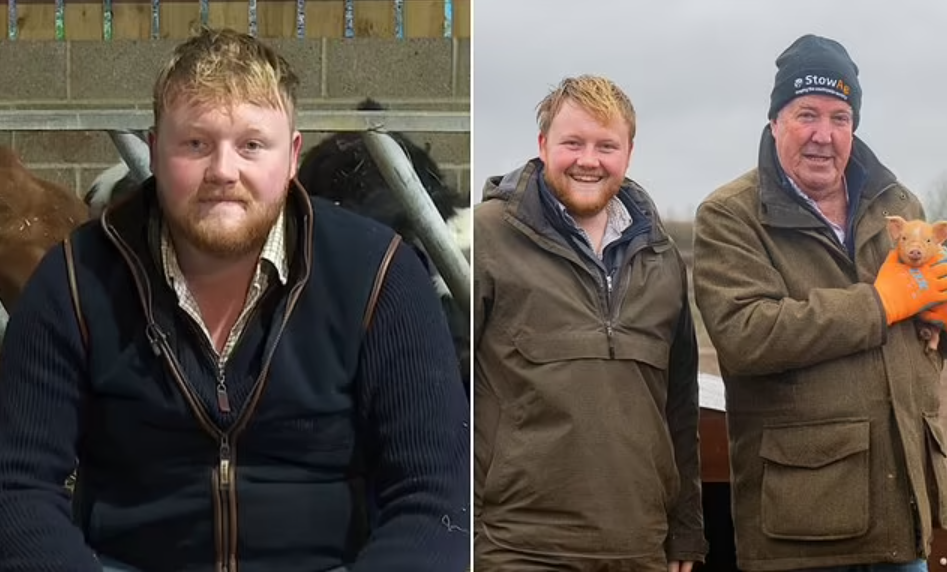
From an operational standpoint, the failure of the robot experiment underscores a crucial lesson: technology cannot fully substitute for experience and knowledge gained through years of hands-on practice. Kaleb Cooper’s understanding of the rhythms of the farm—when to intervene, when to step back, and how to manage multiple overlapping tasks—remains irreplaceable. His ability to anticipate problems before they escalate, whether with livestock or machinery, has been a core component of Diddly Squat’s efficiency and safety since the show began. The robot, while technologically impressive, lacks the adaptive reasoning necessary to make these judgment calls in dynamic situations .
Financially, Clarkson’s robotic experiment illustrates the hidden costs of relying on automation without fully understanding its operational limits. Robotic systems require initial capital outlays, ongoing maintenance, and monitoring, and when the machine cannot operate independently, these investments add only marginal benefit. In contrast, Cooper’s expertise reduces errors, prevents losses, and ensures the farm runs smoothly under unpredictable conditions, making him a far more cost-effective and reliable asset than any current robotic system could provide.
Looking forward, the failed experiment may influence the farm’s approach to mechanization in upcoming seasons. Analysts predict a hybrid model where machines assist human operators rather than replace them entirely. For example, automated tractors may handle repetitive tasks under Cooper’s supervision, while complex decisions and problem-solving remain his responsibility. Such an approach could maximize productivity while mitigating the risk of errors inherent in fully autonomous systems.
The human element, however, remains central to the story of Diddly Squat Farm. Clarkson’s willingness to experiment with robotics highlights his innovative mindset and desire to find shortcuts, yet the outcome reinforces a key principle: farming is an intricate profession that combines physical labor with nuanced judgment, honed intuition, and rapid decision-making. Even with the best technology, human insight is indispensable. As Clarkson himself seems to have learned, the real value on the farm lies not just in machinery but in the people who understand the land intimately, especially those like Kaleb Cooper, whose knowledge cannot be encoded into a tractor’s control system .
The season five episodes offer more than humor and entertainment; they provide a practical lesson in the integration of technology and human expertise. Viewers are offered a rare glimpse into the challenges of modern farming, illustrating that the appeal of automation is tempered by the reality of environmental unpredictability and the complexity of managing a diverse set of crops, animals, and machinery. It also raises broader questions about the limits of AI and robotics in fields that require adaptability, judgment, and hands-on skill.
In conclusion, Jeremy Clarkson’s attempt to replace Kaleb Cooper with a robot at Diddly Squat Farm serves as both an entertaining storyline and a case study in agricultural management. While the self-driving tractor performed some tasks, it could not match the experience, intuition, and adaptive problem-solving that Cooper brings to the farm every day. The experiment may have failed, but it reinforces a fundamental truth about farming—and perhaps many other industries: technology can assist, but it cannot replace human expertise. As the season continues, viewers will likely see a balance emerge between automation and hands-on management, demonstrating that the most effective solutions blend innovation with the irreplaceable wisdom of experienced operators.