Charlie Ireland’s health continued to deteriorate as he lay in his hospital bed, signaling the end of an era on Clarkson Farm.
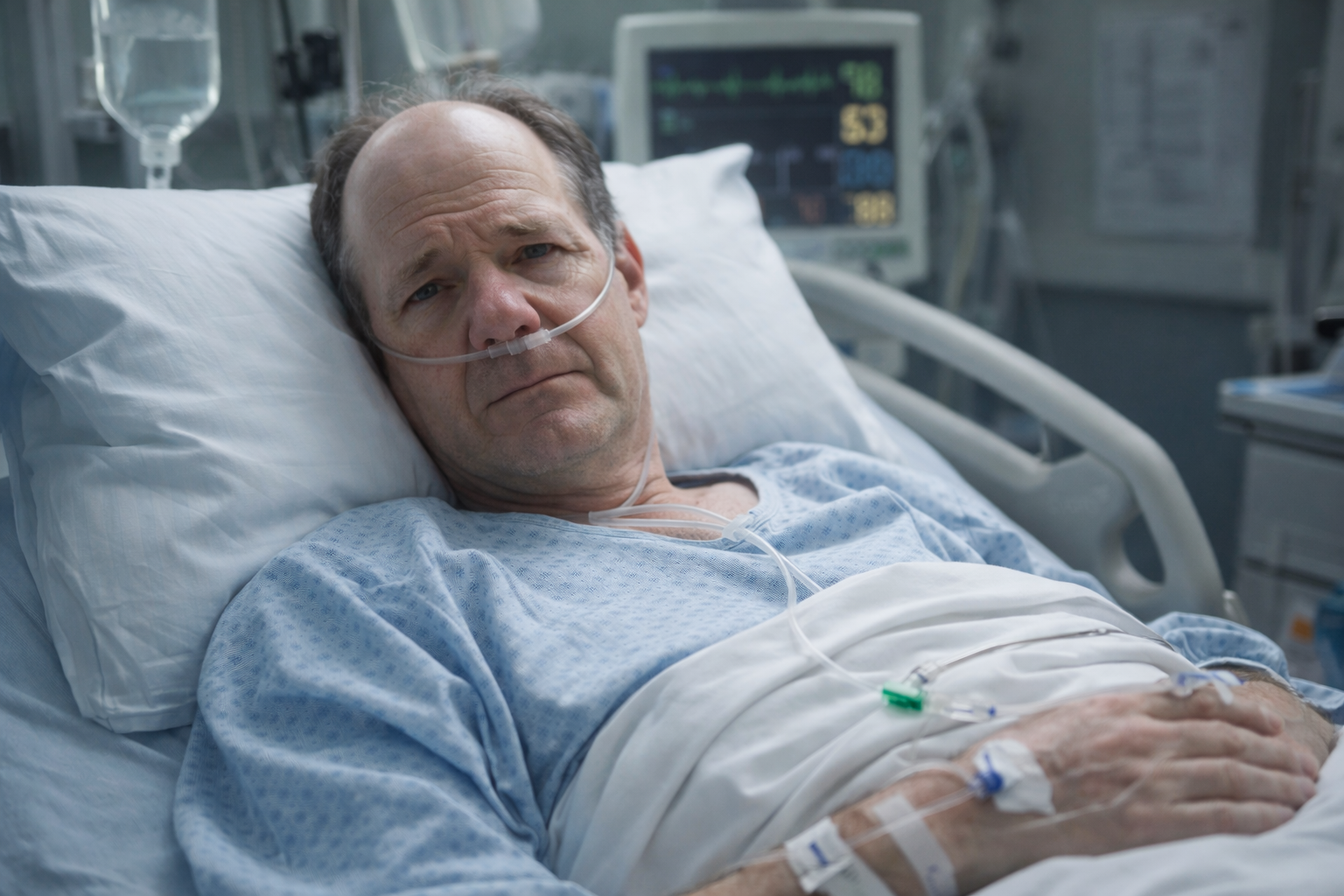
In the evolving narrative universe of Clarkson’s Farm, few figures have played as quietly essential a role as agricultural advisor Charlie Ireland. His steady presence, technical expertise, and pragmatic grounding have often served as the invisible backbone behind the farm’s more chaotic and television-driven moments. The reported deterioration of Charlie Ireland’s health in a hospital setting, therefore, is not merely a personal concern—it represents a structural turning point for both the farm’s operational identity and the show’s long-term trajectory.
From an analytical perspective, this development signals what can only be described as an “institutional inflection point.” The Clarkson farming operation has always balanced two competing systems: entertainment-led decision-making driven by Jeremy Clarkson, and agronomic realism enforced by Ireland’s advisory input. If Ireland’s capacity is significantly reduced or permanently altered, that balance risks collapsing entirely.
The Strategic Role of Charlie Ireland in the Clarkson Farming Ecosystem
To understand the impact of his condition, one must first define Ireland’s functional role. Unlike on-screen personalities such as Kaleb Cooper or Lisa Hogan, Ireland operates primarily in a consultative capacity—translating regulatory constraints, soil science, crop rotation logic, and subsidy frameworks into actionable decisions.
In systems analysis terms, he is a “constraint stabilizer.” He does not drive narrative tension; he prevents operational failure. Whether advising on planting schedules, interpreting DEFRA regulations, or moderating Clarkson’s more experimental instincts, Ireland has functioned as a critical control layer between ambition and agricultural reality.
The deterioration of his health, therefore, removes more than an individual—it removes a regulatory interface. That absence creates immediate exposure to decision volatility within the farm’s operational model.

Hospitalization as a Narrative and Structural Disruption
The reported hospital scenario introduces a dual-layer disruption: personal and systemic. On a personal level, it marks a severe turning point for Ireland himself, whose presence has historically been associated with calm procedural reasoning rather than public vulnerability.
On a structural level, however, the implications are more significant. The Clarkson farm ecosystem is not a conventional agricultural business—it is a hybrid media-agriculture entity. Decisions are often made under production pressure, time constraints, and narrative arcs. In such a system, the absence of a stabilizing advisor increases the likelihood of suboptimal or reactive choices.
Historically, similar advisory absences in agricultural operations tend to produce one of three outcomes: overreliance on less experienced personnel, increased external consultancy dependency, or strategic simplification of farming methods. In Clarkson’s Farm, any of these would dramatically alter both the operational output and the televised narrative.
Kaleb Cooper and the Internal Pressure Shift
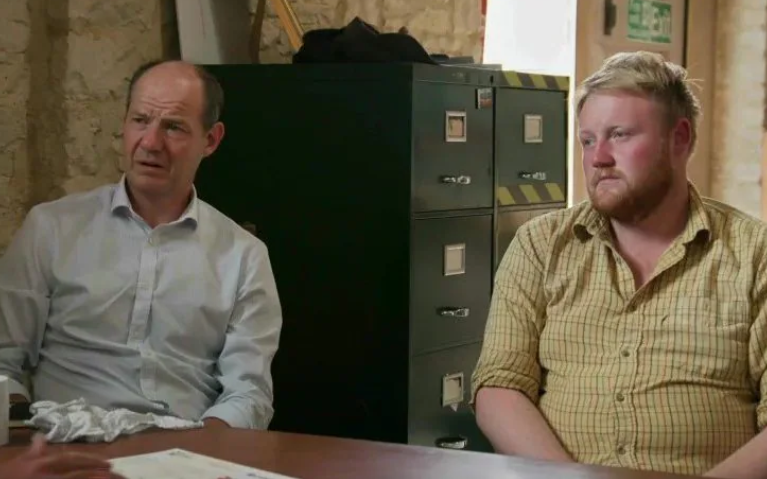
One of the most immediate downstream effects of Charlie Ireland’s decline would be the increased burden placed on Kaleb Cooper. While Kaleb possesses strong practical farming instincts, his role has traditionally been execution-focused rather than systemic or regulatory.
Without Ireland’s moderating influence, Kaleb may be forced into dual responsibilities: operational management and strategic decision interpretation. This shift introduces a potential efficiency gap, particularly in areas requiring regulatory navigation or long-term agronomic planning.
From a narrative standpoint, this would also intensify on-screen tension between Clarkson’s improvisational style and Kaleb’s increasingly pressured operational role. The farm would effectively lose its “interpretive buffer,” resulting in more direct conflict between ambition and feasibility.
Jeremy Clarkson’s Decision-Making Under Reduced Oversight
Jeremy Clarkson’s farming philosophy has consistently leaned toward experimentation, media visibility, and unconventional problem-solving. Ireland’s presence has historically provided a necessary counterweight to this approach, ensuring that decisions remain grounded in agricultural viability.
In Ireland’s absence or incapacity, Clarkson’s decision-making environment becomes significantly less constrained. While this may produce moments of innovation or entertainment value, it also increases the probability of inefficiencies—particularly in crop planning, livestock management, and infrastructure investment.
Analytically, this represents a shift from a “guided system” to a “self-directed system,” where feedback loops are delayed or weakened. In agricultural operations, such transitions typically result in increased volatility in yield outcomes and cost management.
Production Implications for the Television Series
From a production standpoint, Charlie Ireland’s condition introduces a tonal and structural challenge for Clarkson’s Farm. The series has always balanced humor, agricultural education, and emotional authenticity. Ireland, though not a central on-screen personality, contributes significantly to the realism of the farming framework.
His absence or reduced involvement would likely force the production to recalibrate its storytelling architecture. Possible adaptations could include increased focus on Kaleb Cooper’s development arc, greater emphasis on farm community labor dynamics, or a narrative shift toward crisis management themes.
In long-running documentary-style productions, the removal of a stabilizing expert figure often results in either heightened dramatization or increased reliance on alternative advisory voices. Both paths fundamentally alter the tone of the series.
Forecast: What Comes Next for Clarkson’s Farm
Based on current trajectory modeling, three plausible scenarios emerge:
1. Temporary Absence with Structured Return (Moderate Impact Scenario)
Ireland steps back for a defined recovery period, with advisory responsibilities partially redistributed among agricultural consultants and Kaleb Cooper. The farm continues operations with minor inefficiencies.
2. Permanent Role Reduction (High Impact Scenario)
Ireland returns in a limited capacity, shifting from active advisory work to periodic consultation. This creates a long-term structural gap in decision-making stability.
3. Full System Reconfiguration (Transformational Scenario)
The farm adapts by institutionalizing external agronomy consultancy and formalizing decision hierarchies. This would fundamentally change both operational dynamics and the television narrative.
Conclusion: The End of an Era or a Forced Evolution
The reported deterioration of Charlie Ireland’s health represents more than a personal crisis—it symbolizes a potential structural transition point for Clarkson’s Farm. In systems terms, the farm is losing one of its primary stabilizing nodes, forcing a reconfiguration of how agricultural, financial, and narrative decisions are made.
Whether this marks the end of an era or the beginning of a new operational model depends on Ireland’s recovery trajectory and the farm’s ability to redistribute expertise effectively. What is clear, however, is that the equilibrium that has defined the series thus far is now under significant strain.
In the world of Clarkson’s Farm, where chaos is often managed through quiet expertise, the absence of that expertise may prove to be the most consequential development yet.