Following The Government’s Recent Announcement: Jeremy Clarkson Warns Of A Bleak Outlook For The Agricultural Sector
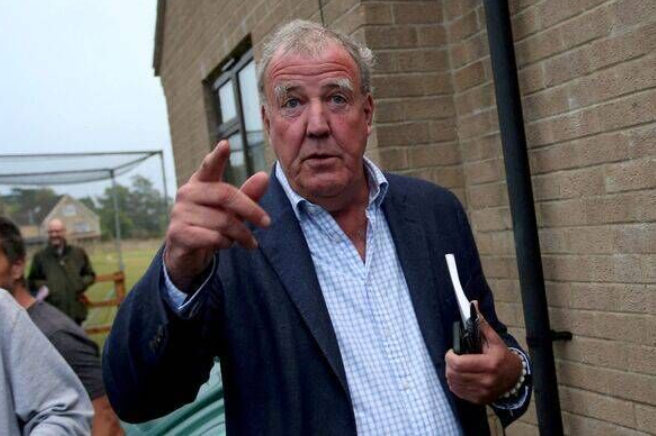
Jeremy Clarkson, the broadcaster who has become the unlikely mouthpiece for the British agricultural soul, has issued a searing warning to the public: the UK’s rural landscape is facing an existential “wipeout.” At the heart of his fury is the government’s recent decision to overhaul Inheritance Tax (IHT) rules, a move Clarkson claims will dismantle family farming as we know it.
The controversy stems from the Chancellor’s latest budget, which significantly narrows the scope of Agricultural Property Relief (APR). For decades, this relief allowed family farms to pass from one generation to the next without being crippled by death duties, ensuring that land stayed in production rather than being sold off to pay a tax bill. Under the new rules, however, a 20% tax will be levied on farms valued over £1 million.
The “Paper Millionaire” Trap
While a million pounds sounds like a fortune to the average urbanite, in the world of agriculture, it is a deceptively low ceiling. “A tractor alone can cost a quarter of a million,” Clarkson noted in a recent discussion. “If you have a couple of hundred acres of land, a barn, and a few cows, you are technically a millionaire on paper, but you are likely barely making a living in terms of actual cash flow.”
The star of Clarkson’s Farm argues that the Treasury has failed to distinguish between wealthy investors hiding money in land and genuine “dirt-under-the-fingernails” farmers. By hitting the land itself with a 20% tax, the government is forcing the next generation to sell significant portions of their heritage just to satisfy the taxman.
A Domino Effect on Rural Industry
Clarkson’s warning extends beyond the farm gate. He argues that if the family farm is wiped out, the collateral damage will be felt across the entire rural economy. “It’s not just the farmer,” he insists. “It’s the man who repairs the tractors, the local vet, the seed merchant, and the small-town butcher. These industries rely on a thriving network of independent farms. If the farms go, they go.”
Industry experts echo this sentiment, suggesting that the vacuum left by disappearing family farms will likely be filled by massive corporate entities or property developers—neither of whom have a vested interest in local biodiversity or community cohesion.
The Government’s Stance vs. Rural Reality
The government maintains that the tax shift is a necessary measure to fix public services and that “the vast majority” of farms will remain unaffected. They point to provisions where a married couple can combine allowances to pass on up to £3 million tax-free.
However, the National Farmers’ Union (NFU) disputes these figures, claiming the Treasury’s data is fundamentally flawed. They argue that many small-to-medium operations will be caught in the net, leading to a “human cost” that numbers on a spreadsheet cannot capture. Clarkson, never one for subtlety, describes the policy as a “betrayal” of a community that worked through the pandemic and various crises to keep Britain fed.
Food Security and National Identity
Perhaps the most sobering aspect of Clarkson’s critique is the threat to national food security. Britain already relies heavily on imports; a policy that discourages the next generation from taking up the plow could make the UK even more vulnerable to global supply chain shocks.
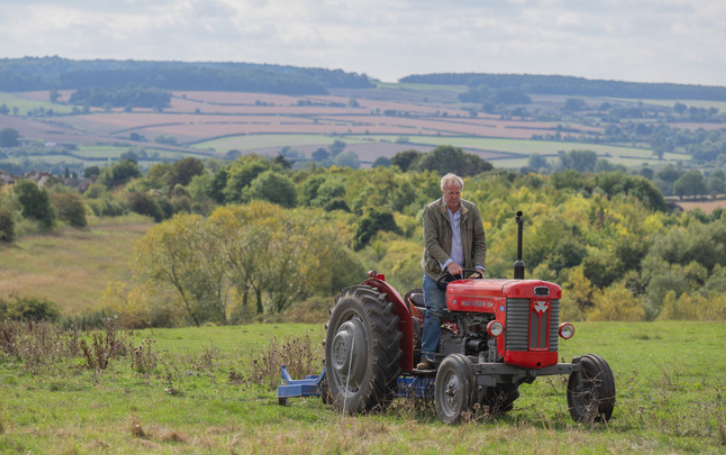
“The public should be appalled,” Clarkson concluded. “We are trading our long-term ability to feed ourselves for a short-term tax grab.”
As the debate rages on, the “Grey Ghost” of Diddly Squat has once again highlighted a divide between the halls of Westminster and the mud of the Cotswolds. Whether the government will listen to the “loudest man in farming” remains to be seen, but for now, the future of the British countryside looks increasingly precarious.