How Clarkson’s Farm EXPOSED The Crisis Destroying British Farming!!
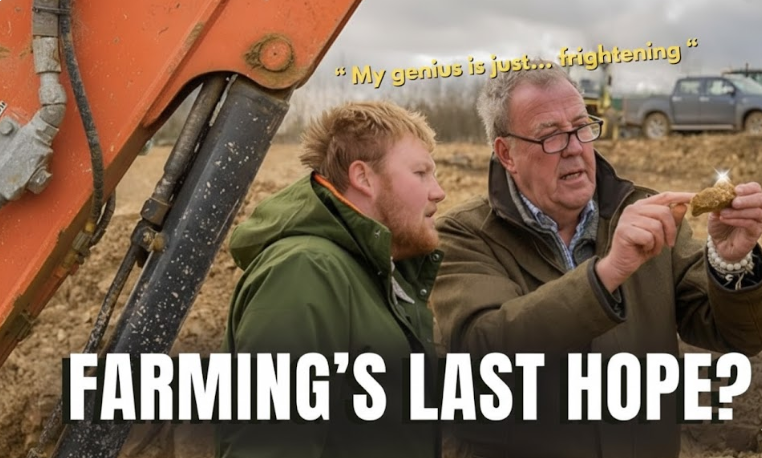
When Jeremy Clarkson bought a 1,000-acre farm in Oxfordshire, few expected it to place him at the centre of one of Britain’s most heated rural policy debates. Known for decades as a motoring presenter, Clarkson’s move into agriculture—documented on Clarkson’s Farm—has unexpectedly turned him into a prominent voice amid growing concern over proposed inheritance tax reforms affecting farming families.
At the heart of the dispute are changes announced in the autumn budget targeting agricultural assets valued above £1 million, with thresholds stretching higher in certain cases. Ministers argue that most family farms, particularly those jointly owned by married couples, will remain unaffected. But in rural communities, the policy has been received with deep unease.
Farms, critics say, may appear valuable on paper—acres of land, machinery, outbuildings—but that does not necessarily translate into liquidity. Many are “asset rich, cash poor,” a phrase often used to describe holdings whose capital value far exceeds annual income. Profit margins in British farming remain tight, with rising costs for fuel, feed and fertiliser squeezing returns. In that context, farmers argue that inheritance tax bills could force the sale of land simply to meet liabilities.
Clarkson has been vocal about what he sees on the ground. While acknowledging his own farm’s purchase price—reported at around £4.2 million—he has argued that family-run farms face pressures invisible to those outside the sector. “Paper wealth doesn’t pay real bills,” he has said in interviews, emphasising that many farmers reinvest earnings directly back into operations rather than drawing substantial salaries.
His intervention, however, has not gone unchallenged.
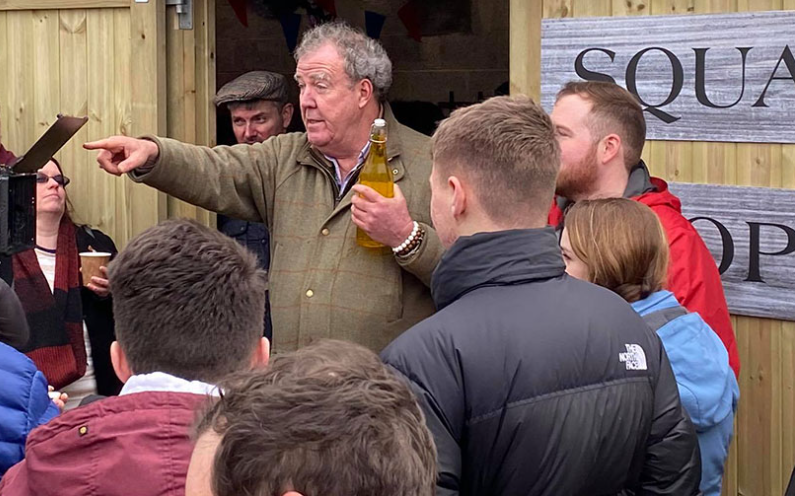
Past comments resurfaced in which Clarkson described farmland as a stable long-term investment. Critics have suggested that his advocacy risks appearing self-interested. Clarkson has since admitted that earlier remarks were framed differently at the time, adding that his understanding of farming economics has evolved since managing Diddly Squat Farm firsthand.
The debate extends beyond one public figure. Farming groups, including the National Farmers’ Union, have expressed concern that inheritance changes could undermine generational continuity. For many families, succession is not simply a financial transfer but a cultural inheritance—land passed down through decades, sometimes centuries.
Tensions escalated in November 2024 when thousands of farmers travelled to London for a demonstration organised by the NFU. Initial reports suggested up to 10,000 participants might attend, though turnout figures were later moderated amid confusion over registration and crowd management. Organisers stressed the protest would be peaceful, aiming to highlight what they described as the long-term risks to British food production.
The political context has added further complexity. At the 2023 NFU conference, government representatives had indicated there would be no new tax rises affecting farmers. For some in the sector, the subsequent policy announcement felt abrupt. Ministers maintain that the reforms are part of broader fiscal measures addressing budget pressures and insist that safeguards remain in place for most agricultural estates.
Public opinion has been divided. Supporters of the policy argue that large landholdings should not be shielded indefinitely from inheritance taxation and that fairness requires agricultural assets to be treated similarly to other forms of wealth. Others counter that farming operates under unique constraints, including volatile commodity markets and unpredictable weather, making forced asset sales particularly destabilising.
The issue has also intersected with wider political debates. Brexit’s impact on agricultural subsidies and export markets remains a point of contention, with some critics suggesting that rural communities supported policy shifts that later proved economically disruptive. For farmers now facing additional uncertainty, however, the immediate concern is operational survival rather than retrospective analysis.
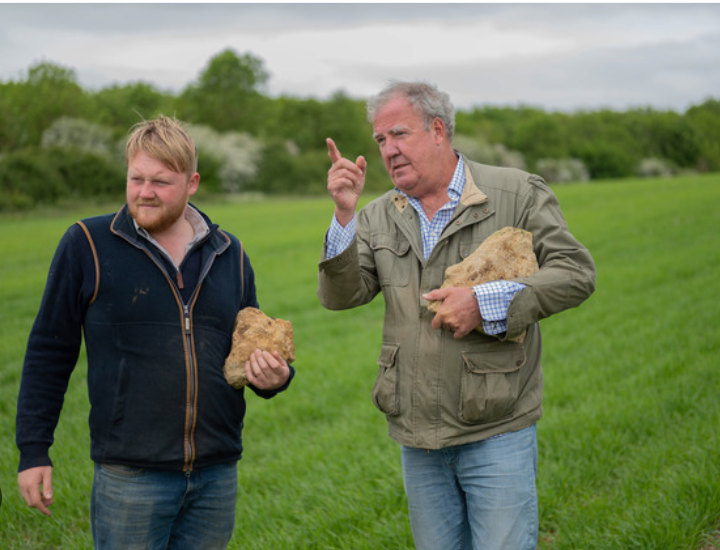
Clarkson’s role has evolved accordingly. He has repeatedly stated that he does not consider himself a spokesperson for the industry, instead describing his position as one of observer and broadcaster. Through his series, audiences have witnessed the practical realities of crop failure, fluctuating prices and bureaucratic complexity. While Diddly Squat may not represent the financial strain faced by smaller farms, it has introduced millions to agricultural economics previously confined to trade publications.
Other figures associated with the programme, including farm manager Kaleb Cooper and land agent Charlie Ireland, have also spoken publicly about the proposed reforms. Media appearances have sometimes proved contentious, reflecting the intensity of feeling on both sides.
Beyond tax, broader concerns circulate within rural communities. Photographs of senior politicians meeting global investors shortly after the London protest prompted speculation about the future ownership of agricultural land. Reports that hundreds of millions of pounds are allocated to overseas agricultural projects have likewise fuelled perceptions—fair or otherwise—that domestic farming is not receiving equivalent priority.
Government officials reject suggestions of neglect, pointing to environmental stewardship schemes and targeted grants as evidence of ongoing support. They argue that reforming inheritance provisions does not equate to dismantling family farming but rather seeks fiscal balance.
For Clarkson, the transformation from motoring presenter to participant in agricultural policy discussions was unintended. Yet the visibility afforded by television has amplified his commentary at a time when farmers feel increasingly under scrutiny.
The broader question now is whether dialogue between policymakers and the farming sector can de-escalate tensions. With land values high but farm incomes often modest, succession planning has become more complex. Industry analysts suggest that clearer exemptions or phased transitions may be required to reassure multi-generational operations.
What began as a television experiment in rural life has thus intersected with national fiscal policy. Whether Clarkson remains at the forefront of the debate or retreats to his fields, the underlying issue—how Britain balances taxation with the preservation of working farms—will continue to shape conversations well beyond the Cotswolds.