Jeremy Clarkson announces brand new 1,000-Hectare mega-farm project to be used in season 5
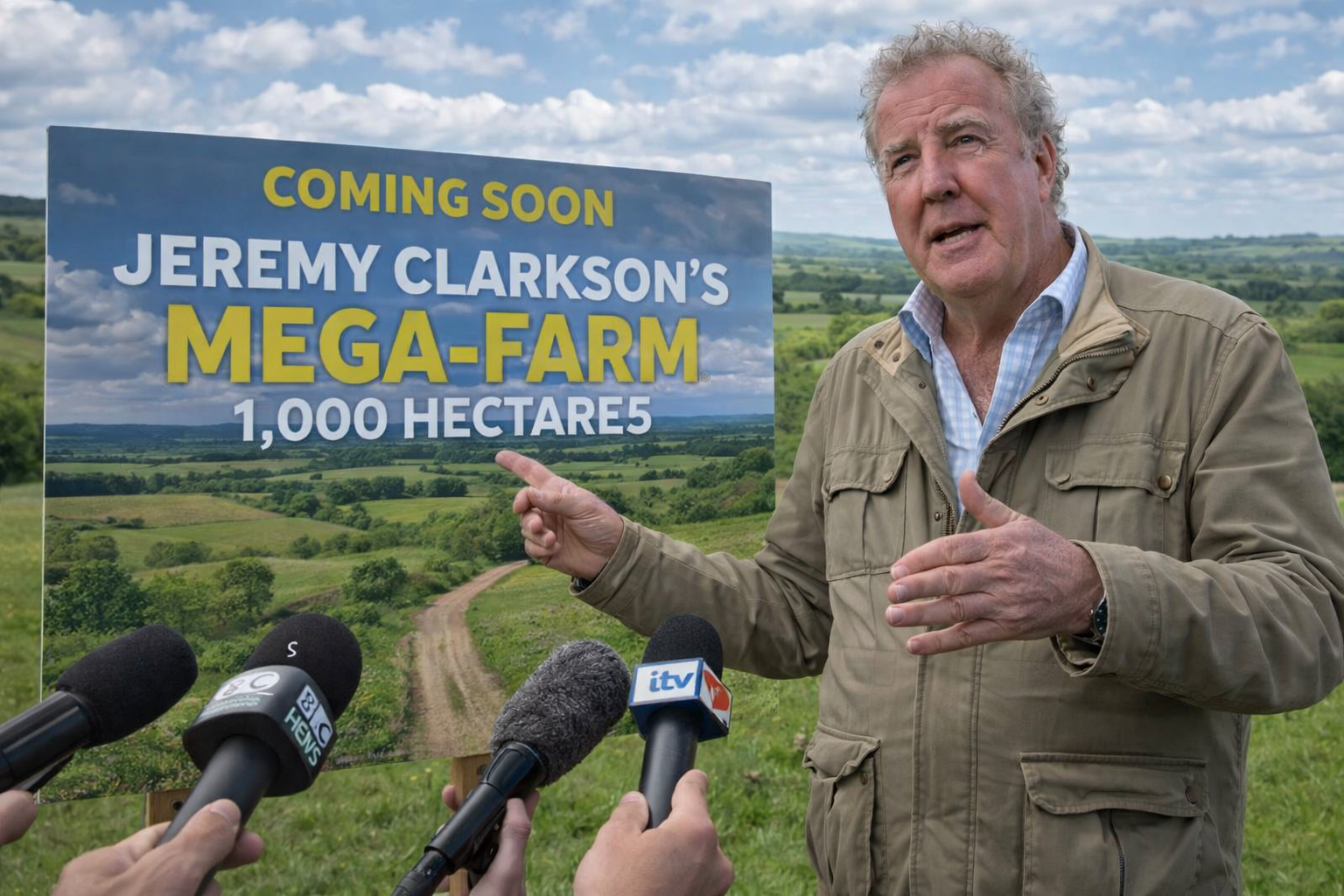
Jeremy Clarkson, the former Top Gear and Grand Tour star turned farmer, has officially announced a transformative project that promises to redefine the scope of Clarkson’s Farm for its fifth season. The 1,000-hectare estate, reportedly located adjacent to the current Diddly Squat Farm, represents not only the largest expansion in the show’s history but also a deliberate pivot toward large-scale, industrial-style agriculture. For fans of the series and observers of the UK farming landscape, this announcement signals both a narrative and operational shift that will have far-reaching implications for the show and Clarkson’s personal farming ambitions.
From an analytical perspective, the decision to launch a super farm comes at a critical juncture in Clarkson’s Farm. Season 4 highlighted the vulnerabilities inherent in managing a relatively small, traditional farm in the Cotswolds, where unpredictable weather, bureaucratic delays, and livestock challenges often dictated the pace of operations. With 1,000 hectares at his disposal, Clarkson can now test large-scale cropping strategies, mechanized equipment, and advanced livestock management techniques that were previously unfeasible at Diddly Squat. The expansion suggests a move toward a hybrid model: combining the quirky, narrative-driven antics fans have come to love with a genuine showcase of high-efficiency, modern farming practices.
Financially, the super farm is both an investment and a calculated risk. While Clarkson has consistently leveraged his media profile to offset some operational costs—through merchandise, farm shops, and pub ventures—the scale of a 1,000-hectare operation introduces new variables. Machinery costs, labor, infrastructure, and insurance alone could amount to millions annually. Analysts anticipate that Clarkson’s production model will likely incorporate precision agriculture technologies such as GPS-guided tractors, soil moisture monitoring, and drone surveillance to maximize yield and minimize losses. This strategy mirrors contemporary trends in UK and European farming, where scale and efficiency are increasingly critical in responding to market pressures.
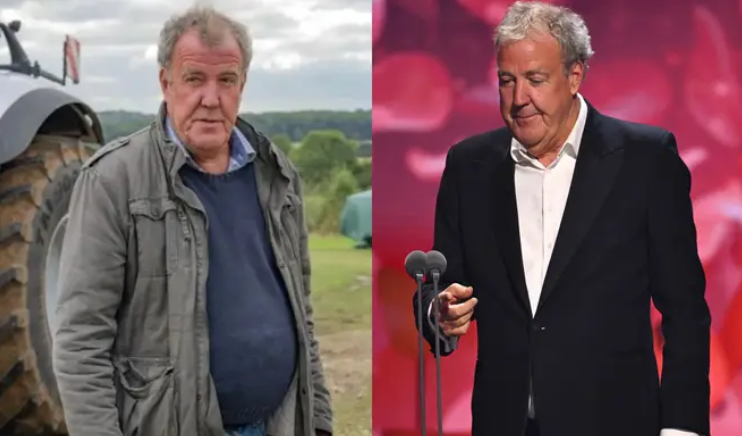
Operationally, the new farm will likely serve as both a narrative engine and a testing ground for storylines in Season 5. Given Clarkson’s penchant for on-screen experimentation, viewers can expect ambitious projects: from mechanized harvesting trials to attempts at cultivating crops in challenging soil conditions. The expanded land area also provides opportunities to diversify livestock operations, potentially introducing larger herds of cattle or sheep and experimenting with alternative breeds. Such additions will heighten the stakes on-screen, as the challenges of herd health, fencing, and grazing logistics multiply across the vastly larger terrain.
Season 5’s super farm also represents a subtle but significant shift in Clarkson’s role from eccentric farm owner to quasi-industrial agripreneur. While previous seasons focused on small-scale misadventures—breaking tractors, navigating bureaucratic obstacles, or learning on-the-job—this expansion positions Clarkson to engage with supply chains, large-scale logistics, and regulatory compliance in ways that were previously only hinted at. Analysts suggest this could attract a broader viewership, appealing to audiences interested not just in Clarkson’s humor, but also in the mechanics of modern agriculture, farm economics, and environmental management.
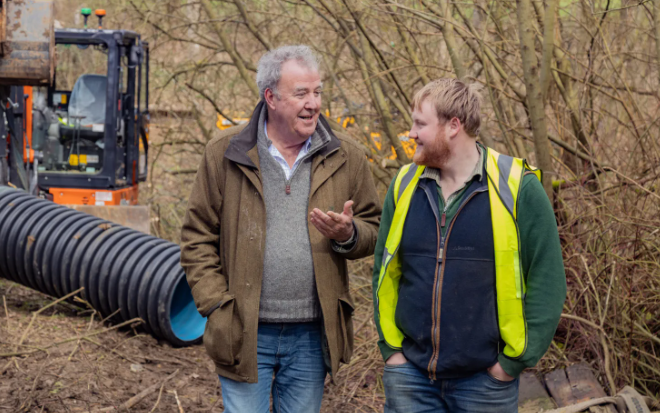
Narratively, the introduction of the 1,000-hectare farm offers fertile ground for dramatic tension. Past seasons thrived on the contrasts between Clarkson’s impatience with bureaucracy, the disciplined work of his staff, and the quirks of rural life. Scaling operations amplifies these dynamics: Kaleb Cooper, Charlie Ireland, and Lisa Hogan may face entirely new responsibilities, from coordinating multiple harvest crews to managing mechanical failures across expansive fields. New personnel may also be introduced to handle the scale, adding fresh interpersonal storylines and potential conflicts. The season is poised to explore not only the physical challenges of farming but also the leadership and decision-making pressures inherent in managing such a large operation.
Environmental and regulatory considerations will likely feature prominently as well. The super farm will almost certainly intersect with protected land, water usage limits, and local planning regulations. Clarkson’s interactions with local councils, environmental groups, and farming associations could become a recurring subplot, blending real-world stakes with the show’s established comedic framework. Given Clarkson’s history of outspoken commentary and risk-taking behavior, these elements are expected to create both tension and compelling viewing material.
Looking ahead, the super farm could redefine the trajectory of Clarkson’s Farm as a series. Beyond Season 5, it establishes the potential for multi-season arcs focused on crop yield optimization, livestock expansion, and even climate adaptation strategies. It also positions Clarkson to explore larger-scale commercial partnerships, from local food distribution to regional farm-to-table initiatives, offering narrative hooks that intersect both business and agricultural authenticity. Analysts predict that the new scale will allow the show to evolve into a hybrid of entertainment and educational programming, without sacrificing the humor and personality that made it a cultural phenomenon.
Ultimately, the 1,000-hectare super farm underscores Clarkson’s ongoing ambition: to test himself as a farmer while entertaining audiences with real-world challenges. For Season 5, viewers can expect the familiar mix of mechanical mishaps, bureaucratic headaches, and Clarkson’s signature humor, but amplified by a level of scale and complexity previously unseen on the show. The super farm is not just an expansion of land—it is an expansion of storytelling potential, operational experimentation, and the stakes of what it means to run a modern British farm under the watchful eyes of a global audience.
As Clarkson prepares to roll out Season 5, the super farm promises to be a proving ground where ambition, innovation, and rural life collide. With 1,000 hectares of possibility, a seasoned team, and Clarkson’s relentless drive, Diddly Squat is poised to enter a new era—one that may redefine the series and set new benchmarks for both farming and entertainment in the UK.