Jeremy Clarkson responds to Rachel Reeves — Who is really paying for Clarkson Farm?
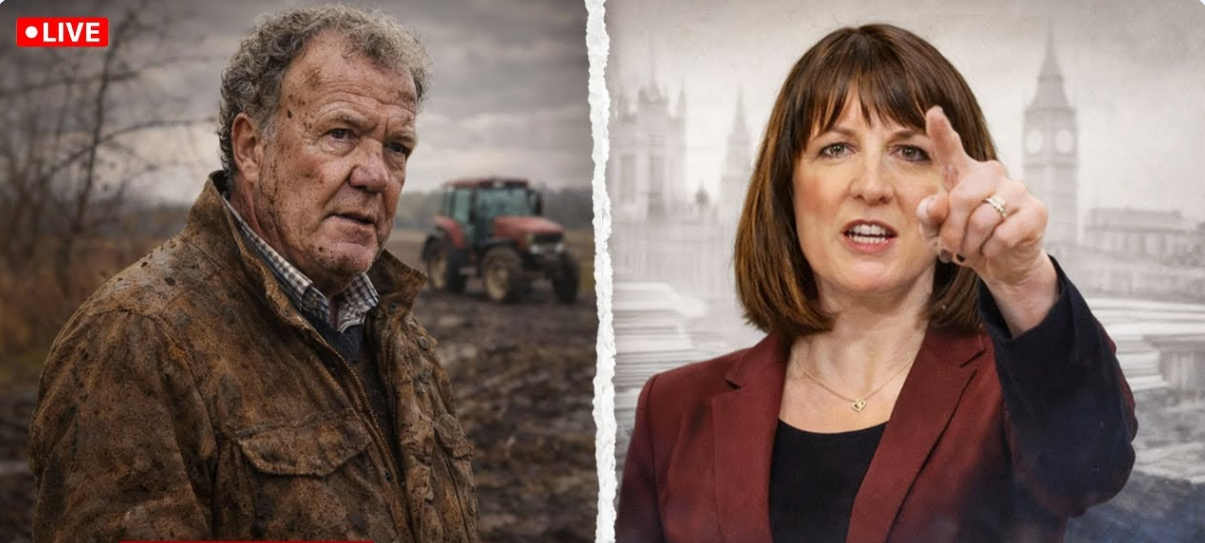
On a working farm in rural Britain, the most troubling sign is no longer anger. It is calculation. Farmers are not shouting, protesting, or storming government buildings. Instead, many are quietly deciding which fields will no longer be planted next year. Not because the soil has failed, and not because demand for food has vanished, but because the arithmetic no longer works.
This is the reality unfolding under the economic framework championed by Rachel Reeves. Rising fuel prices, fertiliser costs that have failed to return to pre-crisis levels, and increasing compliance requirements have already pushed margins close to zero. When new policy expectations arrive on top of those pressures, many farmers reach the same conclusion: continuing full production no longer makes financial sense.
What is striking is how quietly this contraction is happening. British farming is not collapsing in a dramatic fashion. It is being reduced one decision at a time. One field left fallow. One herd scaled back. One family deciding that next year will be smaller than the last. This is not a crisis driven by weather or disease. It is a redesign driven by policy.
At the heart of the issue is a disconnect between how farming is discussed in government and how it functions in reality. Policy language increasingly frames agriculture in terms of incentives, transitions, behavioural change, and long-term frameworks. These words may work in economic theory, but farming does not respond to intention. It responds to yield, cost, risk, and survival. When those variables stop adding up, production falls.
Rachel Reeves frequently speaks about food security, and it features prominently in official documents and speeches. Yet the numbers tell a different story. The United Kingdom already imports more than 40 per cent of the food it consumes. In categories such as fruit and vegetables, that figure rises to 80 per cent or more. Each year, Britain imports between £60 and £65 billion worth of food and drink. This is not resilience. It is reliance.
Under the current framework, that reliance is increasing. Domestic farmers are encouraged to reduce output, restrict inputs, and accept lower yields in pursuit of environmental targets. At the same time, imports quietly expand to fill the gap. Poultry arrives from overseas. Eggs come from eastern Europe. Grain is shipped in from Ukraine. Produce enters the country from regions operating under standards that would not be permitted within the UK.
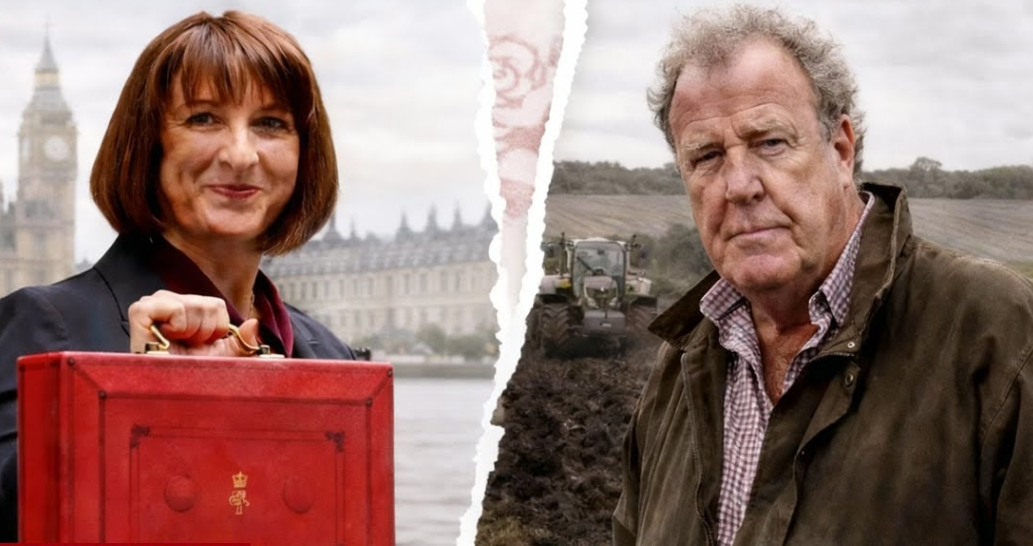
This is the uncomfortable reality rarely addressed directly. British farmers are held to some of the highest regulatory standards in the world, often at significant cost. Foreign producers are welcomed precisely because they are not subject to those same rules. On paper, this is global trade. In practice, it is substitution. Domestic production is reduced while overseas supply takes its place.
Food security, however, is not defined by press releases. It is defined by where food is actually produced. And under Rachel Reeves’ economic model, an increasing share of Britain’s food is produced elsewhere. That does not remove risk. It shifts it beyond national control.
Language matters here. Reeves speaks about agriculture not as a productive sector, but as a policy tool. Her vocabulary focuses on signals, incentives, and transitions rather than output and supply. Farming is treated less as an economic activity and more as a mechanism for delivering broader social goals. The consequence is predictable. Output falls, costs rise, and farms struggle to remain viable.
The figures underline the trend. A significant proportion of UK farms now operate at a loss. Real-terms farm incomes have declined sharply, and thousands of farms have closed within a single year — the highest figure on record. This is not a managed transition. It is attrition.
Inheritance tax policy adds another layer of pressure. Farmland is treated as accumulated wealth rather than productive infrastructure. Yet land value does not equate to disposable income. When inheritance tax is applied to family farms, the result is often forced sales. Fields are broken up, operations shrink, and land leaves food production entirely. Once that happens, it rarely returns.
Reeves frames this as fairness and the closing of loopholes. Farmers experience it as liquidation. You cannot tax your way to food security. Dismantling family farms in the name of fiscal balance inevitably reduces domestic supply.
Trust has eroded further because of how the system operates in practice. Farmers face strict audits, relentless compliance checks, and immediate penalties for administrative errors. Miss a form or a deadline, and payments can disappear. Meanwhile, policy failures at higher levels are treated as clarifications or oversights. The contrast is not lost on those working the land.
This imbalance has consequences. Farmers no longer hear reassurance in government language. They hear distance. A sense that decisions are being made by people who neither grow food nor depend on food production for survival.
Rachel Reeves may believe she is acting responsibly. Intent, however, is not the measure of success in agriculture. Outcomes are. And the outcomes are increasingly clear: reduced domestic production, greater reliance on imports, weakened family farms, and declining resilience.
Farming is not a moral accessory or an ideological project. It is national infrastructure. Countries that forget how their food is produced do not notice immediately. Shops remain stocked. Prices fluctuate but stabilise. The reckoning comes later, when supply chains fracture and dependence becomes vulnerability.
Britain does not need another framework or consultation. It needs agricultural policy grounded in physical reality. Because once domestic farming is lost, it does not quietly return. And no amount of confidence, rhetoric, or economic modelling can replace soil, skill, and the people who work it.