Jeremy Clarkson’s biggest challenge in his farming career: Jeremy Clarkson and Kaleb Cooper reveal something extraordinary is about to happen at Diddly Squat Farm.
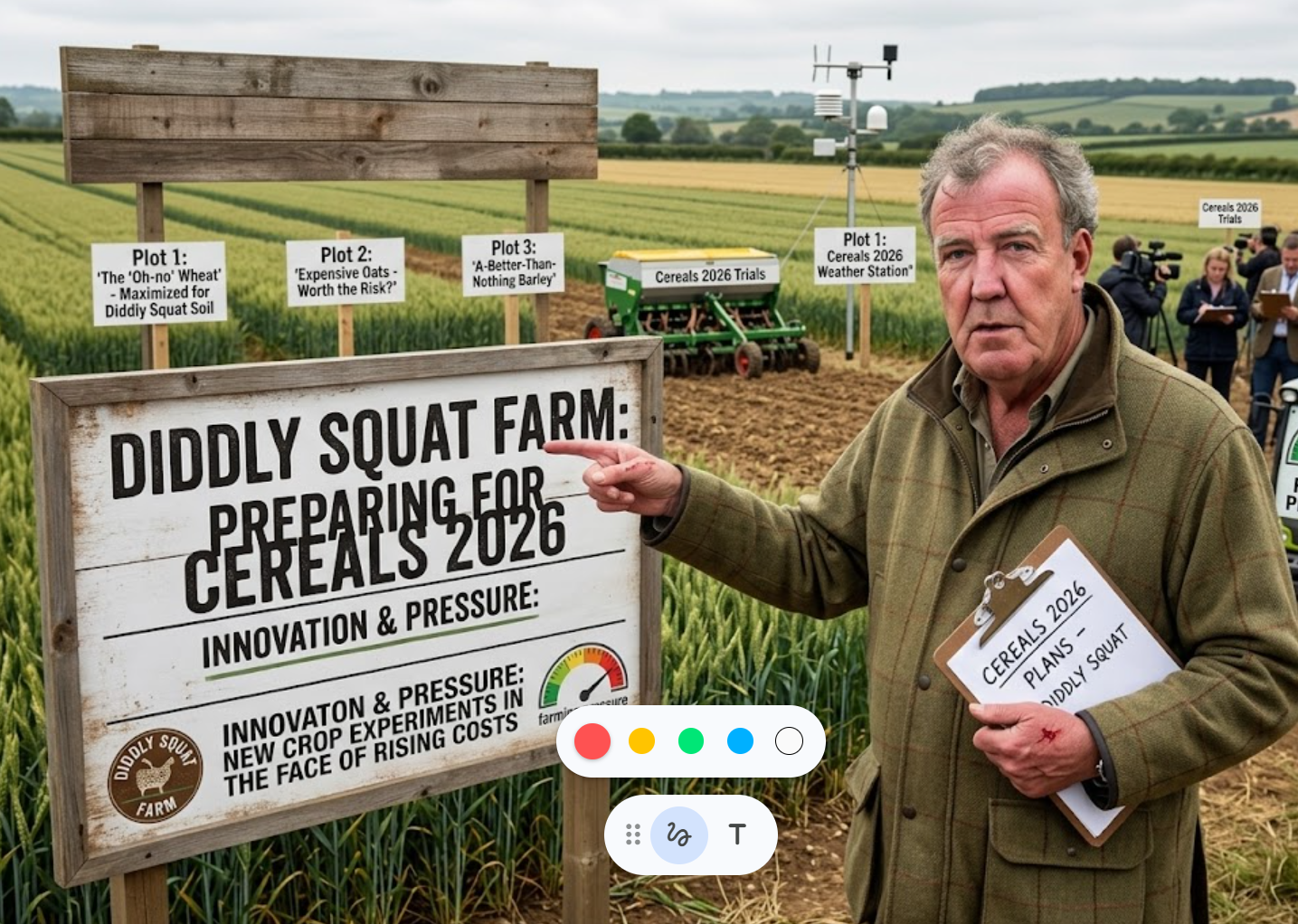
Jeremy Clarkson has admitted he is only now beginning to understand the scale of Cereals 2026, as Diddly Squat Farm prepares to host one of the biggest agricultural events in Britain.
Speaking at a crop plot day at his Oxfordshire farm, Clarkson appeared alongside Kaleb Cooper and Charlie Ireland to discuss the event, the state of British farming, and what visitors can expect when thousands of farmers and exhibitors arrive next year.
For Clarkson, the learning curve was obvious. He joked that he initially struggled to understand why anyone would travel to inspect crop roots, netting, soil structure and trial plots. But after walking the site and seeing the work taking shape, he said he had begun to see why the event mattered.
That shift is important. Clarkson’s Farm has always worked best when Clarkson moves from confusion to curiosity. Cereals 2026 could become a major storyline because it places him in the middle of serious agricultural discussion, not just farm comedy.
The event is expected to bring around 25,000 farmers and hundreds of exhibitors to Diddly Squat. That alone creates a major logistical challenge for the farm, the local area and the production team. Clarkson and Charlie made clear that security, traffic and local communication are already being considered carefully.
But the bigger theme was not crowd control. It was uncertainty.
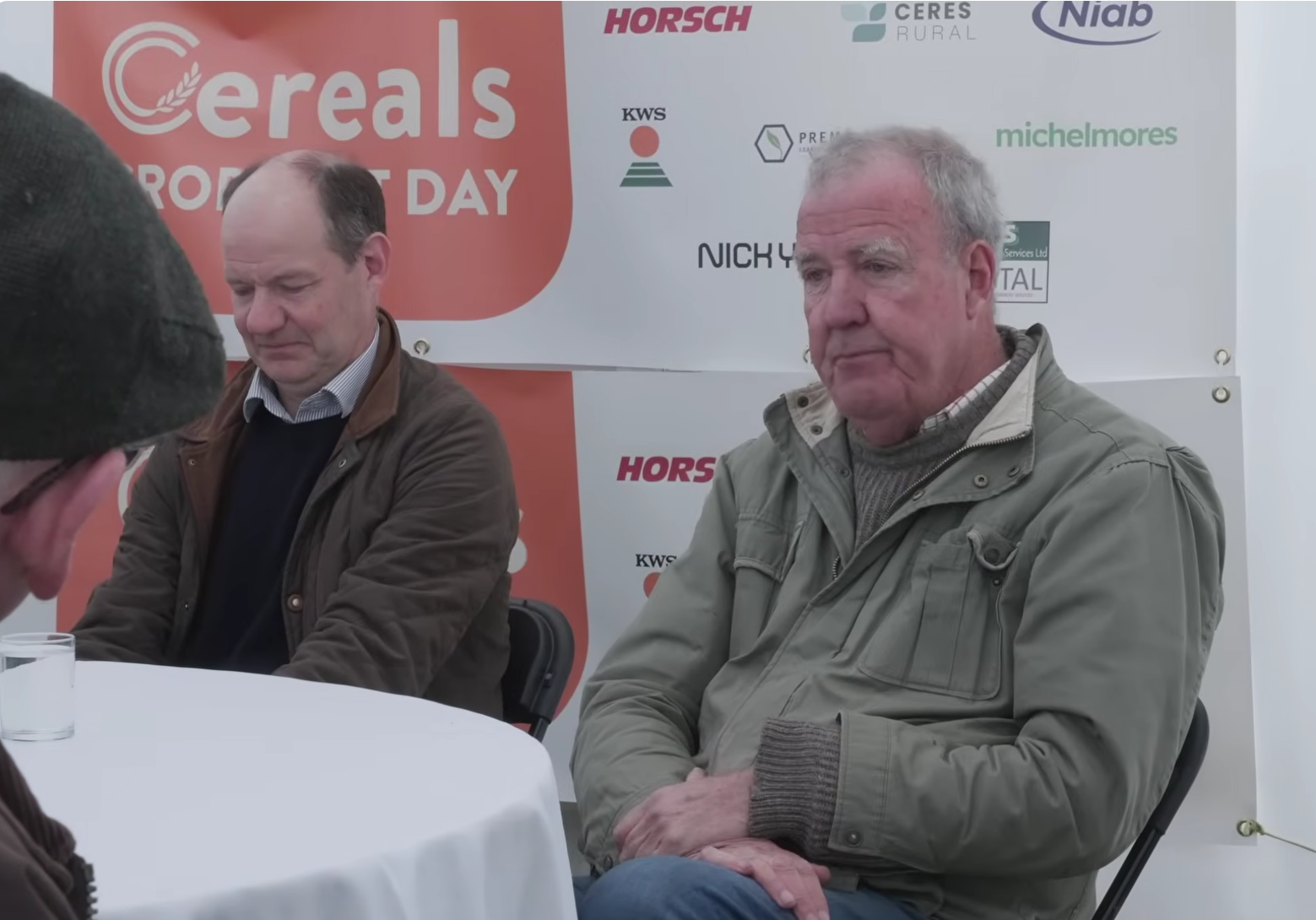
Charlie Ireland gave a clear warning about the pressure facing arable farmers. Fuel costs are already being felt, fertilizer prices could become a bigger issue next season, and global supply concerns remain a serious problem. His message was simple: farmers now have less protection, higher costs and far more exposure to market changes.
Clarkson agreed, saying many farmers must be under immense pressure, especially those without outside income. His comments again showed why the programme has connected so strongly with viewers. Clarkson’s Farm may be entertaining, but it has also become a platform for showing the financial reality behind British food production.
Kaleb Cooper added another important point. He said farming still has a future because people need farmers every day. But he also stressed that young people entering agriculture do not have to follow one single route. They can work with machinery, GPS systems, economics, journalism, crop science or farm management.
That message could become central to Season 5. The show may focus not only on Clarkson’s mistakes and challenges, but also on how farming needs new people, new skills and new technology to survive.
The crop plots at Cereals 2026 also seem likely to give the programme a more technical edge. Clarkson discussed autonomous equipment, underground mapping and robotic systems trialled on the farm. He admitted some tests were difficult to judge because weather conditions affected results, but he clearly saw potential in the technology.
Still, the tone was not blindly optimistic. Charlie suggested some crops no longer make financial sense in the current climate. Clarkson mentioned that durum wheat had fallen out of the rotation plan because the economics did not work. That kind of decision may sound technical, but it goes to the heart of modern farming: even crops that seem useful or popular must justify their place financially.
Livestock also remains part of the farm’s future. Clarkson spoke about cows and sheep being used together and suggested that older mixed farming systems may still have value. Charlie framed it less as a fashionable label and more as good farming practice.
From a television perspective, Cereals 2026 offers rich material. It gives Clarkson a huge public farming event on his own land, puts Kaleb in front of the next generation, and gives Charlie the chance to explain the business pressures behind every decision.
The likely storyline is clear: Diddly Squat is no longer just a celebrity farm. It is becoming a stage for a much wider conversation about British agriculture.
If Season 5 captures this properly, viewers may see a more mature version of Clarkson’s Farm. The humour will still be there, especially as Clarkson learns about trenches, roots and crop plots. But beneath that, the series could show an industry trying to adapt while costs rise and confidence falls.
Cereals 2026 may therefore become more than an event. It could become a symbol of what Clarkson’s Farm has become: entertaining, chaotic, but increasingly serious about the future of farming.