Echoes from the Deep: Josh Gates Uncovers a Lost WWII Avenger Bomber
The coastal waters off Anacapa Island in California hold many secrets, but few are as poignant as the resting places of two TBM Avenger torpedo bombers that collided mid-air during a training mission in World War II. In a compelling episode of Expedition Unknown, host Josh Gates joins forces with the specialized team from Project Recover to locate the “Lost Avenger” by first analyzing a known wreck—a mission that blends high-tech forensics with a solemn tribute to fallen heroes.
The Mystery of the Two Avengers
The story dates back to the height of the war when two planes, piloted by Buckley and Rule, collided. While one wreck’s location was cataloged by the National Park Service in 1996, its sister ship—the one piloted by Dennis Rule—remained missing for nearly eight decades.
Josh Gates began his investigation by testing the accuracy of historical eyewitness reports. An old Coast Guard account placed a wreck just 100 yards from the island’s lighthouse. However, upon reaching the coordinates of the known wreck, Gates and the team discovered a staggering discrepancy: they were actually 1,800 yards away. “Angles are often accurate in the fog of war,” noted the team’s analyst, “but distances are generally horribly wrong.” This 18-fold error provided a vital clue: to find the lost plane, they would need to search much further offshore than history suggested.
A Frigid Descent into History
Equipped with a thick wetsuit to combat the biting cold of the Pacific, Gates dived 120 feet down to the sea floor. The mission was race against the clock; at that depth, bottom time is severely limited to avoid decompression sickness.
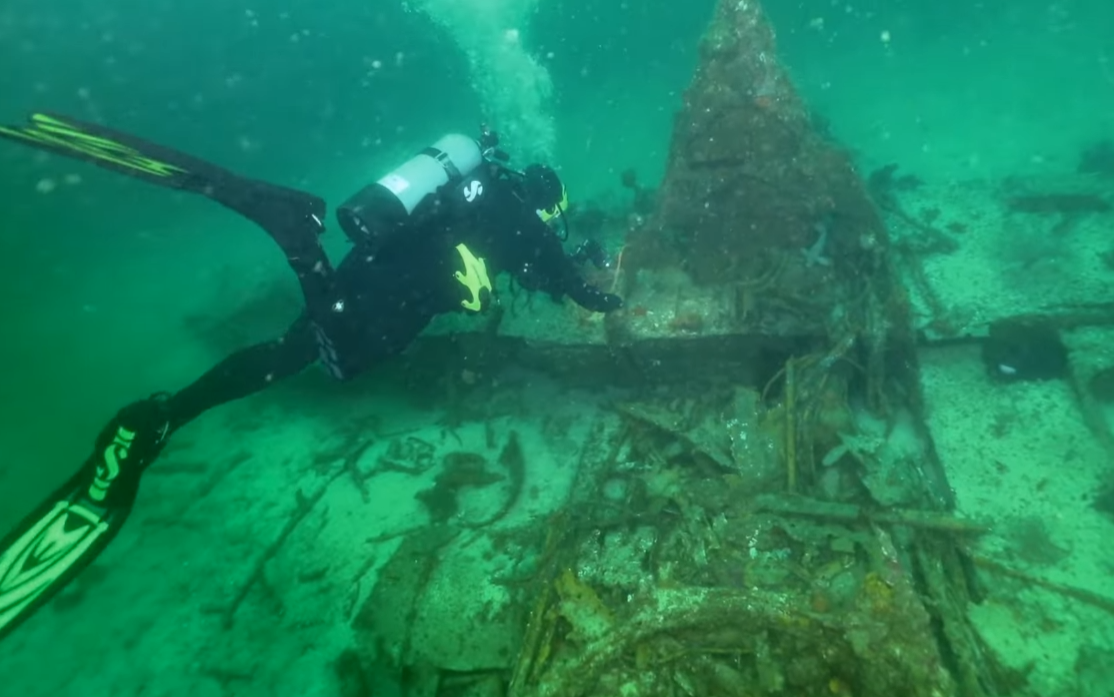
After a tense few minutes searching through a “desert-like” seabed, the ghost-like silhouette of an Avenger emerged from the gloom. Despite decades underwater, the plane’s outline remained remarkably clear. Gates spent his remaining minutes taking thousands of high-resolution photographs, focusing specifically on the tail section. This area was crucial because historical reports indicated it was the point of impact during the mid-air collision.
Forensic Archaeology: The 3D Model
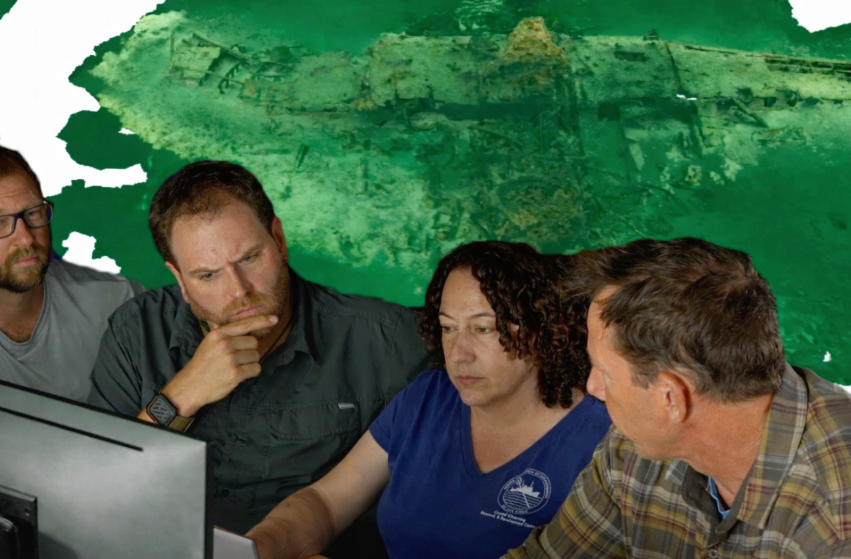
Back on the research vessel Shearwater, the team used a technique called photogrammetry to stitch Gates’ photos into a highly detailed 3D model. This “CSI World War II” approach allowed them to reconstruct the moment of impact with startling clarity.
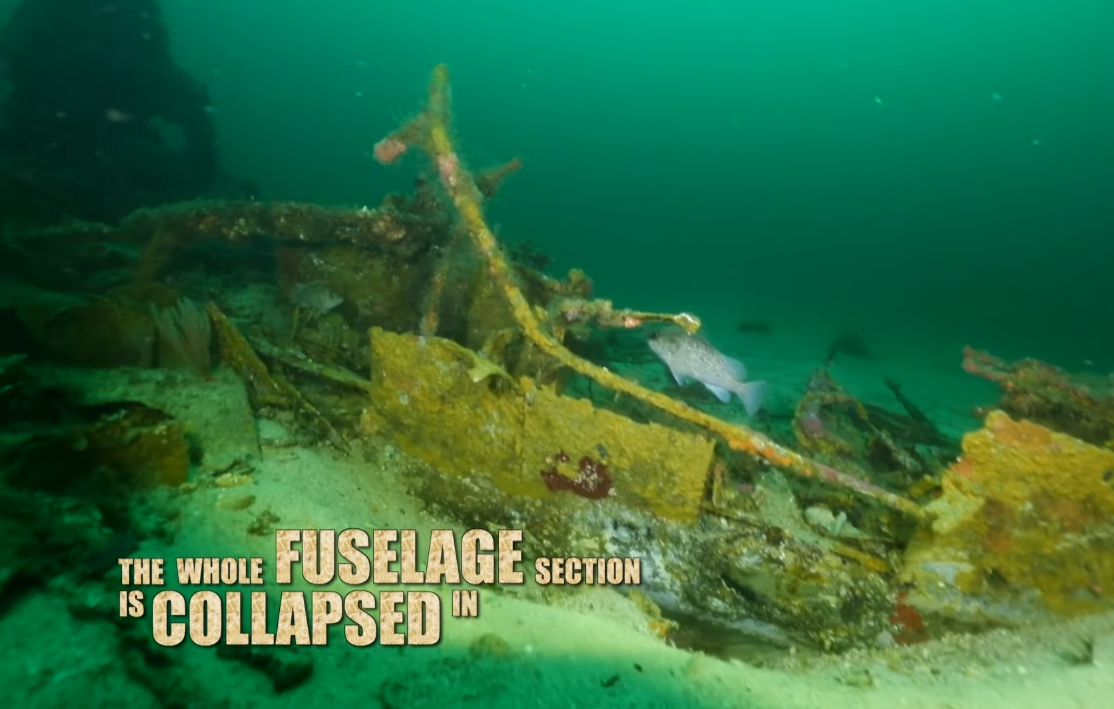
The model revealed significant damage to the horizontal stabilizer, consistent with a propeller strike from the second plane. “It wasn’t just a water crash; it was an immediate water landing,” Gates observed, noting how the plane appeared to have cartwheeled upon hitting the surface. The forensic data also showed the “halo effect”—where the aluminum wreck acts as an artificial reef, changing the texture of the surrounding sediment. This detail is vital for sonar operators, as the wreck sits only about three feet off the seabed, making it incredibly difficult to distinguish from natural rock formations.
More Than Just Aluminum
Beyond the technical data, the dive served as a powerful reminder of the human cost of war. The known wreck is the final resting place of tail gunner Lawrence Works, who did not survive the crash. Seeing the round impression where his turret once stood transformed the site from a “story” into a “memorial.”
“Seeing these wrecks in person connects you to the site,” Gates remarked. The data gathered from this mission—the corrected distances, the impact patterns, and the “flat” sonar profile—has now narrowed the search area for the second, lost Avenger. As the ocean slowly consumes these aluminum relics, the clock is ticking for Gates and Project Recover to find the final piece of this WWII puzzle and bring closure to a mystery that has been submerged for 80 years.