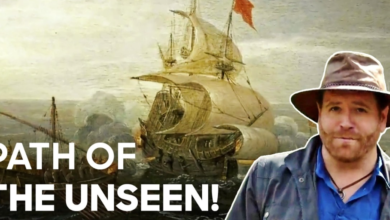
‘Expedition Unknown’ shows Josh chasing Gold Rush-era fortune during season 16 finale

The hit Discovery Channel adventure series Expedition Unknown will close its sixteenth season on Wednesday, Dec. 10, at 9/8c, with a finale that promises to be one of the most daring episodes of host Josh Gates’ career. Known for blending historical investigation with real-world adventure, the series has taken viewers across deserts, mountains, jungles and ancient ruins. But this week’s finale elevates the stakes even further as Gates plunges into the treacherous heart of Central America in pursuit of a legendary Gold Rush-era fortune.
The episode focuses on the compelling story of the Orus, a steamship backed by American industrial magnate Cornelius Vanderbilt in the mid-19th century. Vanderbilt, seeking to establish a faster commercial route connecting the Atlantic and Pacific Oceans, pursued an ambitious plan to use the San Juan River as a central artery for travel and trade. The Orus was intended to become the vessel that would usher in a new era of American expansion and economic influence. However, its maiden voyage ended in catastrophe when it struck violent rapids and was destroyed—taking its cargo, crew equipment and potentially large quantities of Gold Rush-era wealth to the bottom of Nicaragua’s unforgiving waters.
For decades, the wreckage of the Orus has remained an enigma. While some fragments have reportedly surfaced over the years, its true final resting place has never been confirmed. Treasure hunters, historians and archaeologists have speculated endlessly about whether the vessel still holds valuable artifacts—gold among them—that may have gone down with the ship in the 1850s. The Expedition Unknown team now attempts to bring clarity to this long-standing mystery.
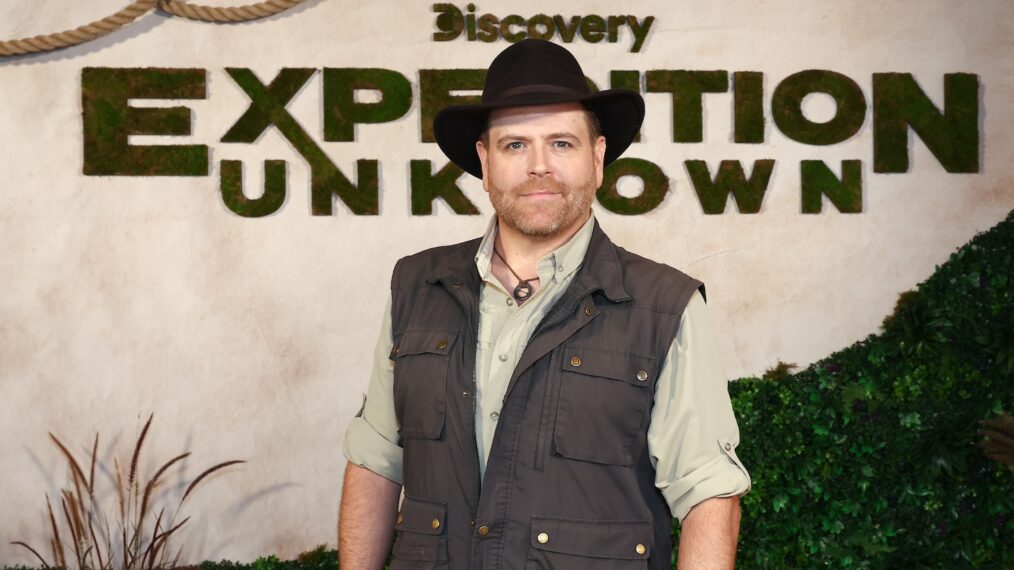
In the finale, Gates travels deep into Nicaragua’s remote landscape, facing environmental hazards that few explorers willingly confront. The episode unfolds against the backdrop of croc-infested waters, dense stretches of rainforest and riverbanks crawling with venomous snakes. The physical demands are immense, requiring Gates and his team to navigate thick mud, unstable terrain and waterways where visibility is almost nonexistent. Each step forward introduces a new risk.
These dangers are not merely dramatic elements—they are constant obstacles that shaped the lives of those who originally tried to traverse the region during the Gold Rush era. Gates frequently draws parallels between his modern expedition and the challenges faced by 19th-century travellers as they attempted to convert a wild, unpredictable river into a functioning commercial passageway. The river’s turbulent rapids, the same currents that destroyed the Orus, continue to shift, erode and conceal evidence of its past.
Finding the wreckage demands a combination of cutting-edge technology and old-fashioned fieldwork. Gates works alongside local experts and river guides, deploying sonar scanners, underwater cameras and geophysical instruments to probe the depths. The finale documents these efforts in detail, highlighting the complexity of scanning a fast-moving, debris-filled riverbed. At times, the search becomes a race against daylight and deteriorating weather conditions.
As the team narrows in on potential targets beneath the water, the tension rises. What they uncover could reshape historical understanding of Vanderbilt’s enterprise and provide new insight into an often-overlooked chapter of Gold Rush history. For Gates, however, the objective is not merely about retrieving treasure—it is about piecing together the human story of ambition, innovation and loss that surrounded the ill-fated Orus.

Throughout the episode, the show maintains its characteristic blend of documentary precision and cinematic adventure. Interviews with historians and maritime specialists explain the economic, political and technological context surrounding the ship’s construction and destruction. Archival materials help illustrate the dreams that were attached to the vessel and the consequences of its failure. Meanwhile, Gates’ on-site narration brings viewers directly into the moment-by-moment intensity of the search.
The finale also touches on the broader legacy of Vanderbilt’s Nicaragua route, which briefly served as a critical pathway for thousands of Gold Rush prospectors before political upheaval forced its closure. The collapse of the route—and the disappearance of the Orus—marked the end of a bold but short-lived era of transcontinental ambition. For historians, the shipwreck serves as a tangible reminder of a turning point in global navigation and American commercial expansion.
As Expedition Unknown closes its sixteenth season, the finale encapsulates everything that has made the series a success: deep historical research, remote exploration, authentic danger and the relentless curiosity of a host willing to push into unknown territory. Whether the team finds conclusive evidence of the Orus or merely adds new data to an enduring mystery, the journey itself becomes the driving force.
Fans can expect a suspenseful, richly detailed and visually immersive conclusion—one that underscores the ongoing appeal of Gates’ global adventures and the enduring mysteries that continue to lie hidden beneath the world’s most challenging landscapes.