Shadows on the Flight Deck: Phil and Heather’s Midnight Vigil Aboard the “Grey Ghost”
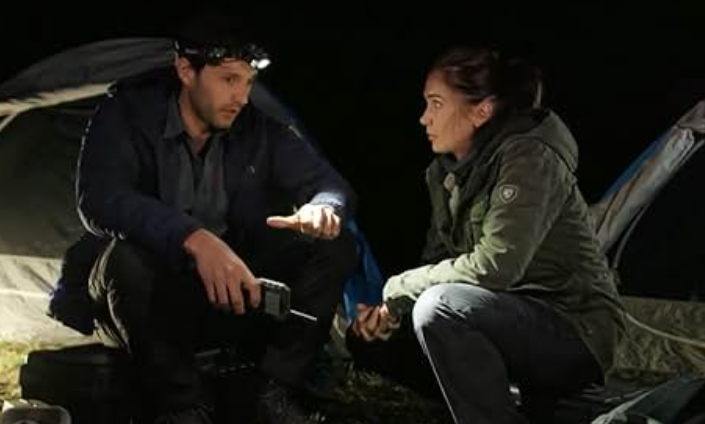
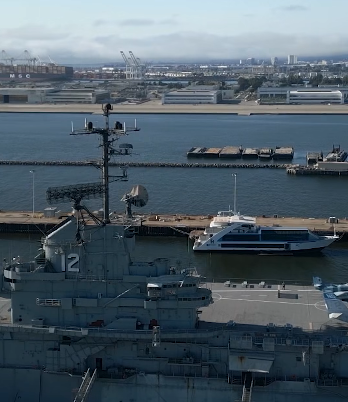
The USS Hornet (CVS-12) is not just a masterpiece of naval engineering; it is a 41,000-ton steel labyrinth of memories, many of them tragic. Known as the “Grey Ghost,” this Essex-class aircraft carrier saw some of the most intense combat of World War II. But today, the battles fought within its narrow companionways are of a different nature.
For the latest Expedition X investigation, biologist Phil Torres and paranormal researcher Heather Amaro stepped onto the hallowed flight deck to face a legend that has terrified museum staff and veterans for decades: the claim that the Hornet is the most haunted ship in the US Navy.
The Investigation Begins
The atmosphere was heavy from the moment the sun dipped below the horizon in Alameda. With over 300 reported deaths during its service—ranging from combat casualties to tragic accidents and suicides—the Hornet is a pressure cooker of “residual energy.”
Phil, ever the skeptic-leaning scientist, arrived armed with thermal imagers and vibration sensors. Heather, bringing her family legacy of paranormal expertise, focused on the “feeling” of the ship. As they descended into the “Combat Information Center” (CIC), the temperature plummeted. Their gear began to malfunction—a classic sign of electromagnetic interference often associated with spirit activity.
“It’s not just cold,” Heather whispered, her breath visible in the beam of her flashlight. “It feels like we’re being watched by a crew that never went home.”
The Turning Point: A Descent into Deck 4
While the first few hours yielded the usual phantom footsteps and distant metallic clangs, the investigation took a chilling turn when the duo decided to push into the lower engineering decks—areas strictly off-limits to the public.
This is where our story intensifies.
As Phil calibrated a laser grid in a narrow hallway, a distinct, guttural voice echoed through the ship’s intercom system—a system that had been disconnected for over thirty years. The voice didn’t scream; it whispered a single service number.
Suddenly, the heavy steel watertight door behind them slammed shut with a force that shook the deck plating. Phil lunged for the handle, but it wouldn’t budge. “The pressure seal is engaged,” he shouted, “but there’s no one on the other side to turn the wheel!”
The Manifestation
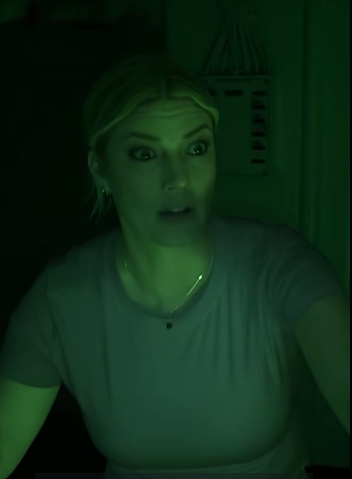
Through the green hue of the night-vision camera, viewers saw what the duo felt: a localized distortion in the air. A shadow, darker than the surrounding gloom, manifested at the end of the corridor. It wasn’t a vague mist; it was the silhouette of a man in a flight suit, pacing back and forth as if preparing for a sortie that would never happen.
Heather reached for her spirit box. “We are here to tell your story,” she called out. The response was instantaneous and terrifying. The radiation detectors on Phil’s belt began to scream, their readings spiking into the red. The “Phantom Pilot” didn’t vanish—it moved. It charged toward them with impossible speed, disappearing mere inches from Heather’s face, leaving behind the distinct, pungent smell of burning aviation fuel and ozone.
The Aftermath
By the time the sun rose, Phil and Heather emerged back onto the flight deck, visibly shaken. They had captured audio of what sounded like Morse code being tapped out on the hull—a message they are currently having decoded by naval historians.
The USS Hornet continues to sit silently in the bay, but for Phil and Heather, the “Grey Ghost” is no longer a nickname. It’s a confirmation that some ships carry a cargo that never appears on a manifest: the souls of those who refused to abandon their post.