Unearthing the Lost Knights: A Chilling Discovery at a Templar Commandery
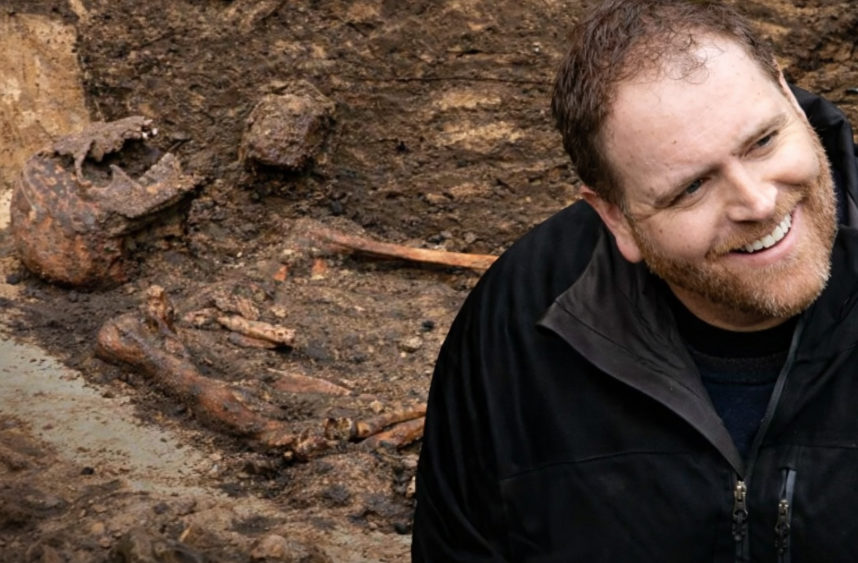
The Knights Templar remain one of history’s most enduring mysteries. From legends of the Holy Grail to secret treasures, the order has inspired centuries of speculation. However, in a recent expedition featured on Expedition Unknown, host Josh Gates moved beyond myth to reveal the stark, human reality of these warrior-monks. In a series of high-stakes archaeological maneuvers, Gates and a team of experts uncovered a rare Templar burial site that offers a haunting glimpse into the lives of those who once served the Cross.
The Inaccessible Tower
The investigation began at a medieval commandery, where a mysteriously inaccessible tower had long puzzled historians. With no internal staircase, the tower’s upper reaches remained a secret until Gates decided on an “unconventional” approach: repelling from the roof.
Dangling from 12th-century timber beams, Gates descended into the hollow heart of the structure. As he lowered himself past ancient bricks, he documented a series of inexplicable niches carved into the walls at regular intervals. While some theorized these could have held historic artifacts or supported long-rotted beams, the true purpose of the tower remains an enigma. However, this daring descent was merely the prelude to a much more significant discovery waiting in the soil outside.
A Layered Mystery in the Earth
While the tower offered architectural puzzles, the ground outside held the secrets of the Templars themselves. Archaeologist Janet and her team identified a patch of disturbed, darker soil—a classic indicator of an ancient burial.
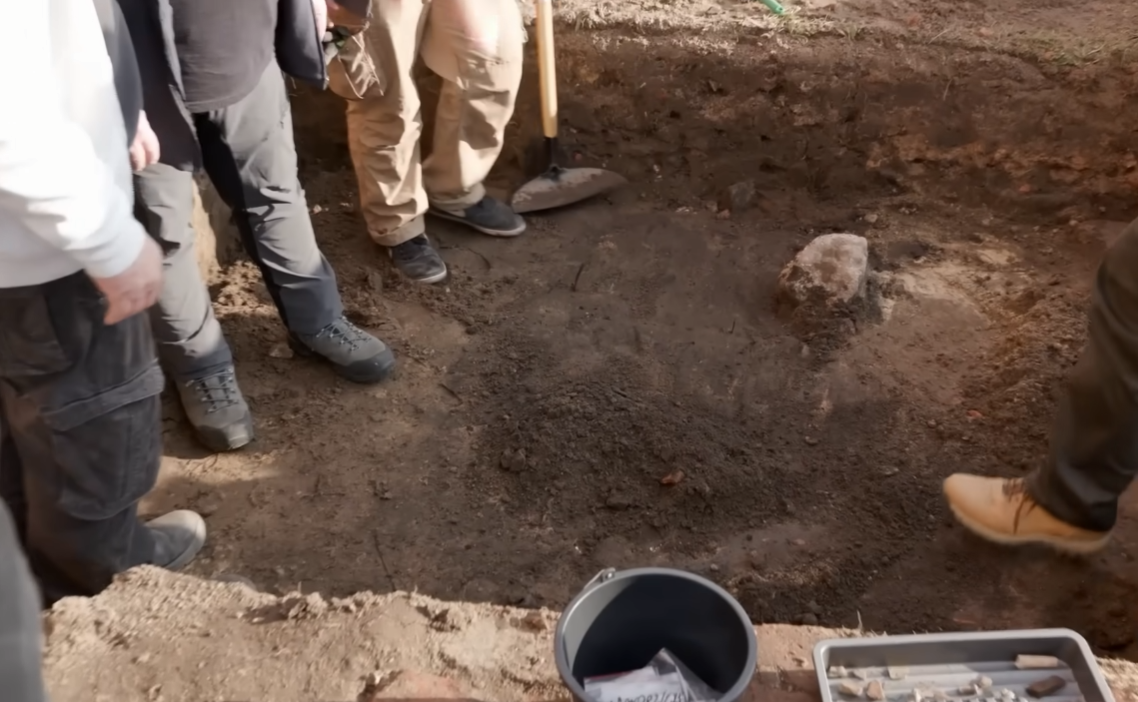
As the team began a careful excavation, a metal detector pinged, revealing a silver coin dating back to the 14th or 15th century. This find provided a crucial chronological anchor, confirming that the site was active during the height of the Templar era. But the coin was only the beginning.
The Face of the Order
As the dig deepened, the team uncovered a remarkably well-preserved human skull. The positioning was unmistakable: the body was laid on an east-west axis, with the head to the west and the face looking east toward the Holy Land. This orientation was a hallmark of Templar tradition, reflecting their belief in witnessing the return of Christ from Jerusalem.
Evidence of the individual’s status soon emerged. The skull featured exceptionally healthy teeth, a rarity in the medieval period that suggests a diet rich in nutrients available only to the elite. Furthermore, the remains showed the arms crossed over the chest, another traditional Templar burial practice.
The discovery grew even more extraordinary as the team realized they weren’t looking at a single grave. Beneath the first skeleton lay a second, and beneath that, a third. This “burial upon burial” suggests that the site was an especially sacred location within the commandery, used repeatedly over generations.
Reality vs. Myth
For many, the image of a Knight Templar is one of a warrior in gleaming armor with a sword and shield. The reality uncovered by Josh Gates, however, tells a different story. These were simple, humble burials—men laid to rest without the trappings of war or mythical treasure.
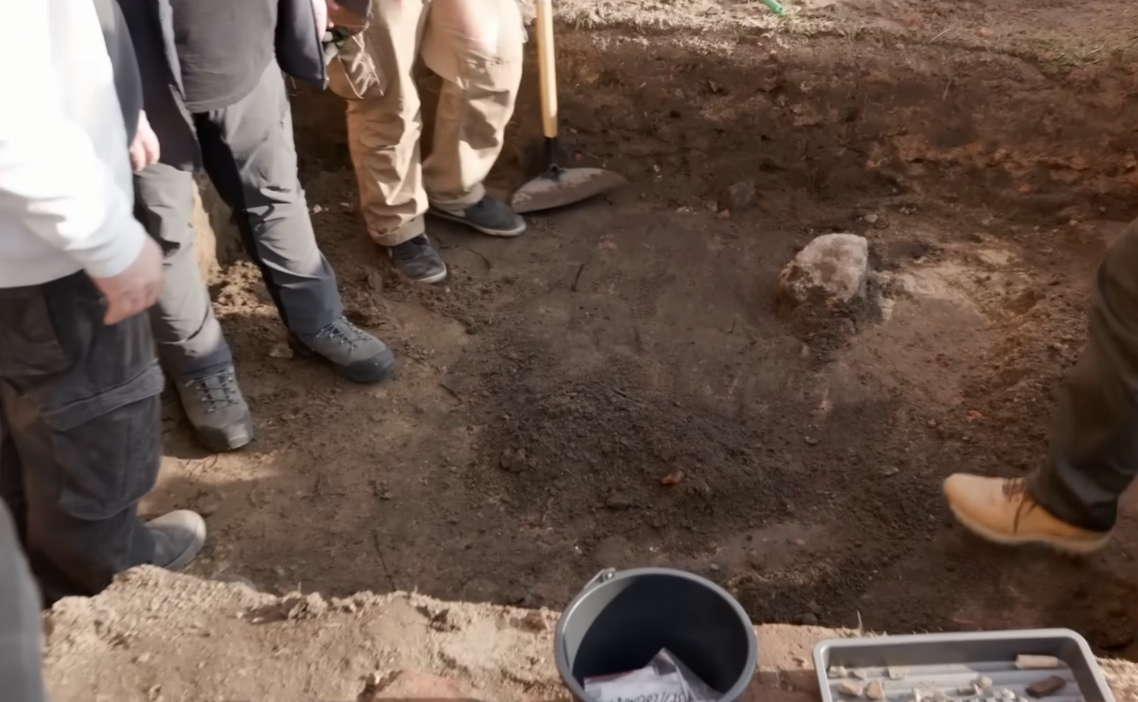
“This is the reality,” Gates remarked while standing in the excavation pit. “At heart, the Templars were monks doing the Lord’s work.” The discovery of these individuals—real people with real stories—serves as a poignant reminder that the true treasure of archaeology isn’t gold, but the physical connection to the people who shaped our world.