Tony Beets is making $2.3 million a week while Rick Ness is pouring all his resources into a new gold mine.

The mid-point of the Yukon mining season has revealed a widening gulf between operators riding a wave of record-breaking gold totals and those battling unstable ground, mechanical setbacks and tightening timelines.
This week’s developments on Gold Rush underscored the unpredictable balance that defines placer mining in the Klondike: extraordinary weekly hauls on one claim, existential uncertainty on another.
Beets Pushes Toward Target
At Paradise Hill, Tony Beets delivered one of the season’s strongest performances, reporting a weekly total of 673 ounces. At current market prices, that equates to more than $2.3 million in gold.
The result lifts the Beets family’s season tally to 4,611 ounces, leaving them roughly 2,000 ounces short of their annual target. For a miner whose career spans more than four decades in the Yukon, the drive appears undiminished.
“It seems like the longer you keep onto it, the higher the price gets,” Beets remarked during the weigh-in, reflecting on buoyant gold values that continue to underpin the economics of large-scale operations.
Yet the headline figure masks operational strain. In order to advance work at Paradise Hill, Beets reassigned his experienced crew to the Indian River claim, leaving his son Mike to supervise a group of less seasoned operators navigating narrow dyke roads and steep embankments.
The terrain itself poses inherent risk. On one stretch, Beets warned that a misjudged turn could result in a multi-roll incident; veer the other way and heavy machinery risks sliding into mud thick enough to immobilise equipment.
The danger materialised almost immediately when a D6 dozer slipped from an embankment, narrowly avoiding a far more serious outcome. While no major injuries were reported, the incident served as a reminder that productivity gains often carry heightened exposure to operational hazards.

Rick Ness Recalculates
Elsewhere in the territory, Rick Ness faces a different kind of reckoning.
After a punishing start to the season, Ness made the difficult decision to abandon his 200-foot-deep cut at Vegas Valley. Though significant volumes of overburden had already been stripped, the instability of the pit walls and surrounding ground presented escalating risk.
Approximately 800 ounces of gold remain buried in the cut, but extracting it would require sustained excavation under precarious conditions. For Ness, the calculus shifted from potential reward to operational viability.
Instead, he has committed to opening a new four-acre cut—an undertaking that demands moving more than one million yards of overburden within six weeks. Only by clearing that material can his team reach the pay layer before winter temperatures bring work to a halt.
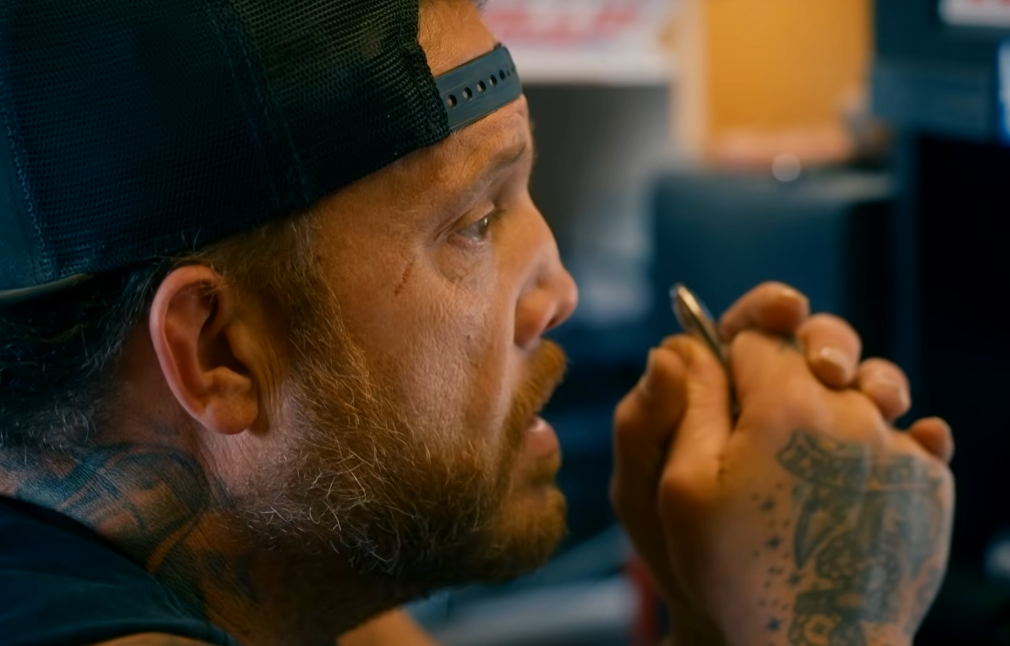
“We’re halfway through the season and our 1,800-ounce goal seems a long way off,” Ness admitted. “I can’t have a bad season. The business would fail.”
The pivot represents both risk and necessity. Mobilising equipment, fuel and manpower for such an ambitious shift mid-season compresses timelines and leaves little room for mechanical breakdowns or weather-related delays.
Schnabel’s Momentum Tested
At the Golden Mile, Parker Schnabel continues to chase one of the most ambitious targets ever set on the programme: a $35 million season.
To date, Schnabel’s operation has banked more than $20 million in gold. However, this week’s weigh-in showed a modest decline in output. Running four wash plants simultaneously—an intensive configuration designed to maximise throughput—the crew reported 453 ounces, roughly 50 ounces below the previous week.
Much of the shortfall was attributed to downtime at the Roxan plant, where mechanical issues slowed processing. In high-volume placer mining, even brief interruptions ripple across weekly totals.
Schnabel’s season total now stands at 6,308.9 ounces, an impressive figure by any measure. Yet within the context of his ambitious goal, consistency remains critical. Operating multiple plants simultaneously strains both equipment and personnel, demanding precise coordination and constant maintenance.
“They’re not as fun when they’re down,” Schnabel observed, acknowledging the subdued mood that accompanied the week’s results.
A Season on a Knife Edge
As summer days in the Yukon begin to shorten, time becomes an increasingly decisive variable. Gold mining in the Klondike operates within a narrow seasonal window; freeze-up can halt excavation abruptly.
For large-scale operators such as Beets and Schnabel, scale provides resilience—multiple cuts, diversified ground and substantial equipment fleets offer buffers against isolated setbacks. For independents like Ness, a single strategic miscalculation can reverberate across the entire season.
Mechanical wear is accelerating under sustained output. Ground conditions are growing more unpredictable as deeper layers are exposed. Fuel costs and labour demands continue to shape margins.
The mid-season snapshot reveals a territory divided: one camp edging closer to its targets with momentum intact, another recalibrating under pressure, and a third balancing remarkable totals against operational strain.
In the Klondike, prosperity and peril coexist in equal measure. With weeks remaining before winter closes the window, the second half of the season will test not only the richness of the ground, but the endurance, judgement and adaptability of the miners who stake their fortunes upon it.