Gold Rush 2025: Returning to Alaska After Disaster — And What It Means for the Miners’ Future

As Gold Rush enters its 2025 landscape, few events have shaped the miners’ trajectory as profoundly as the devastating Haines landslide of late 2020. For over a decade, the miners on Discovery’s flagship franchise have pushed themselves to the limits of endurance — battling extreme weather, unstable ground, equipment breakdowns, and financial pressure. But nothing tested the crew’s resilience quite like the destruction that struck Haines, Alaska. Now, five years later, the long-term effects of that tragedy continue to ripple through the Gold Rush universe, influencing mining strategies, crew dynamics, and the overall direction of the series.
From an analyst’s perspective, the miners’ return to Haines marks a defining narrative shift entering the 2025 mining season — one fueled by environmental uncertainty, rising operating costs, and renewed exploration urgency.
The Haines Disaster: A Turning Point in Gold Rush History
In December 2020, a deadly landslide — roughly 600 feet wide — tore through Haines after record-breaking rainfall overwhelmed the region. Nine homes were destroyed, multiple residents were displaced, and two individuals tragically lost their lives. Beyond its human toll, the event exposed the vulnerability of mining outposts in a landscape increasingly altered by climate volatility.
When the Gold Rush crew returned to Haines shortly after the tragedy, they were faced with more than just damaged infrastructure — they confronted the realization that even the most seasoned miners cannot always prepare for nature’s worst.
As Season 11 documented their uneasy return during the early months of the pandemic, viewers witnessed a team forced to rethink long-standing mining practices, risk calculations, and expansion plans.
2025: The Crew Returns Again — With Higher Stakes Than Ever
Now in 2025, the Gold Rush spinoff Winter’s Fortune revisits this turning point. The series once again follows Dustin Hurt and his crew back to Haines to assess long-term damage to his remote canyon camp. While the immediate destruction occurred five years ago, the aftermath continues to challenge operations:
1. Terrain Instability Is Now a Permanent Factor
Soil studies in 2024 — discussed during pre-season prep — indicated that landslide-prone zones in the Chilkat Valley had widened by nearly 12%. For miners like Dustin, whose operations are built along steep, water-fed canyons, this poses serious questions about long-term viability.
2. Insurance and Compliance Costs Have Skyrocketed
Post-2020 regulations enforced by state and local authorities have increased environmental compliance requirements by up to 30%. For smaller crews, this may reshape the financial feasibility of returning to Haines.
3. Equipment Strategy Has Shifted Toward Mobility
The destruction of 2020 demonstrated the risk of leaving multi-million-dollar equipment in exposed areas. In 2025, miners are investing heavily in modular, easily relocatable gear rather than long-term fixed infrastructure.
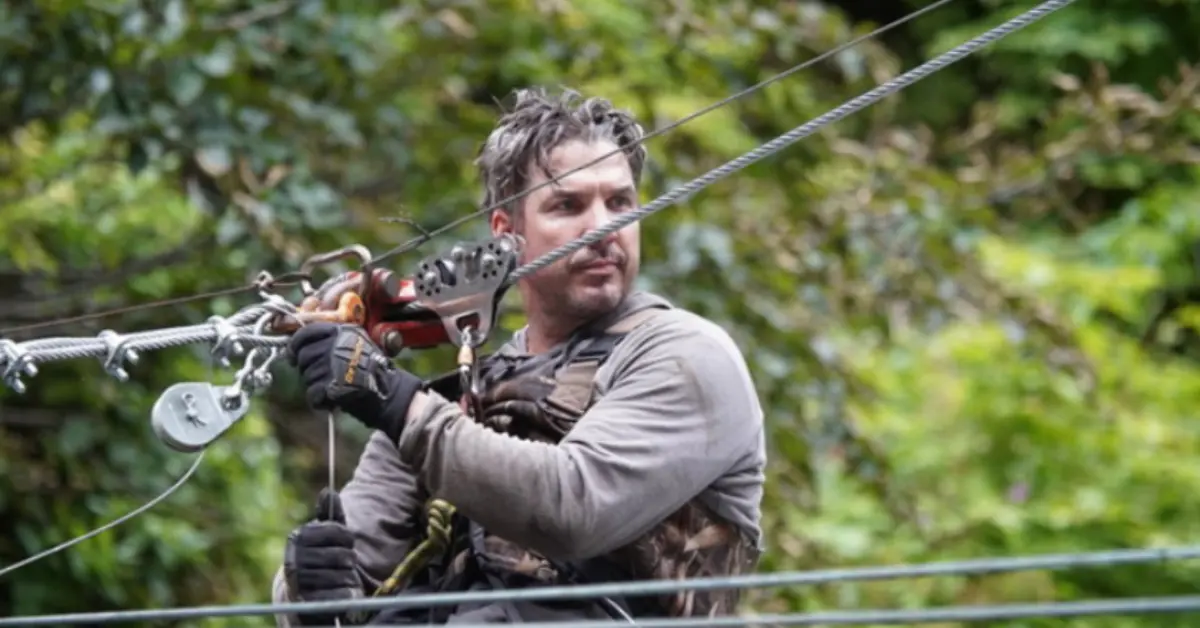
Dustin, more than anyone, stands at the center of these challenges. His high-risk, high-reward operation depends on aggressive exploration into Alaska’s most isolated gold channels. In Winter’s Fortune 2025, his mission becomes not only recovering his camp but determining whether future operations can withstand the new environmental reality.
Where Are the Rest of the Gold Rush Titans in 2025?
Tony Beets: Back to Reinvention Mode
Tony returns to the spotlight in 2025 with renewed urgency. After equipment setbacks and tightening profit margins in 2023–2024, he enters the new season with plans to expand deeper into unmined bench gravels. Analysts believe Tony’s strategy will revolve around boosting efficiency rather than scaling up — especially as fuel prices and labor shortages continue to rise across the Yukon.
Rick Ness: A Season of Redemption
Rick’s appearances in Winter’s Fortune have increased steadily since 2022, and in 2025 he positions himself as a central figure once again. His candid acknowledgment of the pressures facing independent miners — financial stress, limited crew capacity, and harsh off-season logistics — sets up a compelling comeback arc. His 2025 storyline appears to center on rebuilding both confidence and capability.
Dave Turin: The Stability Seeker
Dave’s operations have traditionally focused on reviving abandoned mines — a strategy that, in 2025, becomes increasingly practical. With land values rising and new claims harder to acquire, Dave’s lower-risk, methodical approach may prove to be one of the season’s most sustainable.
Fred Lewis: The Wildcard Continues
Fred’s unpredictable seasons have made him a polarizing figure, but the 2025 off-season gives him a chance to streamline his operation. Analysts expect that his survival-focused military background will play a larger role as conditions grow more volatile.
What About Parker Schnabel in 2025?
Despite his limited appearances in the Winter’s Fortune format, Parker remains a cornerstone of the franchise. There is no indication that he plans to step away from mining. His massive operations in the Yukon continue to deliver some of the highest yardage numbers in the series, and 2025 is expected to bring:
-
Expanded automation and AI-driven recovery systems
-
A push into deeper pay zones previously considered too expensive
-
Increased focus on international projects to offset Yukon permitting delays
Parker’s absence from the off-season cameras is less a retreat and more a strategic allocation of time. If anything, his return to the main series is expected to bring some of the most technically advanced mining sequences yet.
Predictions for Gold Rush Moving Into Late 2025
Based on current trends and the evolving Alaskan climate profile, the 2025–2026 seasons will likely be defined by four major shifts:
1. Environmental Volatility Will Reshape Claim Strategies
More crews will adopt mobile, lightweight setups that can be evacuated quickly.
2. Profit Margins Will Tighten
Fuel price fluctuations and stricter regulations will put pressure on mid-tier crews.
3. Technological Innovation Will Accelerate
Automation, water-management systems, and remote-monitoring tech will become essential tools rather than luxuries.
4. Storylines Will Grow More Personal
As miners face higher stakes, the human cost — family pressure, crew loyalty, financial risk — will emerge more prominently on screen.