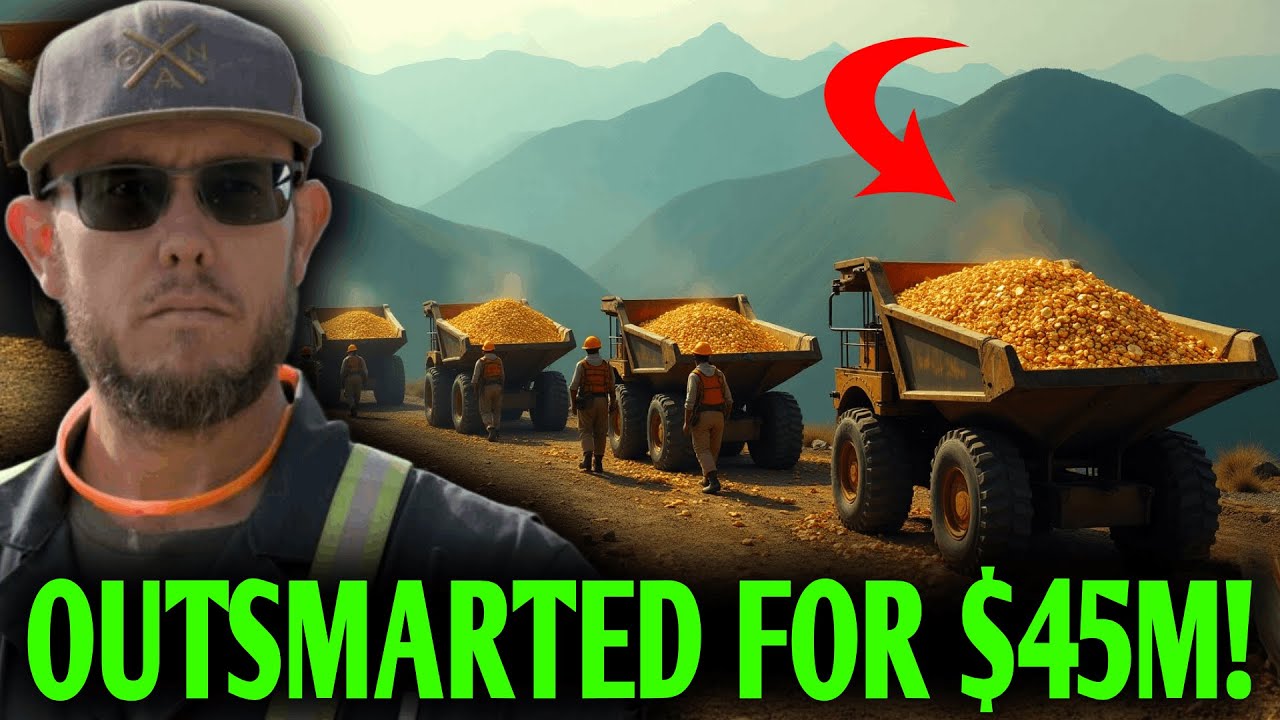
Kevin Beets outsmarted Tony Beets, snatching $45 million worth of gold right under his nose!
Gold mining in the Yukon has never been only about machinery and earthmoving. Behind every cut lies judgment, patience, and the quiet decisions that shape entire seasons. This year, one of the most dramatic developments in the Klondike unfolded not with roaring engines, but in silence—through planning, discretion, and a calculated departure from tradition.
At the centre of it stands Kevin Beats, long known as part of his father Tony Beats’ vast mining operation, yet rarely viewed as an independent force within it. For years, Tony’s authority defined the rhythm of work, fuel use, and ground selection. His experience and instinct built an empire. But it was a set of forgotten geological reports—documents most people would have discarded—that opened a new chapter.
The reports dated back decades and had once been reviewed, then dismissed, by Tony himself. Coffee-stained and buried in storage, they referenced subtle magnetic irregularities and unexplained soil disturbances beneath glacial rock. Where Tony saw unreliable theory, Kevin saw unanswered questions. Quietly, he began comparing those documents with modern LIDAR scans, overlaying old assumptions with new data.
The alignment was striking.
Beneath ground long believed exhausted, the scans suggested hidden bedrock traps—formations capable of capturing heavy gold beyond the reach of conventional equipment. Journals from early miners added context, describing gold that seemed to sink deeper than tools could follow. Kevin did not announce his findings. He framed the work as a minor experiment, careful not to invite scrutiny.
Behind that restraint, however, lay intent.
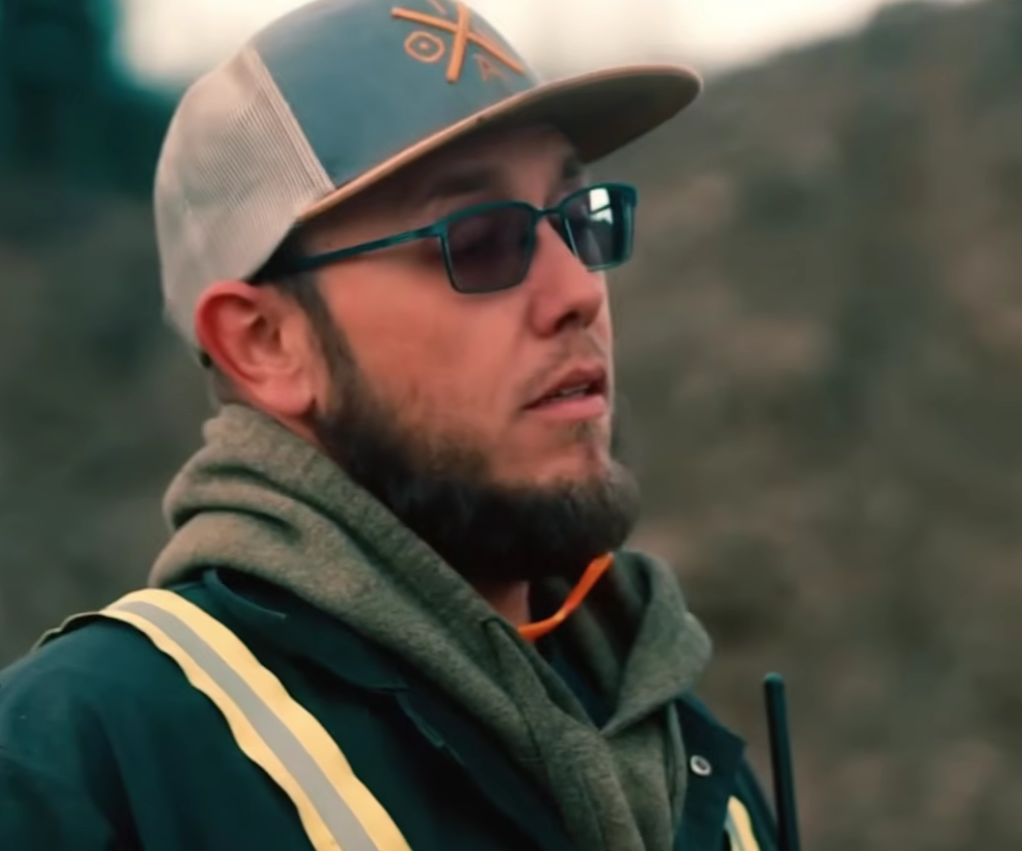
Kevin assembled a small, trusted team—workers willing to operate without attention, many eager to step beyond Tony’s demanding leadership. Their objective was clear: test the theory quietly, avoid notice, and gather proof before questions could be asked. By night, equipment was moved in short bursts, engines muffled, materials concealed beneath tarps. By day, temporary screens and stacked lumber made the area appear inactive.
Fuel posed the greatest challenge. Tony tracked diesel consumption closely, and irregularities rarely went unnoticed. Kevin rerouted deliveries with precision, logging usage under routine maintenance tied to Tony’s own machines. On paper, nothing appeared out of place.
As work progressed, tension rippled through camp. Rumours circulated. Some questioned Kevin’s judgment. Others whispered that he was pushing too far. Tony himself publicly dismissed the effort, joking that his son was chasing ideas rather than results. Yet beneath the humour was attention. Fuel records began to draw scrutiny. Inspections increased. Drones surveyed valleys at night. Tony appeared without warning, checking machines at unconventional hours.
Kevin anticipated the response. Decoy trucks were sent along false routes, drawing attention away from the real work. While Tony’s focus shifted, excavation continued elsewhere. What began as a mining effort evolved into a contest of awareness and misdirection.
Then the results arrived.
Under lantern light, the first run of pay dirt passed through modified sluice systems. The concentrate revealed thick, bright streaks of gold—far richer than anticipated. When the weigh-in was complete, the value approached $2 million. The team reacted instinctively, then fell silent. Kevin ordered discretion. The gold was sealed and stored out of sight, the work area restored to appear untouched.
The discovery changed everything.
Production continued carefully, the returns growing rapidly. Estimates climbed into the tens of millions as deeper layers revealed extraordinary consistency. Each movement carried risk. Tracks in Yukon mud tell stories. More than once, trucks narrowly avoided encounters that could have exposed the operation. Crews erased marks by hand, working quickly when patrols approached. At one point, a damaged hose sent water spraying toward a route Tony had chosen for inspection, forcing frantic repairs under pressure.
Tony’s suspicion hardened. He confronted Kevin directly, accusing him of mismanagement and waste. Kevin responded calmly, describing technical trials and redesign tests—statements vague enough to satisfy, yet grounded in enough truth to avoid escalation. Tony laughed publicly, but doubt lingered.
A loyal worker was sent to observe Kevin’s sector. Once again, decoys diverted attention. For the moment, the operation remained unseen.
The decisive moment came at dawn when excavation reached a layer unlike any before. Gold emerged not as scattered flakes, but in dense slabs and large nuggets. The volume was unprecedented. By the time work paused, estimates surpassed $45 million. The scale of the find was impossible to ignore.

When Tony finally reached the area, the richest ground had already been cleared. What remained were scars in the earth and silence. The gold was gone. For the first time in years, Tony stood facing evidence not of external competition, but of internal challenge. The frustration was visible. The authority he had built had been questioned by his own son.
Miles away, Kevin gathered his crew. The gold was counted and secured. The conversation that followed was not about wealth, but direction. Kevin spoke of leadership without intimidation, of judgment guided by observation rather than volume.
By morning, word spread quickly through the Klondike. The story was retold in camps and workshops: Kevin Beats had uncovered a fortune beneath ground his father had dismissed. For many, it signalled a shift—not the end of an empire, but a transformation.
The Yukon remained outwardly quiet. Beneath that calm, the balance of influence had changed. Kevin Beats had stepped out of a shadow, not through confrontation, but through preparation. And in doing so, he altered the narrative of one of the Klondike’s most watched operations.