Kevin Beets Steps Out on His Own at Scribner Creek, Chasing 1,000 Ounces and a New Legacy
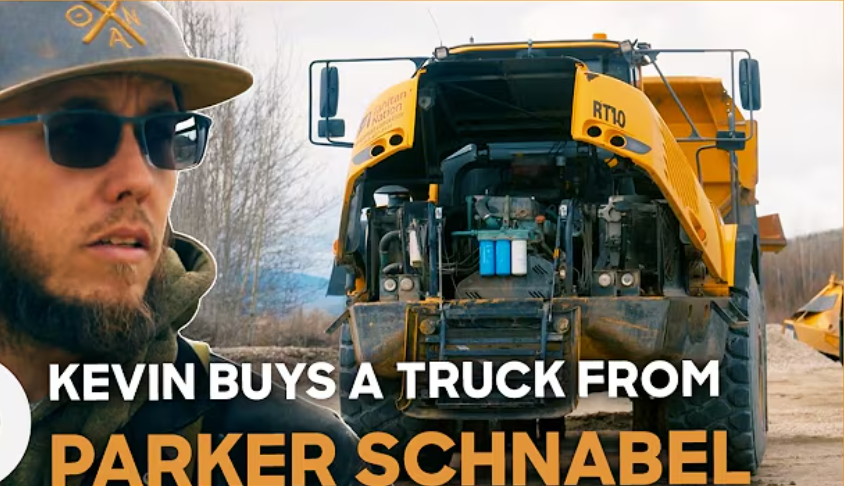
At Scribner Creek, just a few miles from the sprawling Beets family empire, a quieter but significant shift is unfolding in the Klondike. After more than two decades working under his father, Tony Beets, Kevin Beets is launching a mining operation of his own — determined to prove he can lead without the Viking’s shadow looming over every decision.
For viewers of Gold Rush, the move marks a generational turning point. For Kevin, it is both an opportunity and a risk.
A Fresh Start at Lynx Cut
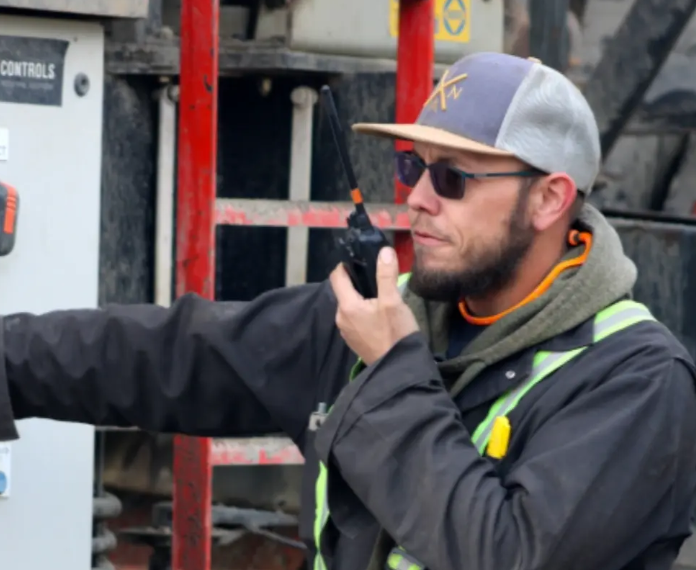
Kevin and his partner Faith began their season by gathering a small but focused crew for their first official meeting. Their target is clear: 1,000 ounces of gold.
It is an ambitious number for a compact team working new ground at the Lynx Cut. Brennan Raunlt oversees the cut itself, while rookie Hunter Cannon and Chase handle the rock trucks. Matt runs the excavator. The equipment — at least initially — is borrowed from Tony.
Kevin’s management style signals a shift from the intensity often associated with his father’s operations.
“You don’t have to like it,” Kevin told the team, “but I really don’t want you to dread it.”
The statement underscores his intent to create a workplace defined less by pressure and more by collaboration. But mining in the Yukon rarely accommodates idealism for long.
Trouble in the First Hours
The season’s first complication arrived quickly. While hauling dirt up a muddy incline, Hunter’s rock truck stalled. The wheels spun without traction, and the differential lock failed to engage.
The rookie’s frustration was evident. Calling Kevin was unavoidable.
After crawling beneath the machine, Kevin identified the issue: a damaged airline controlling the diff lock. The repair itself was straightforward, but the underlying problem was more systemic.
Years of hard use under Tony’s operation had taken their toll.
“When it finally gets to me and it grenades, it’s now my problem,” Kevin remarked, acknowledging that stepping into independence also means inheriting wear and tear.
For a new mine without surplus equipment, mechanical reliability is not optional. Each breakdown risks falling behind schedule — and in a short Yukon season, lost time rarely returns.
Shopping for Stability
By midday, Kevin recognised that borrowed equipment would not sustain a 1,000-ounce goal. If he wanted stability, he would need machinery he could rely on.
That search led him and Faith to inspect a lineup of A40 rock trucks — a familiar model across the Klondike. Among them, one unit stood out for its condition.
The seller was Parker Schnabel.
The negotiation reflected Parker’s reputation for directness. The asking price was $110,000. Kevin countered with $105,000, but Parker remained firm.
“I don’t haggle,” Parker stated. “Buy it or don’t buy it.”
Ultimately, Kevin agreed to the full price, securing deferred payment until later in the season. The terms were clear: once purchased, the truck — and any issues it might reveal — would be Kevin’s responsibility.
It was a calculated decision. Without reliable haulage, the Lynx Cut would stall. With it, Kevin gains autonomy.
Beyond the Shadow
For much of his career, Kevin operated within Tony’s larger structure. Decisions were often reviewed, adjusted or overridden. Now, accountability rests solely with him.
“I just don’t have anybody I gotta go double-check with,” Kevin noted earlier in the day.
The freedom is empowering, but the margin for error narrows. Unlike his father’s operation, Kevin’s mine lacks depth in manpower and spare equipment. Every repair consumes time and capital. Every miscalculation carries weight.
Yet there is also opportunity. A successful season would not only validate his leadership but establish a parallel branch of the Beets legacy.
A Competitive Landscape
The Klondike remains dominated by established names. Tony’s multi-plant operation at Indian River continues to produce at scale. Parker’s expansion into new ground has reinforced his position as a formidable competitor.
Kevin’s emergence introduces a third active front.
Though his 1,000-ounce target is modest compared to larger operations, it represents a significant benchmark for an independent start-up. Achieving it would demonstrate not just technical competence but strategic management — the ability to balance production with cost control.
The purchase of Parker’s truck symbolizes more than logistics. It reflects Kevin’s willingness to invest in his own infrastructure, even under financial strain.
A Season That Defines Direction
The coming weeks at Scribner Creek will determine whether Kevin’s gamble pays off. Stripping the remaining acreage of the Lynx Cut and reaching pay dirt before winter arrives will test both machinery and morale.
The early breakdown served as a reminder: independence magnifies consequences.
Still, momentum appears to be building. With the new truck on site and dirt moving once more, Kevin’s operation has stabilized — at least temporarily.
The Klondike has long been a proving ground for ambition. For Kevin Beets, this season is more than a pursuit of ounces. It is an assertion of identity.
If he succeeds, he will not merely be Tony Beets’ son. He will be a mine boss in his own right.
And at Scribner Creek, the future of a mining dynasty is beginning to take shape — one truckload at a time.