Parker Schnabel is investing $1 million in the new “Golden Mile” mine. Will this be a successful or a failure?
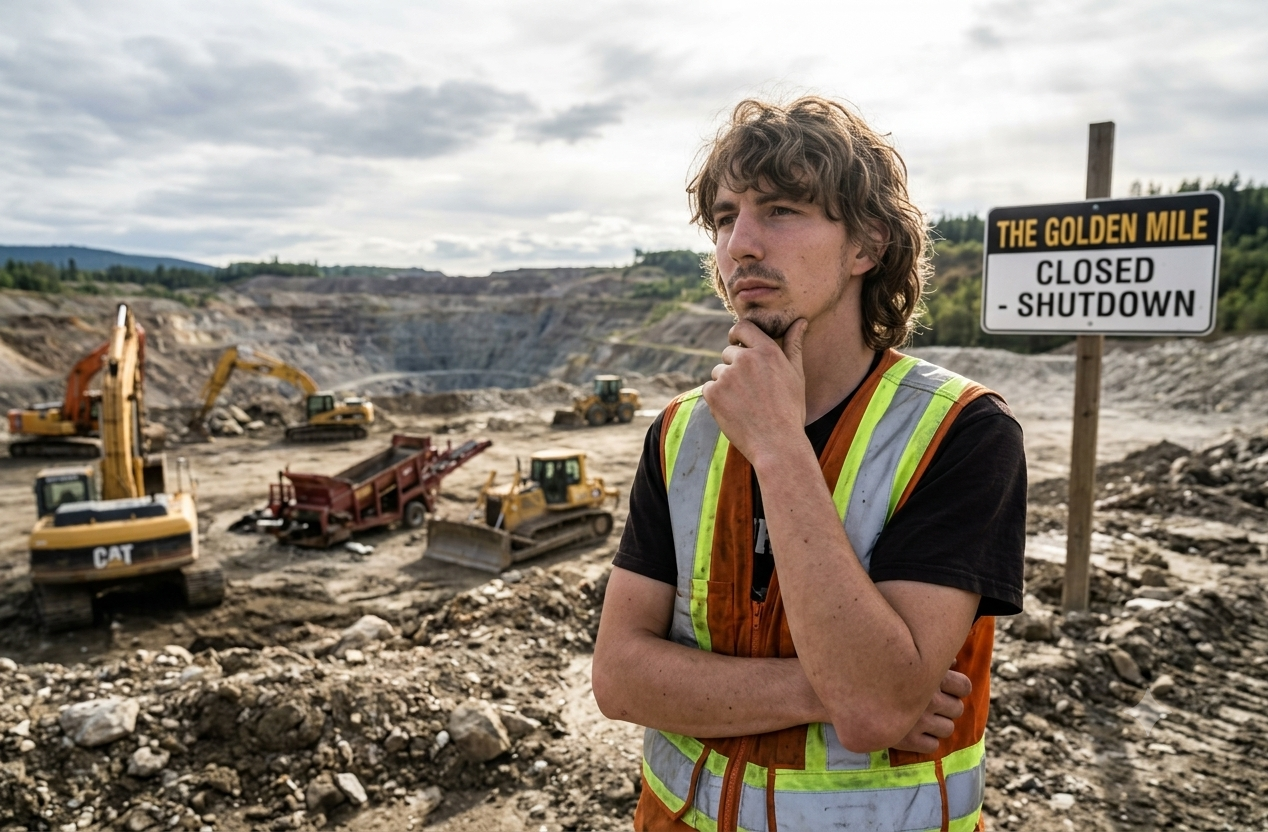
From the perspective of a Gold Rush analyst, Parker Schnabel’s reported decision to invest $1 million into the so-called “Golden Mile” mine represents more than just a seasonal expansion—it is a calculated bet on scale, efficiency, and geological continuity. Known for his aggressive reinvestment strategy and razor-thin tolerance for underperforming ground, Parker rarely commits capital without a clear expectation of return. This makes the Golden Mile project one of the most important strategic moves of his recent mining cycle.
At its core, the question is simple: is this a disciplined expansion of proven ground, or an overextension into uncertain pay zones that could strain even Parker’s tightly optimized operation?
Understanding the “Golden Mile” Strategy
In modern placer mining terms, a “Golden Mile” concept typically refers to a concentrated strip of high-potential ground where historical sampling, stripping results, or nearby production suggest continuity of gold-bearing gravels. For Parker Schnabel, whose success has been built on moving large volumes of pay dirt efficiently, such a target aligns with his core philosophy: scale is only valuable when matched with grade consistency.
The $1 million investment likely covers initial stripping, access road development, and early wash plant integration. This is not production capital yet—it is pre-production risk capital. And in Gold Rush economics, that distinction is critical.
If the Golden Mile proves uniform in gold distribution, Parker could unlock a multi-season asset. If it is patchy or geologically inconsistent, the investment becomes sunk cost tied to reclamation and operational delay.


Parker Schnabel’s Historical Risk Profile
Parker’s track record provides useful context for forecasting outcomes. Unlike some operators who diversify slowly, Parker tends to push aggressively into new ground when he identifies even partial signals of profitability. This approach has produced both major successes and costly inefficiencies in past seasons.
Key traits of his operational model include:
- High-volume dirt movement as a primary profit driver
- Rapid scaling of crews and equipment when ground proves viable
- Immediate abandonment of underperforming cut zones
- Relentless reinvestment of early-season profits into expansion
This means the Golden Mile investment is unlikely to remain static. If early results are positive, Parker will likely scale beyond the initial $1 million footprint within the same season.
However, this also introduces operational fragility: rapid scaling can expose weaknesses in ground assessment and water management planning.
Operational Variables That Will Decide the Outcome
From an analytical standpoint, the success or failure of the Golden Mile project will depend on four primary variables:
1. Pay Gravel Continuity
If gold distribution is consistent across the mile, Parker’s high-volume strategy becomes extremely profitable. If it is concentrated in isolated pockets, efficiency drops sharply.
2. Overburden Depth and Strip Ratio
Excessive overburden could delay access to pay dirt, increasing fuel burn and machine hours before ounces are recovered.
3. Water Management Efficiency
Given Parker’s reliance on wash plant throughput, any bottleneck in water supply or settling capacity will directly impact recovery rates.
4. Equipment Deployment Timing
Early misallocation of excavators and loaders can create cascading delays across the entire operation.
Each of these factors has historically determined whether Parker’s expansions become record-breaking successes or costly recalibrations.
What a Successful Outcome Looks Like
If the Golden Mile performs as intended, analysts would expect the following sequence:
- Early-season discovery of consistent pay layers
- Rapid scaling of stripping and processing capacity
- Expansion of wash plant throughput beyond initial projections
- Multi-season reserve designation for the entire strip
- Reinforcement of Parker’s reputation as the most efficient large-scale placer miner in the series
In this scenario, the $1 million investment would be viewed as entry capital into a much larger asset base potentially worth many multiples of that figure over time.
What Failure Would Actually Mean
A “failure” in Gold Rush terms does not necessarily mean total loss of gold—it often means inefficient recovery relative to operational cost. For the Golden Mile, failure scenarios include:
- Highly variable gold distribution requiring constant relocation
- Excessive stripping costs without proportional yield
- Water or processing constraints limiting throughput
- Shortened productive season due to delays in ground preparation
In such a case, Parker would likely pivot quickly, reallocating equipment to adjacent claims or previously proven cut zones. His operational philosophy rarely allows prolonged losses in a single location.

Analyst Forecast: Most Likely Scenario
Based on Parker Schnabel’s historical decision-making patterns and the nature of large-scale placer development, the most probable outcome is neither full failure nor explosive success—but a phased success model.
This would involve:
- Moderate early returns while infrastructure is optimized
- Gradual identification of richer pay streaks within the mile
- Partial expansion into adjacent ground
- End-of-season confirmation of long-term viability rather than immediate jackpot production
In other words, the Golden Mile is more likely to become a strategic multi-year asset than a single-season breakthrough.
Final Assessment
Parker Schnabel’s $1 million investment in the Golden Mile reflects a familiar but increasingly sophisticated pattern: controlled risk-taking backed by operational discipline. The key question is not whether gold exists in the ground—it almost certainly does—but whether it exists in a configuration that matches Parker’s high-throughput mining model.
If the geology aligns with his system, the Golden Mile could become one of his most important long-term assets. If not, it will serve as another calculated experiment in his ongoing refinement of large-scale gold recovery strategy.
Either way, the outcome will reinforce a central truth of Gold Rush economics: in modern placer mining, success is not only about finding gold—but about finding it fast enough, and in enough volume, to outpace the cost of digging.