Parker Schnabel Uncovers $500 Million Gold-Bearing System in Yukon, Redefining Klondike Mining
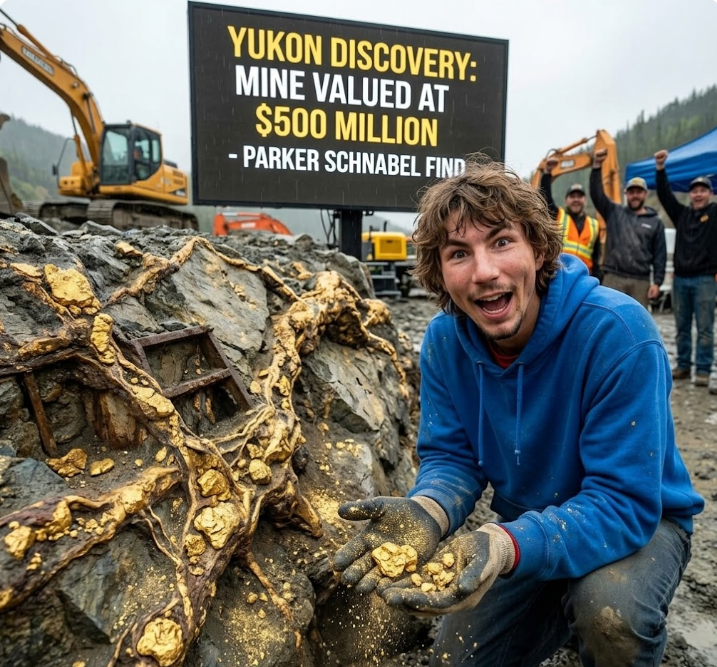
In a groundbreaking development that has sent shockwaves through the Yukon mining community, Parker Schnabel has reportedly unearthed a massive gold-bearing system that geological experts believe could be worth upwards of $500 million. This monumental discovery, detailed in recent reports from the Klondike, comes after a high-risk “deep cut” operation that pushed both mining equipment and financial reserves to their absolute limits. The find has the potential to change the landscape of gold mining in the Klondike forever, making it one of the most significant discoveries in recent history.
A Bold and Risky Venture
The operation that led to this astonishing discovery was nothing short of ambitious. Schnabel’s theory centered around the belief that an ancient river channel, buried under millions of years of soil and rock, was located nearly 110 feet below the surface of his current mining claim. While most miners in the Klondike focus on shallow placer deposits, Schnabel took a different route, investing more than $20 million to explore depths that had rarely been targeted in modern family-run mining operations.
This deep exploration strategy, though risky, was grounded in a geological theory that an ancient river system could have deposited large quantities of gold deep underground. While the majority of the Klondike’s miners stay close to the surface, Schnabel’s deep cut targeted the untouched layers below, where the promise of a large, untapped deposit lingered. The gamble required not only an immense financial investment but also the courage to dig deeper than anyone had before.
A Herculean Effort: Excavating the Deep Cut
Reaching this potential gold deposit came with significant challenges. To access the ancient river channel, Schnabel’s crew of 60 workers labored around the clock, removing approximately 70,000 cubic yards of overburden. This massive effort was equivalent to 3,000 heavy dump truck loads of soil and rock that had to be excavated to expose the gold-bearing layer below. However, this monumental task came with its own set of dangers.
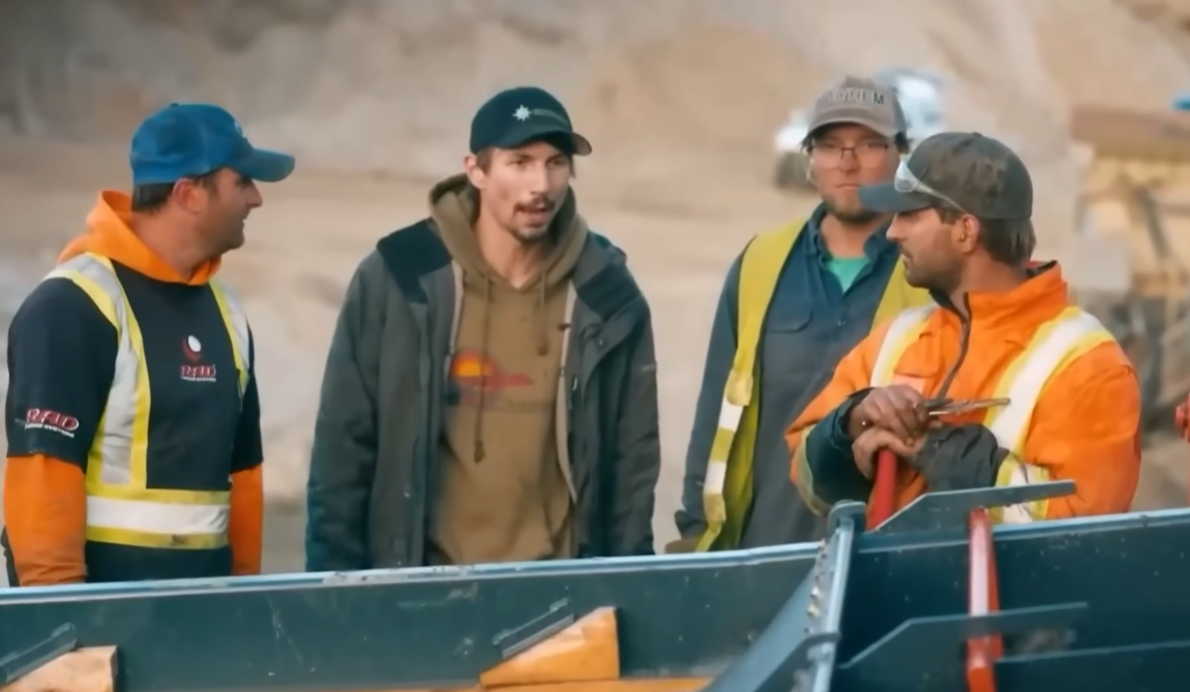
As the crew dug deeper, the operation encountered numerous complications, including unstable gravel walls and dangerous groundwater seepage. At one point, a near-catastrophic sidewall collapse threatened to bury an 80-ton excavator, forcing a temporary halt to stabilize the area. This incident was a stark reminder of the perilous nature of deep-earth mining, where even small miscalculations can result in disastrous consequences. The financial pressure mounted as well, with the operation’s “burn rate” running between $45,000 and $60,000 per day in fuel, labor, and maintenance costs. For weeks, Schnabel’s team was on the edge of disaster, fighting both the elements and the looming threat of financial ruin.
The Breakthrough: Heavy Gravel Yields Gold
The breakthrough moment finally came when excavators breached a layer of heavy, black gravel—an indicator of rich pay dirt in gold mining. Initial core samples from the area had already stunned geologists, revealing gold densities of between 0.7 and 1.0 ounce per cubic yard, a significant finding in a region where gold densities of just 0.1 ounce are considered profitable. This discovery, labeled as a “super-deposit,” suggested that Schnabel had struck a once-in-a-generation gold system that would change the dynamics of the Yukon mining landscape.
The first major cleanup from the deep cut yielded an impressive 300 ounces of gold, valued at approximately $600,000. This early success was just the beginning. As the team moved deeper into the ancient river channel, daily recoveries surged to between 350 and 500 ounces of gold, with the operation now generating nearly $1 million in gold every 24 hours. At these rates, the mine has quickly become one of the most lucrative in the Klondike.
A $500 Million Estimate
The implications of Schnabel’s discovery are staggering. Geological models now suggest that the ancient river system is not a localized “pocket” of gold, but a continuous system extending across the entire claim. Analysts estimate that the deposit could contain between 220,000 and 240,000 ounces of recoverable gold—an amount worth upwards of $500 million at current market prices. If the deposit proves as vast as expected, Schnabel’s discovery could go down in history as the largest and most profitable gold system ever found in the Klondike.
“This is the biggest find we’ve ever seen in the Klondike. If the data is correct, this could rewrite the history of gold mining in the region,” Schnabel said, addressing his crew after the discovery. The consistency of the “deep black” gravel layer has convinced many veterans of the Klondike mining industry that Schnabel’s team has struck a major vein of gold. The theory of a large, untapped gold system buried deep beneath the surface has proven to be accurate, and the team’s persistence in targeting this ancient river system has paid off in ways few had anticipated.

Changing the Klondike Forever
Schnabel’s discovery has the potential to change the future of gold mining in the Klondike. For years, miners have primarily focused on shallow placer deposits, which, while profitable, have become increasingly scarce. This new find, however, demonstrates that the deep earth still holds vast, untapped resources for those with the capital and ambition to pursue them. As Parker Schnabel himself has proven time and time again, success in the Klondike requires more than just skill—it requires the willingness to take risks and challenge conventional mining practices.
The discovery could also have significant economic implications for the region. If the gold system proves to be as extensive as Schnabel’s team believes, it could lead to a surge in exploration and mining activity in the area. Other miners, inspired by Schnabel’s success, may look to replicate his deep-cut approach, leading to a new era of mining in the Klondike.
Conclusion: A Game-Changer for Gold Rush
Parker Schnabel’s discovery of a $500 million gold-bearing system marks a new chapter in the Gold Rush saga. This unprecedented find not only solidifies Schnabel’s status as one of the most successful and innovative miners in the Klondike but also highlights the unyielding potential of deep-earth mining. As the team continues to extract gold from the system, the true scale of the discovery will become clearer, but one thing is certain—Gold Rush fans are in for a season full of thrilling developments, high rewards, and even higher risks. With over $20 million already invested, and the promise of millions more to be extracted, Parker Schnabel’s legacy in the world of gold mining has just been cemented as one of the most groundbreaking figures in the Klondike’s storied history.