Parker Schnabel’s Crew Unearths Ancient Hoard of Gold Coins in the Klondike
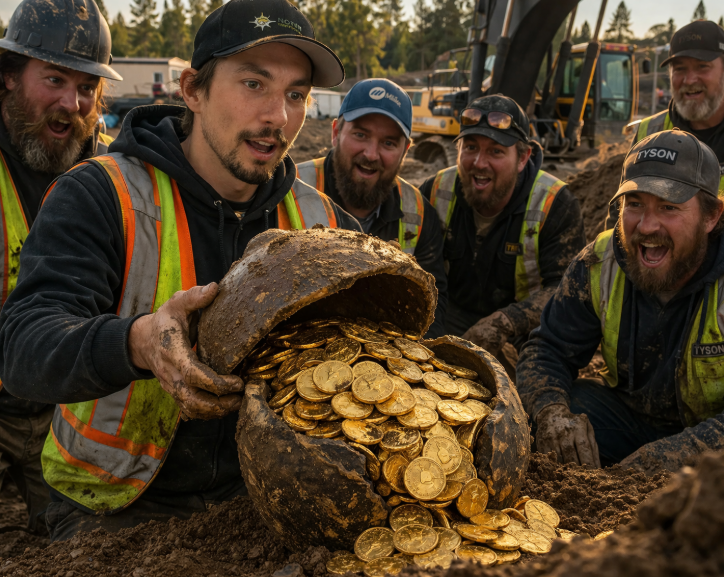
In the century-long history of the Klondike, miners have frozen, bled, and toiled for the elusive “glittering dust.” But this week, Parker Schnabel and his crew moved beyond the realm of traditional placer mining and into the pages of a treasure hunter’s manual. While excavating a deep, untouched layer of ancient creek bed at his Dominion Creek claim, the team made a discovery that silenced the roar of the wash plants: a weathered, antique ceramic jar overflowing with gold coins.
The find has sent shockwaves through the mining community, as it marks a departure from the typical “raw gold” extraction that defines the Yukon. This wasn’t gold formed by nature over millions of years; this was a hidden legacy of the original 1898 Gold Rush.
The Moment of Discovery: “Something That Shouldn’t Be There”
The discovery occurred during a night shift while the crew was stripping a section of “pay” near a collapsed timber structure—likely the remains of a long-forgotten prospector’s cabin from the late 19th century.
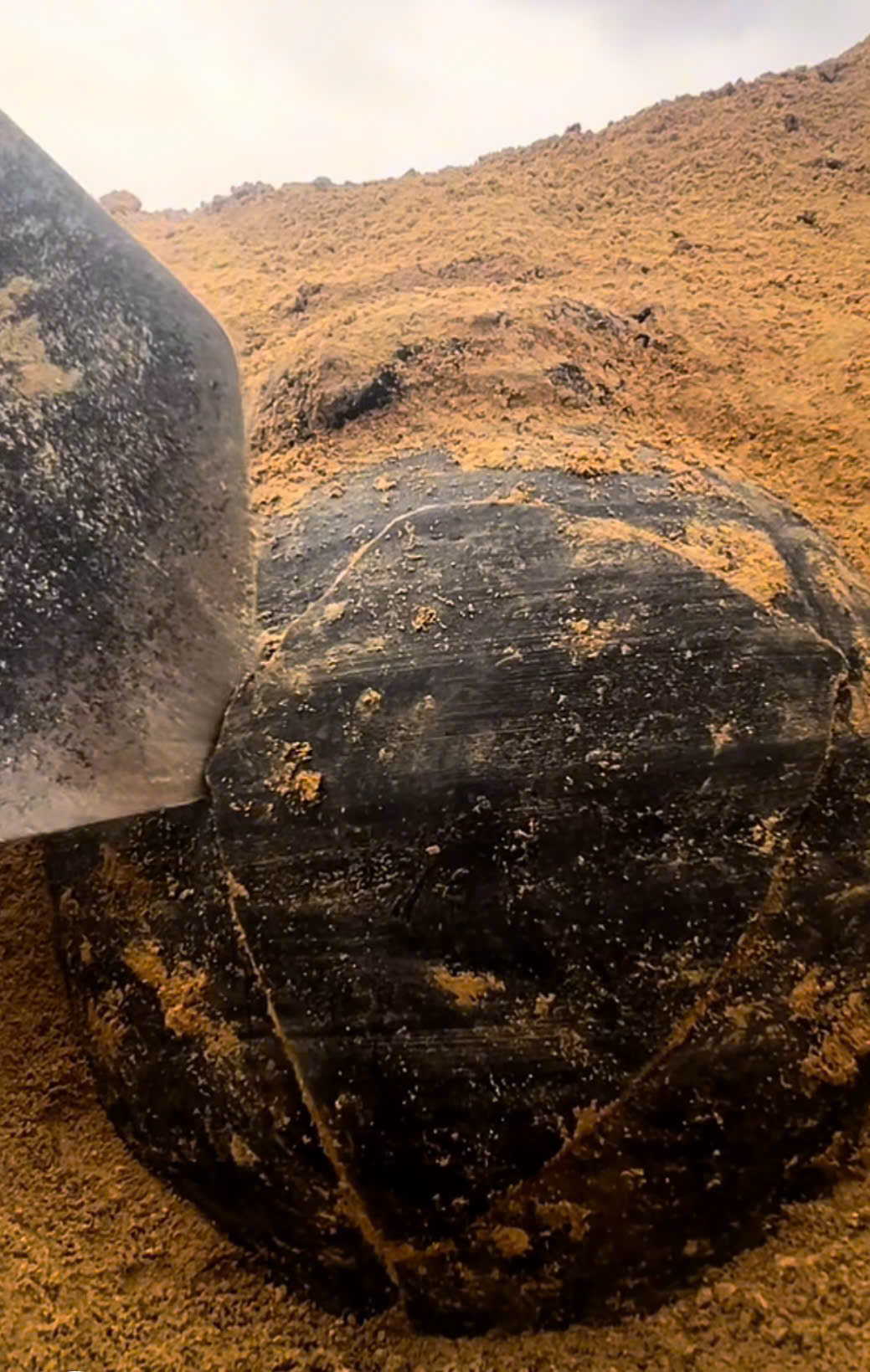
Mitch Blaschke, Parker’s lead mechanic and site foreman, was operating a 700-ton excavator when the bucket hit something that didn’t sound like bedrock or frozen muck. “It was a distinct ‘clink’—the sound of ceramic breaking,” Mitch recalled. “I climbed out to check the bucket teeth, thinking I’d hit a buried pipe. Instead, I saw a flash of bright, minted yellow in the dirt.”
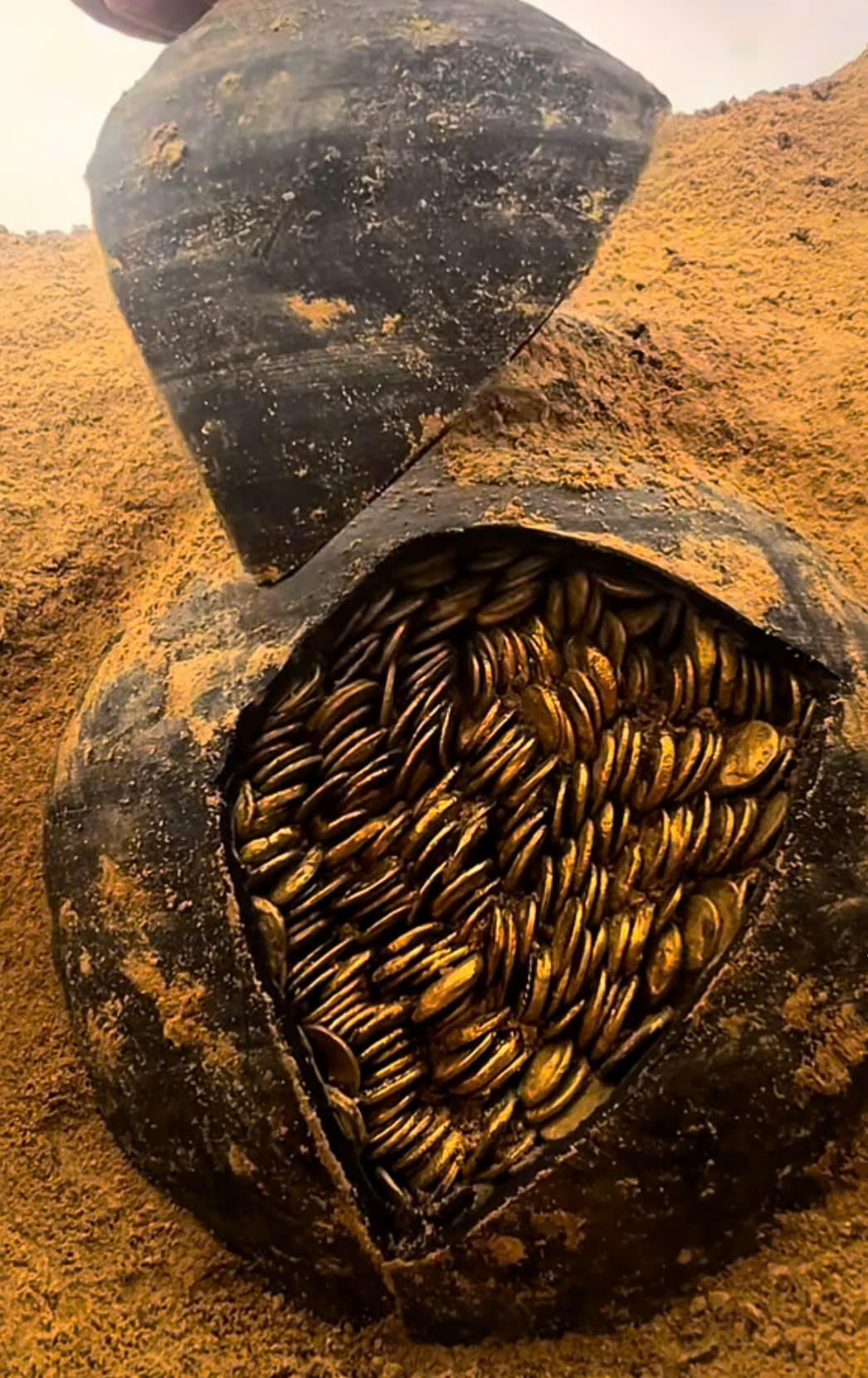
Upon closer inspection, the crew found the shattered remains of a heavy stoneware jar. Spilling out from the debris were hundreds of gold coins, perfectly preserved by the Yukon permafrost.
A Time Capsule of Wealth
Preliminary looks at the hoard suggest the coins are a mix of American Liberty Head Double Eagles and Canadian Gold Sovereigns, mostly dating between 1880 and 1901. Unlike the “raw gold” Parker usually finds—which must be smelted and refined—these coins represent a historical “cache” hidden away by a miner over 120 years ago.
Experts speculate the jar was likely a “bank” for a successful pioneer who perhaps didn’t trust the local assay offices or was forced to flee the harsh winter, leaving his fortune buried beneath the floorboards of a cabin that was eventually reclaimed by the earth.
“We’ve seen a lot of strange things in the dirt—mammoth tusks, old pickaxes, rusted cans,” Parker Schnabel remarked while examining one of the coins. “But finding a jar of minted gold? That’s a once-in-a-lifetime moment. It’s a direct link to the guys who were standing right where we are a hundred years ago, risking it all just like we do.”
The Value: More Than Just Ounces
While the raw gold content of the coins is worth hundreds of thousands of dollars at today’s spot price, their numismatic and historical value could be significantly higher. Each coin tells a story of the global economy during the original Gold Rush era.
However, the find also brings unique challenges. Unlike raw gold, which is subject to standard mining royalties, a historical “treasure find” involves complex legalities regarding heritage laws and mineral rights. Parker has reportedly contacted Yukon authorities and historians to ensure the find is documented and handled according to local regulations.
A Boost for Team Morale
For a crew that spends 12 to 14 hours a day staring at muddy water and grey gravel, the sight of “man-made” gold was an incredible morale booster. It transformed a grueling industrial operation into a legendary adventure.
“It changes the energy on site,” one crew member noted. “Every time the bucket goes into the ground now, you’re not just looking for colors in the pan—you’re looking for history.”
The Search Continues
While the “coin jar” is a stunning anomaly, Parker hasn’t lost sight of the bigger picture. The discovery was made in a section of ground that is already proving to be incredibly rich in natural gold. The presence of the hoard suggests that the original prospectors were finding enough gold in this specific “cut” to accumulate a massive private fortune.
As the season enters its final stretch, Team Parker is digging deeper than ever. Whether they find more coins or just record-breaking amounts of dust, one thing is certain: the 2026 season will be remembered as the year the Klondike gave up more than just its secrets—it gave back its history.