PARKER SCHNABEL’S HIGH-PRESSURE MINING SEASON: Disagreements and equipment malfunctions bring gold mining operations to a standstill.
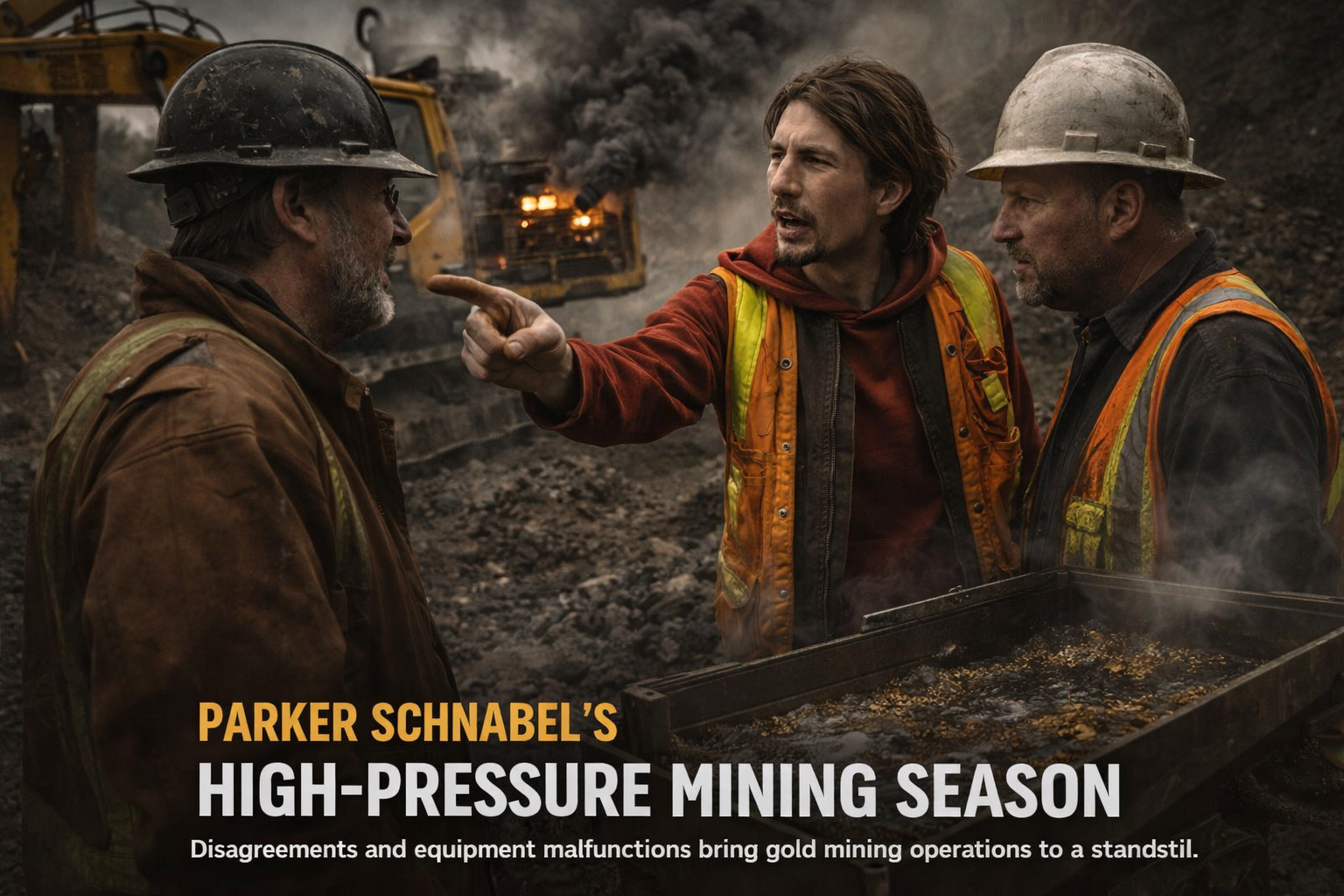
The latest developments from Parker Schnabel’s mining operation reveal a season defined not just by gold recovery, but by escalating operational pressure, workforce fatigue, and mechanical instability. While production numbers continue to demonstrate strong output potential, behind the scenes the system is showing signs of strain across labor, equipment reliability, and crew morale.
Based on field dialogue and operational footage, this season captures a mining environment where financial ambition collides directly with physical limitations and human endurance.
A SEASON DRIVEN BY EXPANSION AND STRESS
At the core of Parker Schnabel’s strategy is aggressive expansion—more ground, more machines, and higher throughput targets than previous seasons. However, this scaling process introduces a critical side effect: operational tension between cost control and production speed.
Crew discussions reveal ongoing disputes over working hours, overtime compensation, and fatigue management. Deckhand labor shifts, often extending beyond standard cycles, have become a point of friction between workforce expectations and management cost reduction strategies. These internal pressures highlight a recurring challenge in large-scale placer mining: productivity is directly tied to human endurance.
From an analytical standpoint, this creates a fragile equilibrium. While longer operational hours increase output potential, they simultaneously accelerate burnout and reduce long-term efficiency.

CREW MANAGEMENT AND INTERNAL FRAGMENTATION
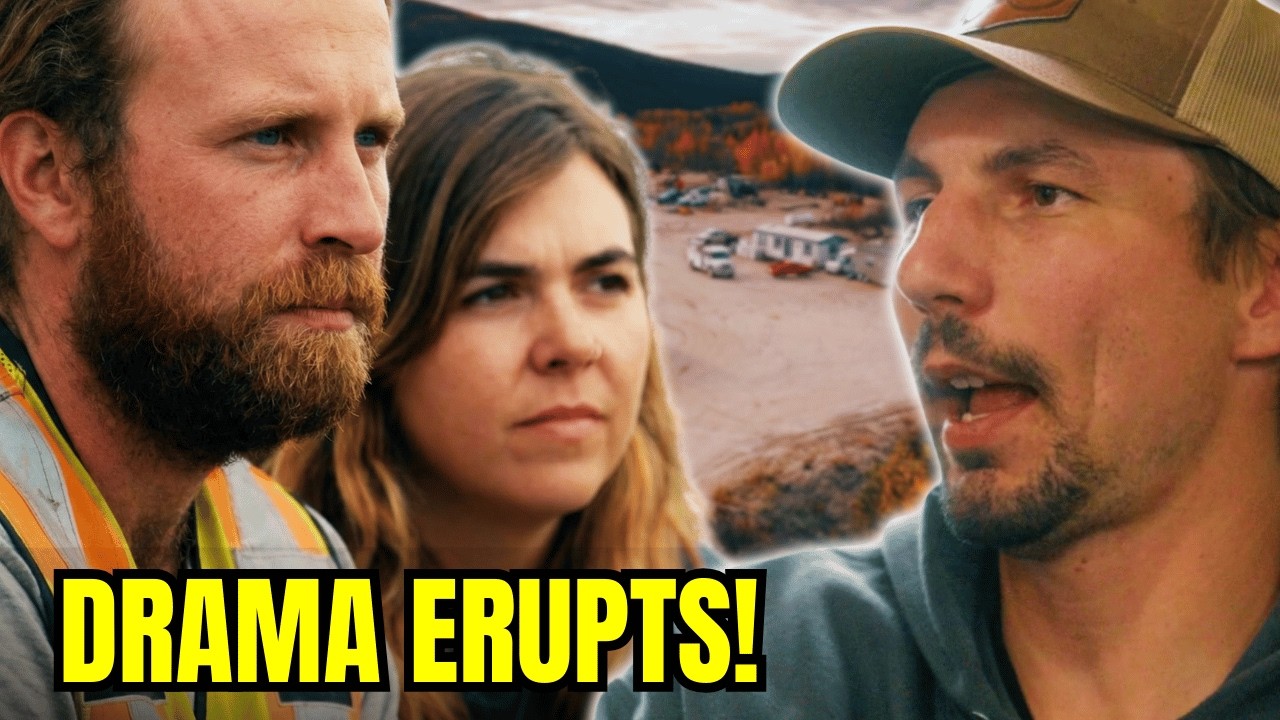
One of the most significant undercurrents this season is the visible strain within crew dynamics. Conversations between operators indicate dissatisfaction with workload distribution and decision-making authority, particularly regarding labor cuts and hour reductions implemented to manage operational costs.
A notable aspect of this season is the increasing disconnect between frontline workers and upper-level decision-making. Hour reductions and payroll adjustments, while financially necessary from a management perspective, are perceived by crew members as diminishing earned value and recognition.
This tension has already resulted in personnel turnover in some segments of the operation, demonstrating how financial optimization strategies can unintentionally destabilize workforce cohesion. In mining environments where trust and coordination are essential, even small disruptions in morale can produce outsized operational consequences.

EQUIPMENT FAILURE AS A CRITICAL RISK FACTOR
Beyond human factors, mechanical reliability has emerged as a central vulnerability in Parker Schnabel’s current mining phase. Heavy equipment, particularly dozers and processing units operating in extreme conditions, are experiencing increased failure rates under sustained use.
A major incident involving transmission failure underscores the fragility of relying on aging or overworked machinery in frozen ground conditions. Once critical systems fail, entire sections of the operation can be rendered inactive, forcing production shutdowns and halting gold recovery cycles.
From an operational risk perspective, this highlights a key dependency: the entire mining output is only as stable as its weakest mechanical component. In environments where repair turnaround times are long and replacement equipment is limited, a single failure can cascade into multi-day production losses.
THE RICK LAGINA PARALLEL: OPERATIONAL DISRUPTION AND TEAM STABILITY
Parallel to Parker’s operational stress points, segments of the broader mining ecosystem also show instability in crew alignment and leadership cohesion. Internal disagreements, shifting team dynamics, and equipment breakdowns contribute to a broader theme of unpredictability across multiple mining fronts.
These disruptions illustrate a consistent reality in large-scale placer mining operations: success is not solely determined by gold availability, but by the system’s ability to maintain synchronized performance under pressure.
ECONOMIC PRESSURE AND THE DRIVE FOR OWNERSHIP
A key long-term motivator in Parker Schnabel’s operational decisions is the strategic goal of securing independent mining ground. This ambition requires sustained gold output at a level sufficient to fund future claim ownership and reduce dependency on external land agreements.
However, this goal intensifies short-term operational pressure. The need to extract additional ounces before season end forces extended work cycles and higher risk tolerance in both machinery usage and crew workload.
The result is a high-efficiency but high-fragility system: capable of producing significant returns, but vulnerable to disruption from both human and mechanical variables.
ANALYTICAL OUTLOOK: THREE POSSIBLE TRAJECTORIES
From a production analysis standpoint, the remainder of the season appears to be heading toward one of three likely outcomes:
- Stabilized Output Scenario
Equipment is repaired, crew morale stabilizes, and production continues at high but controlled efficiency levels. - Fragmentation Scenario
Continued labor dissatisfaction leads to reduced workforce stability, impacting long-term output consistency. - Mechanical Bottleneck Scenario
Further equipment failures reduce operational capacity, forcing partial shutdowns and limiting seasonal recovery potential.
The most probable outcome will depend on how quickly mechanical issues are resolved and whether workforce fatigue can be mitigated before reaching critical levels.
CONCLUSION: A SEASON DEFINED BY BALANCE, NOT JUST PRODUCTION
While Gold Rush seasons are often evaluated by final ounce totals, this season reveals a deeper narrative: the sustainability of high-output mining systems under compounding internal stress.
Parker Schnabel’s operation remains highly productive, but it is increasingly clear that production alone does not define success. The ability to maintain workforce stability, manage mechanical reliability, and sustain operational cohesion will ultimately determine the true outcome of the season.
In essence, this is no longer just a gold mining story. It is a systems story—where human endurance, mechanical integrity, and financial ambition must all align for success to continue.