Parker Schnabel’s Potential $25,000,000 Gold Season Is In JEOPARDY!

Two weeks into the new mining season, Parker Schnabel finds himself in unfamiliar territory. Operating nearly 100 miles from the Kino Mountains, the 29-year-old miner has committed more capital, equipment, and manpower than ever before—yet the early returns have been worryingly thin. His ambitious objective this year is clear: reach 10,000 ounces of gold, valued at roughly $25 million. But the opening chapter of the season suggests that reaching that figure will be far from straightforward.
At this stage, Parker has recovered just over 30 ounces from his first major clean-up, with no wash plants running at full, sustained capacity. The centrepiece of his plan is a massive 20-acre excavation known as the “long cut.” Rather than easing into the season with smaller, proven ground, Parker chose to open this cut immediately, believing it held the pay layer that could support his entire operation. The problem is simple and unsettling: the ground is proving unpredictable.
From the outset, the long cut has been consuming cash at an alarming rate. Fuel, labour, stripping, and thawing costs are mounting daily, while frozen ground continues to slow progress. Keeping even a single wash plant operational has become a struggle, forcing the crew into a constant battle to maintain momentum. As Parker himself admits, while the team knows how to mine, they do not yet fully understand this property—or where profitability truly begins.
The wash plant Roxanne was meant to be the first step toward clarity. Once operational, it began sluicing pay dirt from the long cut, finally giving Parker a chance to assess whether his early-season commitment would justify the expense. Instead, the operation was hit by a cascade of mechanical problems. Thick, muddy water caused the suction basket to implode, pulling debris into the system. Moments later, a loader accidentally struck the radial stacker feeding the plant, destroying a tire and threatening to shut operations down completely.
With no spare parts on site, the crew had no choice but to improvise. Mitch and Tyson led a rapid series of repairs—welding damaged components, clearing spray bars clogged with debris, and blocking the damaged stacker with timber to keep it level. The fixes were far from ideal, but time was the enemy. Nearly three hours of downtime had already pushed the team further behind, and every lost hour reduced the odds of reaching Parker’s weekly production targets.
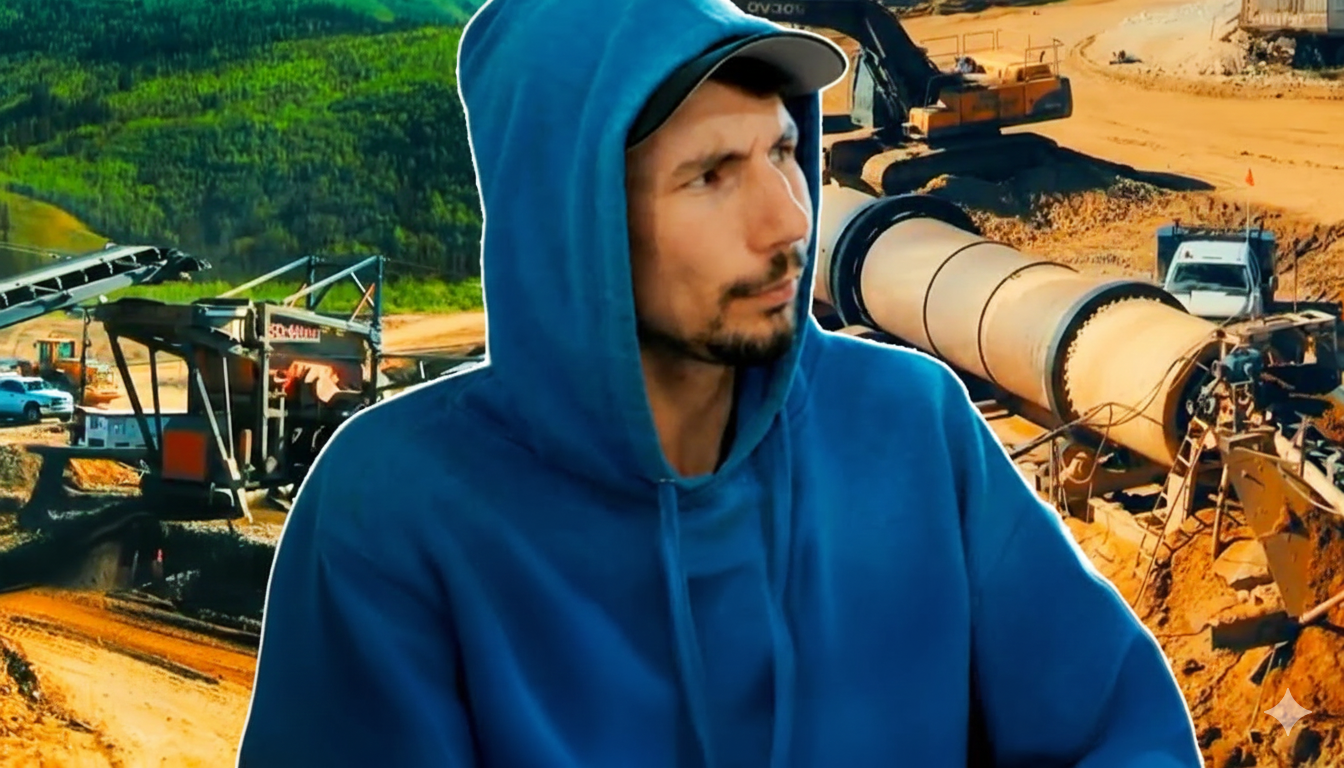
When Roxanne finally returned to green light status, relief was palpable. Water flowed correctly, material began moving through the plant, and the long cut once again offered a chance at answers. For Parker, this moment carried enormous weight. With such a large financial commitment already sunk into the ground, the first clean-up was not just about gold—it was about validation.
The result, however, was sobering. The clean-up produced just over 30 ounces of gold, worth approximately $77,000. In isolation, that figure might seem respectable. In context, it was deeply concerning. To remain on track for 10,000 ounces, Parker needs to average more than 475 ounces every week. Thirty ounces barely registers against that requirement.
The disappointment was visible. Parker acknowledged that calibration issues and unfamiliar ground could be affecting recovery rates, but the underlying concern remained: was this low return a temporary adjustment period, or an early warning sign? The long cut has already consumed significant resources, and if gold values do not increase substantially, the strategy underpinning the entire season could unravel.
What makes this situation especially tense is the nature of the equipment Parker is relying on. Roxanne is a powerful, high-capacity wash plant—capable of processing enormous volumes of material when conditions are right. But that capacity cuts both ways. High throughput demands consistent feed, stable water conditions, and predictable pay. Without those elements, the plant becomes a costly liability rather than an advantage.
From an analytical perspective, Parker’s season now hinges on three critical variables. First, the team must quickly identify where the richer pay streaks lie within the long cut. Continued processing of marginal ground will only drain resources. Second, mechanical reliability must improve. Repeated breakdowns not only cost time, but also undermine crew morale during an already stressful phase. Third, Parker may need to reassess pacing—balancing the pressure to produce with the reality of learning a new property.

There is still room for recovery. Early seasons have often begun unevenly, only to turn around once crews dial in their process and hit better ground. Parker himself remains cautiously optimistic, expressing hope that once the right material is reached, results will improve dramatically. Yet optimism alone will not close the gap.
As the season unfolds on Gold Rush, the long cut stands as both opportunity and warning. It represents Parker Schnabel’s belief in scale and ambition—but it also exposes the risks of committing everything before the ground has proven itself. The next few weeks will reveal whether this bold opening move becomes the foundation of a record-breaking season, or a costly lesson in how unforgiving new ground can be when expectations run ahead of evidence.