Rick Ness discovered ABANDONED Trommel FULL Of Gold Worth $500 Million!
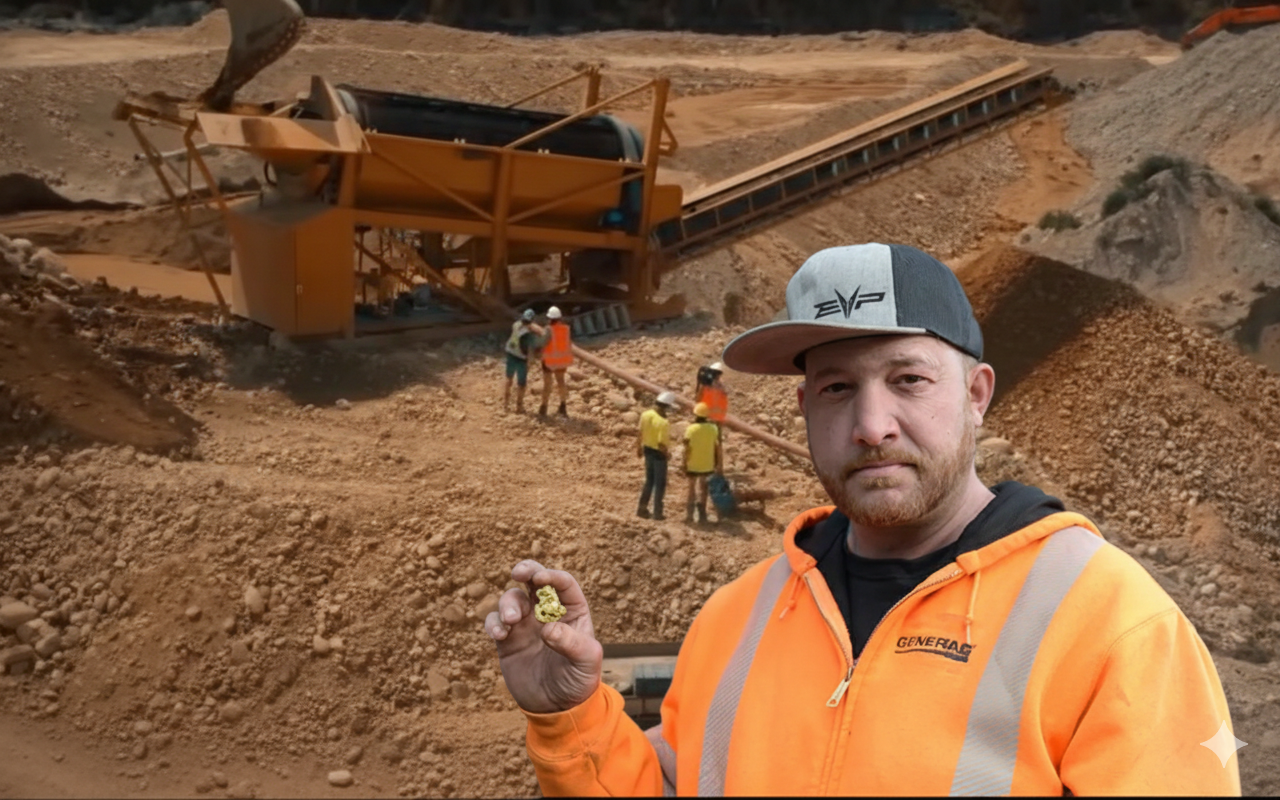
In an industry defined by constant innovation and the search for the latest cutting-edge technology, an unlikely hero has emerged: a long-forgotten piece of mining machinery, the TRL, which has not only revived a mining operation but is also challenging the very foundation of the mining industry’s thinking. Once abandoned and left to rust, this hulking machine, initially deemed obsolete, is now proving that sometimes, the old ways are the best ways, especially when combined with modern technology.
The TRL, a massive piece of mining equipment, was originally designed to extract gold with brute force, capable of ripping through tons of material daily. However, as modern mining techniques advanced, the TRL was abandoned, seen as a relic of a bygone era. Fast forward to the present day, and a team led by Rick and his crew has decided to revive this beast. What started as an ambitious project to restore a piece of mining history has turned into one of the most successful gold mining operations in recent memory, shocking the mining world with its success.
From Abandoned Relic to Gold Mining Giant
The TRL had sat forgotten, buried under years of grime, vines, and rust, until a group of modern miners saw its potential. It wasn’t long before they unearthed the gold-laden dirt surrounding it. What was once written off as worthless junk was now a treasure trove waiting to be claimed. As they began their investigation, the team realized that the dirt surrounding the machine was loaded with gold, a finding that sent shockwaves through the mining community. The sediment wasn’t just a pile of neglected material; it was a jackpot waiting to be mined, and this wasn’t just a random stroke of luck.
What made the TRL’s revival even more remarkable was how the team approached the task. Rather than simply restoring it to its original state, they incorporated modern mining methods and cutting-edge technology. The old TRL was given new life with advanced sensors and automation, increasing its efficiency far beyond what it was originally capable of. This combination of old and new technology proved incredibly effective, as the TRL started producing gold at an astonishing rate. It wasn’t long before the machine, once written off as scrap metal, had proven itself to be an invaluable asset to the mining operation.

The Mining Industry Takes Notice
As the gold poured in and the numbers started stacking up, the mining world began to take notice. If one forgotten machine could yield such staggering results, what other pieces of discarded equipment might still hold untapped riches? The TRL’s success has forced miners and investors alike to rethink how they view old mining sites and equipment. No longer are these sites seen as abandoned wastelands. Instead, they are now viewed as potential goldfields, waiting for someone to realize their value.
The success of the TRL has sparked a ripple effect throughout the mining industry. Experts, engineers, and historians are now combing through old mining records and exploring abandoned equipment to see if there are any other “forgotten machines” that could be revived for profit. The shift in perspective has opened up new opportunities for mining operations, especially for those willing to embrace the idea that sometimes, the old ways can offer more than the new. In an industry that often discards its past in favor of new technologies, the TRL’s resurrection is a powerful reminder that there is still untapped potential in the past.
A Sustainable Future for Mining
What makes the TRL’s revival even more groundbreaking is its environmental impact. Unlike traditional mining methods that cause significant environmental damage, the TRL has been modernized to reduce waste and improve efficiency. This approach combines old engineering with new technology to create a mining method that is not only effective but also more sustainable. The TRL’s ability to recover gold without the need for massive destruction of the landscape is a game-changer for the industry.
Environmentalists, who have long criticized the mining industry for its harmful practices, are now beginning to take a second look at this new approach. If the success of the TRL can be replicated across the industry, mining could become a more sustainable practice, with less harm to the environment. This is a hopeful development for both the industry and the planet, showing that it’s possible to strike a balance between profitability and environmental responsibility.
The Future of Mining: Looking Back to Move Forward
The revival of the TRL has not only breathed new life into a forgotten machine, but it has also sparked a larger conversation about the future of mining. If a machine once considered obsolete can be restored to profitability, what other equipment and techniques from the past can be brought back to life? The success of the TRL challenges the industry’s assumption that new is always better and encourages a shift in thinking that values innovation, yes, but also recognizes the value of history.
As the TRL continues to operate at full capacity, the team is pushing the machine to its limits, learning from the past and applying new technologies to improve its performance even further. With gold continuing to flow from the revived machine, the question remains: how many other forgotten machines are out there, just waiting to be rediscovered? The TRL has not just proven its worth—it has sparked a revolution in the way the mining industry approaches its past, showing that sometimes, the key to the future lies in looking back.
In the end, the revival of the TRL is more than just a success story for one machine. It’s a lesson in resourcefulness, sustainability, and the power of innovation. By embracing both the old and the new, the mining world has unlocked a treasure trove of opportunities, proving that the golden age of mining may not be over after all. It’s just been buried under layers of rust and neglect, waiting for someone to dig it up and turn it into gold.