THE DOMINION ANOMALY: SCHNABEL’S $98M STRIKE REWRITES KLONDIKE HISTORY
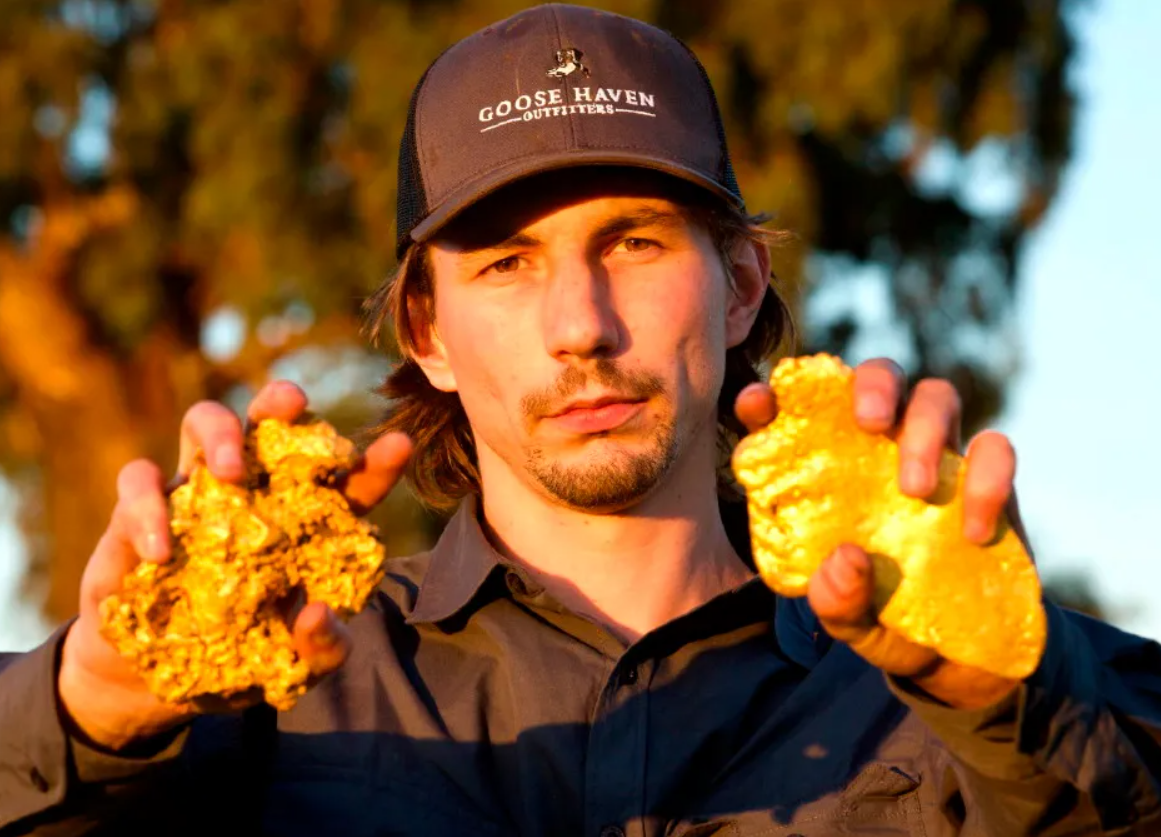
What began as a high-stakes $15 million gamble on “dead ground” has transformed into the most significant archaeological and financial event in modern mining history. Parker Schnabel, the 29-year-old titan of the Klondike, has reportedly uncovered a massive gold hoard and ancient artifacts at Dominion Creek valued at a staggering $98 million.
The $15 Million Gamble
Dominion Creek, a site largely written off by veteran miners as “worked out” decades ago, became the center of the mining world when Schnabel invested $15 million in its acquisition and development. Critics labeled the move reckless, but Schnabel’s reliance on historical geological surveys suggested that earlier miners, limited by 19th-century technology, had only “scratched the surface.”
“They quit too early and too shallow,” Schnabel stated during the early weeks of the grind. His theory was vindicated during a routine shift when an excavator bucket revealed a structure that halted production immediately.
Not Just Gold: A Mystery in Iron and Copper
The find is not merely a deposit of raw dust and nuggets. The crew unearthed a series of iron-reinforced copper boxes, deliberately buried and sealed. Initial X-ray scans and purity tests conducted on-site revealed the contents to be 98% pure gold—a level of refinement that implies advanced metallurgical knowledge.

The discovery has transitioned from a mining operation into an archaeological mystery. The boxes are covered in cryptic symbols—an erratic blend of Phoenician, Mesoamerican, and Middle Eastern scripts. “The level of precision at that depth could not exist without human involvement,” noted a geologist from the University of British Columbia. “Someone dug, placed these objects, and carefully refilled the site.”
The “Sunkeepers” and Missing Records
The discovery has breathed new life into local indigenous legends of the “Sunkeepers,” a group said to have viewed gold as a sacred substance to be protected rather than currency.
Furthermore, the find has exposed a chilling gap in official records. Documents from a 1940s excavation at the same coordinates are missing from territorial archives. That operation reportedly shut down abruptly due to “unstable ground,” an explanation Schnabel’s team has now debunked as a potential cover-up.
A Once-in-a-Generation Event
The financial impact is undeniable. The $98 million haul resets the record books for the most lucrative single-site discovery in Gold Rush history. However, the cultural impact may be even greater. Federal archaeology officials have now been integrated into the crew, and there is active discussion regarding declaring Dominion Creek a protected historical site.
“This isn’t about moving dirt fast anymore,” Schnabel said, standing before the latest Ground Penetrating Radar (GPR) scans. The data shows even deeper, larger engineered structures—potential vaults or chambers—sitting beneath the initial discovery.
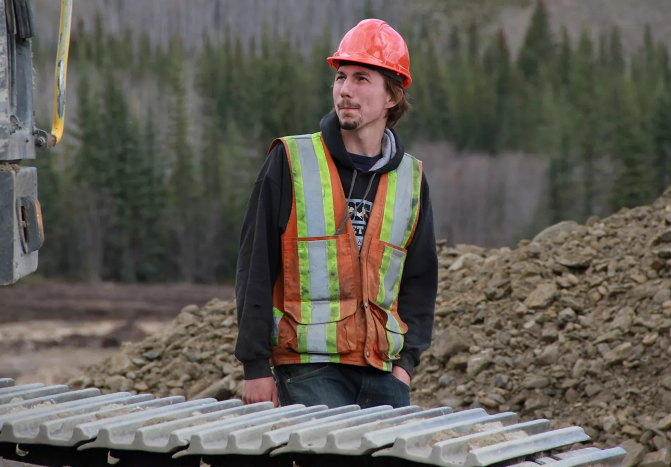
What Lies Beneath?
As the federal government and academic institutions descend on the Yukon, the mining community remains in a state of shock. If these symbols and structures prove that trans-oceanic civilizations reached the Yukon centuries before recorded history, the $98 million in gold will be the least valuable part of the discovery.
For now, the machines at Dominion Creek have slowed to a surgical pace. The world is watching, waiting to see if the next layer of earth reveals a treasure, or a truth that changes history forever.