THE FOOL’S BOULDER: Parker’s Crew Spends Hours Chasing “Crocodile Bundy” Nugget
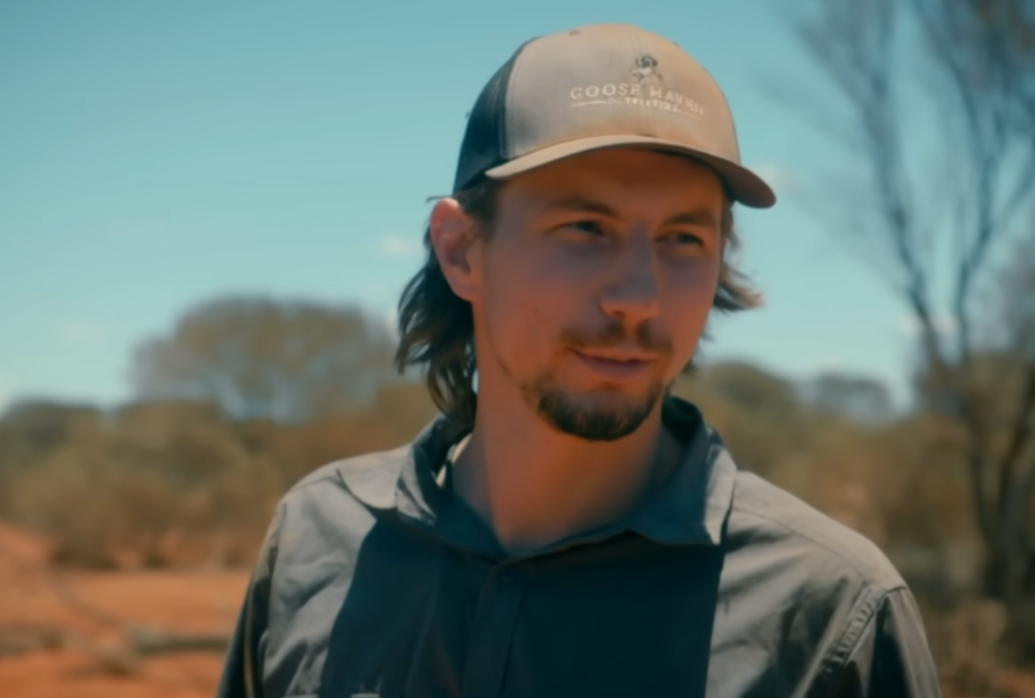
In the desolate, sun-scorched expanse of the Australian Outback, “gold fever” is more than a metaphor—it is a documented occupational hazard. This week, Parker Schnabel’s expedition team fell victim to a severe bout of the condition, spending three grueling hours attempting to extract what they believed was a multi-million dollar nugget from a massive ironstone boulder.
The “signal of a lifetime” turned out to be a lesson in the deceptive nature of metal detecting in mineral-rich soil, leaving the crew with a haul worth less than a tank of diesel.
The Legend of “Crocodile Bundy”
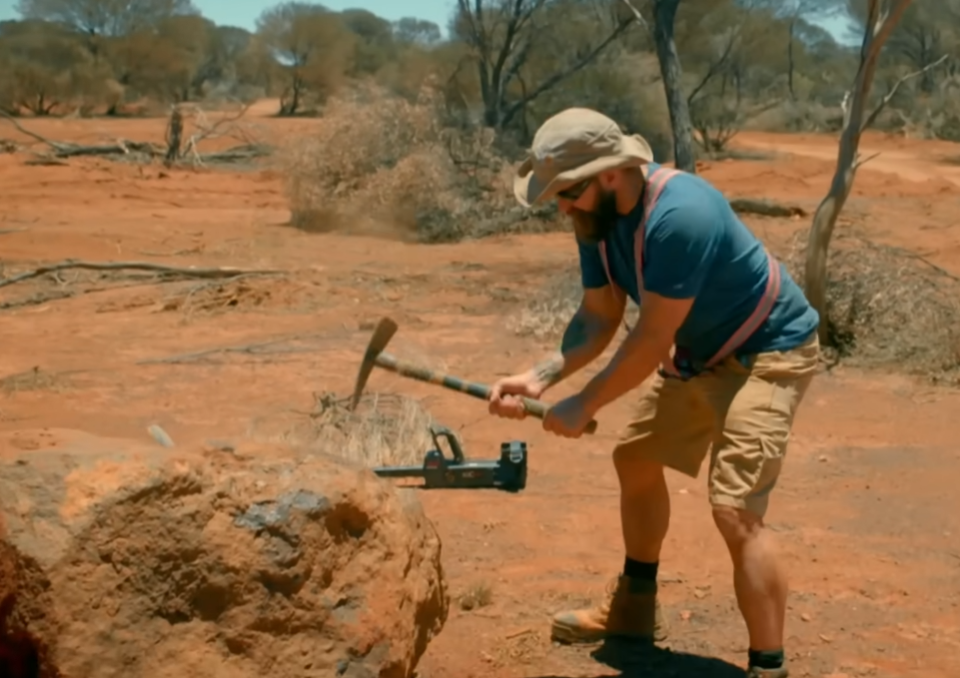
The drama began on a remote claim when Fred Lewis, Danny Etheridge, and Tyler Mahoney picked up a “screaming” signal emanating from a large boulder. In the Outback, large rocks are colloquially known as “bundies,” leading the team to affectionately dub their target “Crocodile Bundy.”
The signal was so intense that the team’s hand-held detectors peaked instantly, suggesting a solid mass of gold buried deep within the rock. “It’s a direct hit,” Lewis shouted over the electronic wail of the detector. “We cannot leave this behind.”
Brute Force and Heavy Machinery
With no dynamite on hand, the crew resorted to increasingly desperate measures to crack the stone. The initial plan involved a “gold mining lottery” of physics: using a backhoe to lift another large rock and drop it onto Crocodile Bundy. The result was a loud crack, but it was the “wrong bundy” that shattered, leaving the target unscathed.
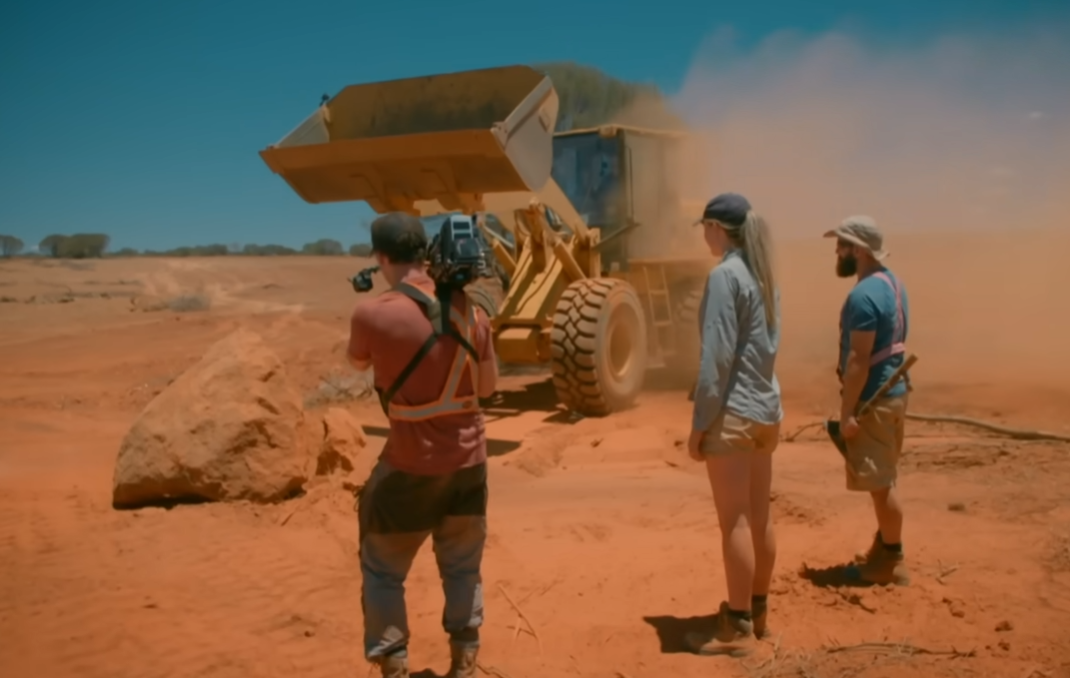
Refusing to yield, the team moved to more surgical—albeit exhausting—methods. They drilled holes into the rock and hammered in steel wedges, a traditional stonemason’s technique designed to split the boulder along its natural fault lines. After hours of manual labor in the heat, the rock finally cleaved in half.
To separate the massive sections, the crew hitched the stone to a truck, dragging the segments apart to expose the “heart” of the signal.
The Moment of Truth
As the boulder fell open, the detector’s signal narrowed to a specific, palm-sized chunk of rock. The tension reached a fever pitch as the team carefully chipped away at the remaining stone, expecting a massive, five-ounce gold specimen to drop into their hands.
Instead, the “treasure” was revealed to be a tiny, jagged nugget. While it was indeed gold—and a rare example of gold found encased directly in a host rock—its weight was negligible.
The High Cost of Curiosity
While the team celebrated the novelty of “mining” gold directly from a rock, the reality of the situation quickly set in. The three hours spent chasing the boulder meant three hours of downtime for the dry-blower, the primary source of the operation’s gold recovery.
“If I paid somebody to do this, they would probably get fired,” Parker Schnabel remarked with a mix of amusement and irritation.
For Fred Lewis, the stakes are higher than just lost time. Having convinced Schnabel to invest heavily in specialized equipment for the Australian terrain, the lack of a significant find puts his reputation on the line. “If this flops and there’s no gold, Parker is going to have no trust in me whatsoever,” Lewis admitted.
As the crew returns to the more predictable—if less exciting—work of processing pay dirt, Crocodile Bundy remains a fractured monument to the hope and heartbreak of the Australian gold fields.