Tony Beets’ Equipment Failure Triggers Million-Dollar Disaster – Family Tensions Surface

A catastrophic equipment failure at Tony Beets’ dredge has sent ripples through the Klondike, threatening to halt production and exposing deep fault lines inside one of the region’s most recognised mining operations.
According to accounts from the site, the alarm was raised when Beets received an urgent call from his son, Kevin, reporting that the dredge—often described as the centrepiece of the Beets operation—had suffered a major structural collapse. Within minutes, Tony was en route to the river, driven by what he later characterised as the instinct that separates routine setbacks from events that can derail an entire season.
When he arrived, the scene resembled a wreck: the massive floating platform sat at an ominous angle, with part of the structure partially submerged. The main ladder assembly—responsible for feeding material from the riverbed—appeared twisted and compromised at points that should have been among the strongest on the machine.
Kevin Beets, visibly strained, presented what he described as immediate operational concerns: the dredge could not run safely, crews were already facing downtime, and the cost of repairs would be immense. Initial estimates discussed on site put direct equipment damage and replacement costs at roughly $800,000, with lost production potentially pushing overall impact into the $2 million to $3 million range once delays, labour retention, and contractual obligations were factored in.
But as the family assessed the damage, the conversation shifted from mechanical failure to a more troubling possibility: deliberate interference.
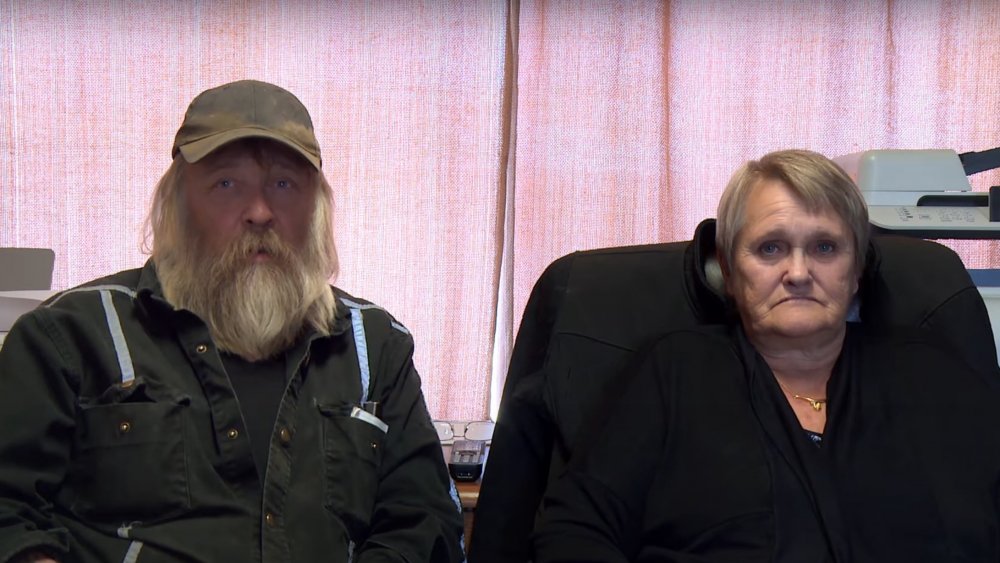
Monica Beets, who has focused on understanding equipment performance and structural integrity, examined damaged welds and fracture patterns. Her conclusion, based on what she observed at the break points, was that the failure did not resemble ordinary fatigue. The fractures, she argued, suggested the welds may have been weakened in advance—compromised in a way that would allow normal operating stress to finish the job.
Kevin then produced maintenance and inspection logs showing the dredge’s support structures had been signed off as checked and cleared earlier in the season. One signoff, dated October 15, was attributed to “Mike” via digital credentials. However, the family stated Mike was not at the site that day, raising concerns that records may have been completed inaccurately—or accessed by someone else.
Further review of procurement documents added another layer. Kevin cited invoices for repair materials that appeared legitimate in format and payment trail, but which the vendor reportedly had no record of delivering to the Beets site. Payments were processed, yet matching delivery confirmations could not be produced. Taken together—inspection signoffs, questionable invoices, and physical evidence at the welds—the family began treating the incident less as a routine failure and more as a coordinated internal problem.
Those concerns intensified after Tony received a short, taunting message from an unknown number implying the collapse was intentional and suggesting he should step aside. While the sender was not identified in the message itself, its timing and tone reinforced the family’s fear that someone wanted Tony to know this was not bad luck.
Inside the Beets office, the situation reportedly escalated into a tense internal briefing. Monica said she had noticed irregularities in maintenance budgets months earlier, beginning with expenses that seemed inflated relative to the work being performed. Kevin said he quietly reviewed the records and identified what he described as a pattern: inflated invoices, cancelled supply orders, and maintenance marked complete without corresponding proof of work.

The most serious allegation presented was that these irregularities repeatedly traced back to Mike’s credentials. The family also claimed funds had been routed to an LLC registered in Whitehorse, with ownership linked to Mike and Bianca Beets. Monica asserted that tracing the flow of money suggested more than $300,000 in questionable transactions over 18 months, with the possibility of additional amounts not yet fully reconciled.
The implications were profound: if true, the dredge failure was not only a mechanical crisis but a threat to the company’s ability to operate, pay crews, and maintain credibility with suppliers and partners. Monica added that word of the failure spread quickly in the mining community, compounding the pressure by raising doubts about equipment reliability at a critical point in the season.
As the family attempted to respond, they faced a fresh complication: a legal filing seeking an emergency review of operations and a temporary restriction on Tony’s ability to make major decisions. The petition, filed under partnership provisions, requested an immediate hold—effectively freezing key moves while the review proceeded.
That hold created a narrow window in which the Beets team would need to assemble evidence, stabilise operations, and protect financial accounts—tasks made more difficult by the strain on Tony himself. In the narrative provided, Tony suffered a medical episode under extreme stress and was taken to hospital for evaluation, leaving Kevin and Monica to manage the immediate response and the pending hearing.
At the hearing, Kevin and Monica presented financial records and technical assessments to support allegations of fraud and deliberate compromise. The situation took another turn when they introduced the name of a former accountant linked to a competing operation, suggesting the possibility of outside advisory support in what they characterised as a restructuring attempt carried out through internal family access.
By the end of the account, the incident had evolved from a machinery failure into a broader battle over control, accountability, and the future of the Beets mining operation—raising a central question that now hangs over the Klondike: was this simply an expensive collapse, or the moment a family enterprise discovered its most serious risks were not in the ground, but within its own systems?