Tony Beets’ Rookie UNDERMINES The Whole Gold Operation.
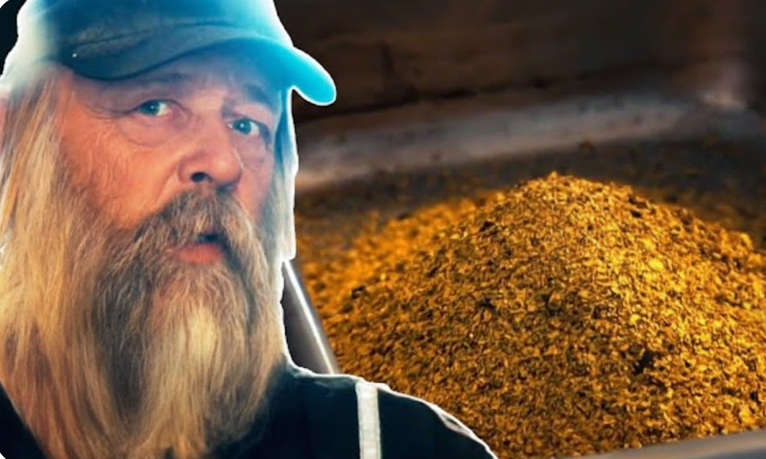
At 10 miles southwest of Dawson City, the pressure is already mounting for Klondike veteran Tony Beets. With gold prices holding strong and a 6,500-ounce seasonal target looming overhead, the self-proclaimed “King of the Klondike” is wasting no time expanding operations at his Indian River claim.
But as this week’s developments reveal, ambition in the Yukon rarely unfolds without turbulence.
A Fast Start — and a Faster Expansion
Tony opened the season aggressively. His “Early Bird” cut was mined out quickly, delivering a solid 632 ounces toward his 6,500-ounce goal. In most camps, that would signal momentum. For Tony, it signals urgency.
“With gold prices as they are, you’ve got to stay ahead of the game,” he explained. “You can’t let up.”
To maintain that pace, he launched the Early Bird extension — a tight, technically challenging stretch of ground that needed to be stripped and brought down to pay within a single week. The goal was simple: feed his only operational wash plant, Sluicifer (nicknamed “Slooot” by the crew), before it ran out of pay dirt.
But the extension came with a new variable: rookies.
New Blood, Immediate Trouble
Tony’s fresh hires, rock truck drivers Tyler Swan and Sam Moore, were thrown directly into the high-pressure environment of Klondike mining. Narrow haul roads, blind corners, and heavy iron leave little room for inexperience.
The learning curve proved steep.
In a tense moment, Sam Moore tipped one of Tony’s $300,000 rock trucks, bringing the operation to an abrupt halt. A flipped truck isn’t just an equipment issue; it’s downtime, lost production, and financial risk.
Temporary foreman Jacob Moore moved quickly to recover the machine. Carefully coordinated maneuvering brought the truck back upright without catastrophic damage.
For Sam, it was a baptism by fire.
“That’s my first truck I tipped over. It was a little scary,” he admitted. “Tony was pretty relaxed.”
Relaxed may be relative. In Tony’s world, mistakes are tolerated — briefly — but production cannot stall.
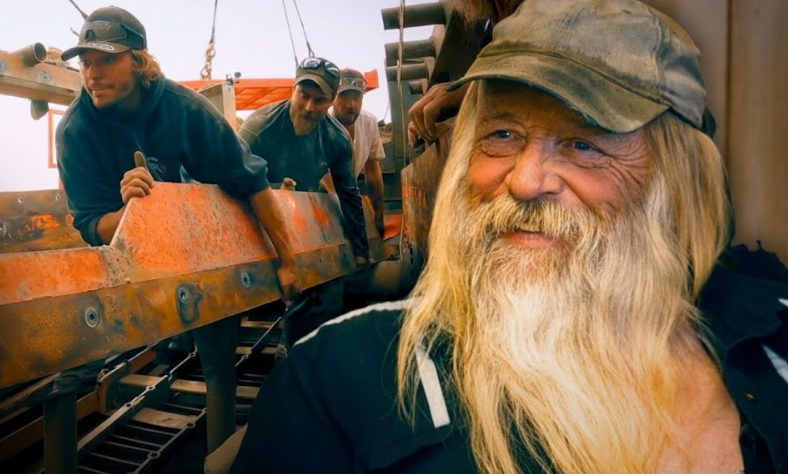
Racing Against the Wash Plant
The larger concern was timing. With stripping behind schedule and Sluicifer consuming stockpiled pay at a steady rate, Tony needed the Early Bird extension to deliver gold — and deliver quickly.
“We lost a bit of stripping time,” Tony noted. “So we have to get the extension cut ready. Stay ahead. Stay ahead. Stay ahead.”
That mantra reflects a broader mining truth: ounces are dictated not just by ground quality, but by logistics. Trucks must turn. Excavators must feed. Wash plants must run continuously. Interruptions compound quickly.
Tony conducted a pan test in the freshly opened ground to determine whether the extension had reached pay dirt. In the Yukon, a simple gold pan still carries decisive authority.
The verdict?
Visible color. Consistent specks. Promising texture.
“That’s paid dirt to me,” Tony confirmed.
For a crew still finding its rhythm, the sight of gold in the pan was both relief and motivation.
The Weigh-In: Solid but Not Spectacular
After a turbulent week, the team brought the Early Bird cut gold to the scale.
The result: 142.14 ounces from the latest cleanup. Combined with prior totals, Tony’s seasonal output now stands at 774 ounces.
At current market value, the haul approaches half a million dollars.
On paper, that is impressive. In context, it is insufficient.
To reach 6,500 ounces, Tony must average over 1,000 ounces per month during peak season. A weekly total of 142 ounces signals stable production — but not the acceleration required to close the gap.
“We’re still a little ways off from our goal,” Tony acknowledged. “But it’s still early.”
The Rookie Dilemma
From an operational standpoint, Tony faces a familiar dilemma: labor.
“If you want to do X amount of ounces a year, you need X amount of people,” he said. “But sometimes it’s not that easy — especially when it costs money.”
The Yukon labor market has tightened. Experienced operators are scarce. Many recruits arrive with minimal heavy equipment experience — some, as Tony pointed out, have “never even been in an airplane,” let alone inside a rock truck.
Training takes time. Mistakes cost money. But without manpower, expansion stalls.
It is a calculated risk.

Strategic Outlook: Can the Extension Deliver?
The Early Bird extension now becomes critical. If the ground proves consistent and richer than the initial cut, Tony can recover lost stripping time and potentially boost weekly output.
However, several factors will determine success:
-
Crew Stability – Rookies must gain confidence quickly and reduce costly errors.
-
Equipment Reliability – After the rock truck incident, uptime is essential.
-
Pay Consistency – If the gold in the pan translates into sustained grades, the cut may outperform expectations.
Should the extension underperform, Tony may need to accelerate stripping elsewhere or consider bringing a second plant online — a costly but potentially necessary move.
The Bigger Picture
Tony Beets has built his reputation on resilience. He has weathered breakdowns, labor shortages, and fluctuating gold markets over decades in the Klondike.
This week illustrates a recurring theme in Yukon mining: momentum is fragile.
A tipped truck, a delayed strip, or a modest cleanup can tilt a season’s trajectory. Yet Tony’s approach remains unchanged — push forward, find pay, keep the plant running.
“Long as you get some gold in your pocket,” he told the crew, “at the end of the day, it’s all worth it.”
With 774 ounces banked and thousands more required, the season is still wide open. The Early Bird extension has shown promise — but promise alone won’t hit 6,500 ounces.
For Tony Beets, the race is officially on.