UNBELIEVABLE: Parker’s Crew FINALLY Get Their First Season 16 Paycheck
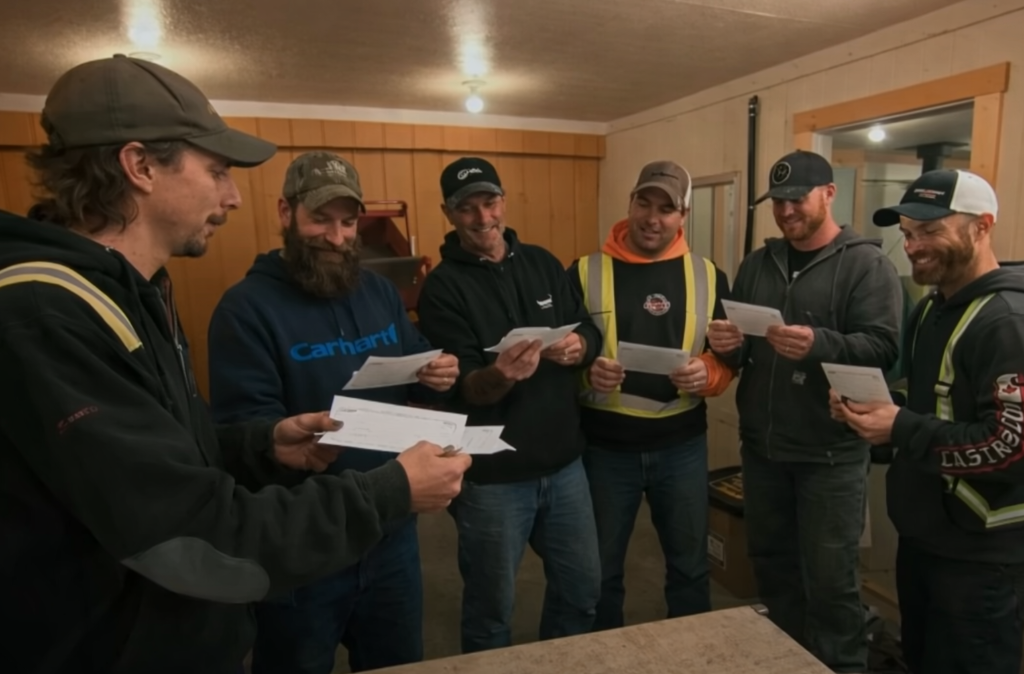
As the Klondike winter begins its mid-season tighten, Parker Schnabel’s crew has finally cashed their first major paychecks of Season 16. On the surface, the numbers look like a disaster: a 10,000-ounce goal slashed to 8,000, then missed entirely with a final weigh-in of just 6,837 ounces. Yet, despite missing his target by nearly $8 million in projected revenue, Schnabel’s veterans are reportedly purchasing luxury trucks and new homes.
The disconnect between the “failed” gold count and the crew’s skyrocketing bank accounts reveals a hidden “dual-economy” in the Yukon—one where television drama pays a higher dividend than the gold itself.
The 75-Hour Grind: What the Dirt Pays
For the boots on the ground, the financial math of mining is a game of volume. An entry-level “greenhorn” on Schnabel’s site starts at roughly $28 per hour. While that may seem modest for 16-hour shifts in freezing mud, the overtime surge is staggering.
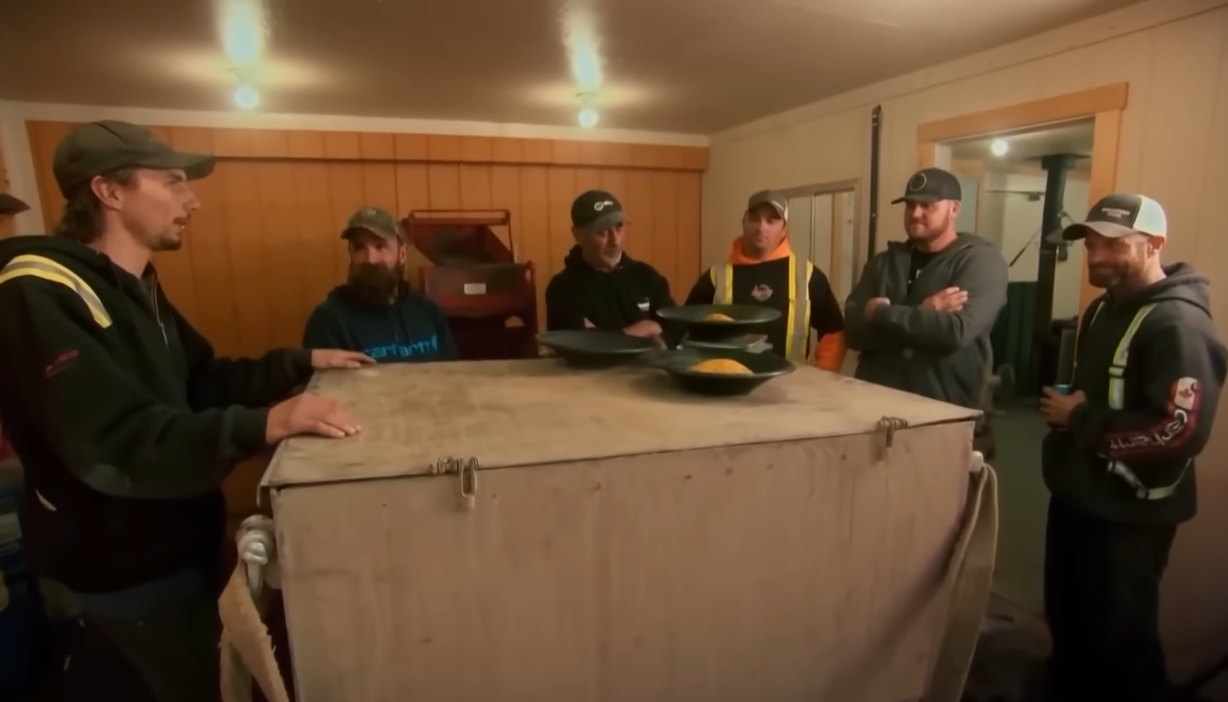
With a standard 75-hour work week, a rookie grosses approximately $2,590 weekly, walking away with $65,000 for a six-month stint. For elite talent—foremen and lead mechanics who command $34 to $45 per hour—seasonal earnings frequently climb between $100,000 and $150,000. Because Schnabel covers all housing and food costs in the remote North, these earnings are “pure profit,” unburdened by the cost of living.
The Real Fortune: The Discovery Dividend
The true “secret weapon” of the Schnabel empire is the television contract. Industry insiders estimate that top-tier talent like Parker Schnabel, Tony Beets, and Rick Ness earn between $25,000 and $30,000 per episode. With a 20-episode season, the “Boss” takes home a guaranteed $500,000 to $600,000 regardless of whether the wash plants are running or frozen.
Crucially, this “talent fee” extends to the supporting cast. Key crew members—the faces fans recognize daily—can earn roughly $10,000 per episode. Over a full season, their television earnings alone can reach $200,000, dwarfing their actual mining wages. This explains why the crew remains loyal even when the permafrost snaps excavator teeth and the gold counts underperform; the show provides a multi-million dollar safety net that nature cannot touch.

The Risk Behind the Reward
While the crew enjoys “golden handcuffs,” the burden of the gamble rests solely on 31-year-old Parker Schnabel. Every cent for fuel, million-dollar D11T repairs, and the massive payroll comes out of his pocket first.
“Parker is managing a financial empire that relies on dirt, diesel, and drama,” noted one site foreman. His personal net worth, now estimated over $10 million, was forged through high-stakes gambles like the $15 million acquisition of Dominion Creek—a move backed by the security of a global TV phenomenon.
As Season 16 enters its final turn, the question for viewers remains: Is this a story of mining, or a highly-paid drama in the dirt? For the men cashing $100,000 checks in six months, the answer doesn’t seem to matter.