When Entertainment Crosses the Line: Hard Lessons from Gold Rush’s Most Controversial Moments

For a series built on risk, grit, and heavy machinery, Gold Rush has never pretended that mining is a safe or predictable business. Yet over the years, a small number of incidents have stood out—not because they delivered gold, but because they highlighted how quickly judgement calls can spiral into legal and safety consequences. Two moments in particular, involving Tony Beets and Rick Ness, remain cautionary examples of how thin the line can be between television spectacle and real-world accountability.
One of the most widely discussed controversies came when Tony Beets found himself facing legal consequences following a stunt that aired on the show. In the episode, gasoline was poured into a murky pond and deliberately ignited, creating a dramatic blaze. Beets, standing nearby, appeared to approve of the act. What may have been intended as a moment of bravado or humour quickly became a serious legal matter.
Court documents later confirmed that the incident violated the Yukon Waters Act. The issue was not only the dumping of gasoline into the water, but also the failure to report it. Environmental regulations in the Yukon are strict for a reason: mining already places enormous pressure on fragile ecosystems, and any additional contamination can have lasting effects. In this case, the court determined that Beets and his company, Tamarack Inc., bore responsibility for what had occurred.
Beets did not deny his role. In statements presented to the court, he acknowledged that the idea was his and described it as a “joke gone wrong.” He explained that the stunt took place on what he believed would be his final day on the job and that he underestimated the seriousness of the action. As the leader of the operation, he accepted that he should have stopped it before it happened.

The penalties were significant. Beets personally paid fines related to the environmental violation, while Tamarack Inc. faced additional financial penalties that pushed the total cost well beyond what most would consider a minor mistake. The message from the court was clear: intent does not excuse impact, and leadership comes with responsibility—especially in industries that already carry environmental risk.
For long-time viewers, the incident was a rare moment where the authority figure known for pushing boundaries was publicly checked. Beets has built his reputation on confidence and scale, often thriving in conditions where others hesitate. This time, however, that instinct backfired. The episode served as a reminder that even experienced miners are not immune to oversight when actions move outside acceptable standards.
Another sobering moment in Gold Rush history unfolded not as a stunt, but as an accident born of frustration and urgency. During Season 9, while battling freezing conditions and stubborn mud, Rick Ness was attempting to keep work moving before temperatures dropped further. Under pressure, an additional truck was brought in to speed up the process.
What followed was a loss of control on slick ground. One vehicle slid and collided with another where a crew member was filming with a small action camera. The impact knocked her to the ground in a moment that unfolded far too quickly for anyone to react. Fortunately, she was able to walk away with relatively minor injuries, but the incident left a lasting impression on everyone present.
For Ness, the moment was deeply unsettling. Known for wearing the emotional weight of his crew’s safety, he made the decision to shut down operations for the day. The choice was not about productivity, but about preventing further incidents in already dangerous conditions. In that moment, the realities of mining overrode the pressure of television schedules or gold targets.
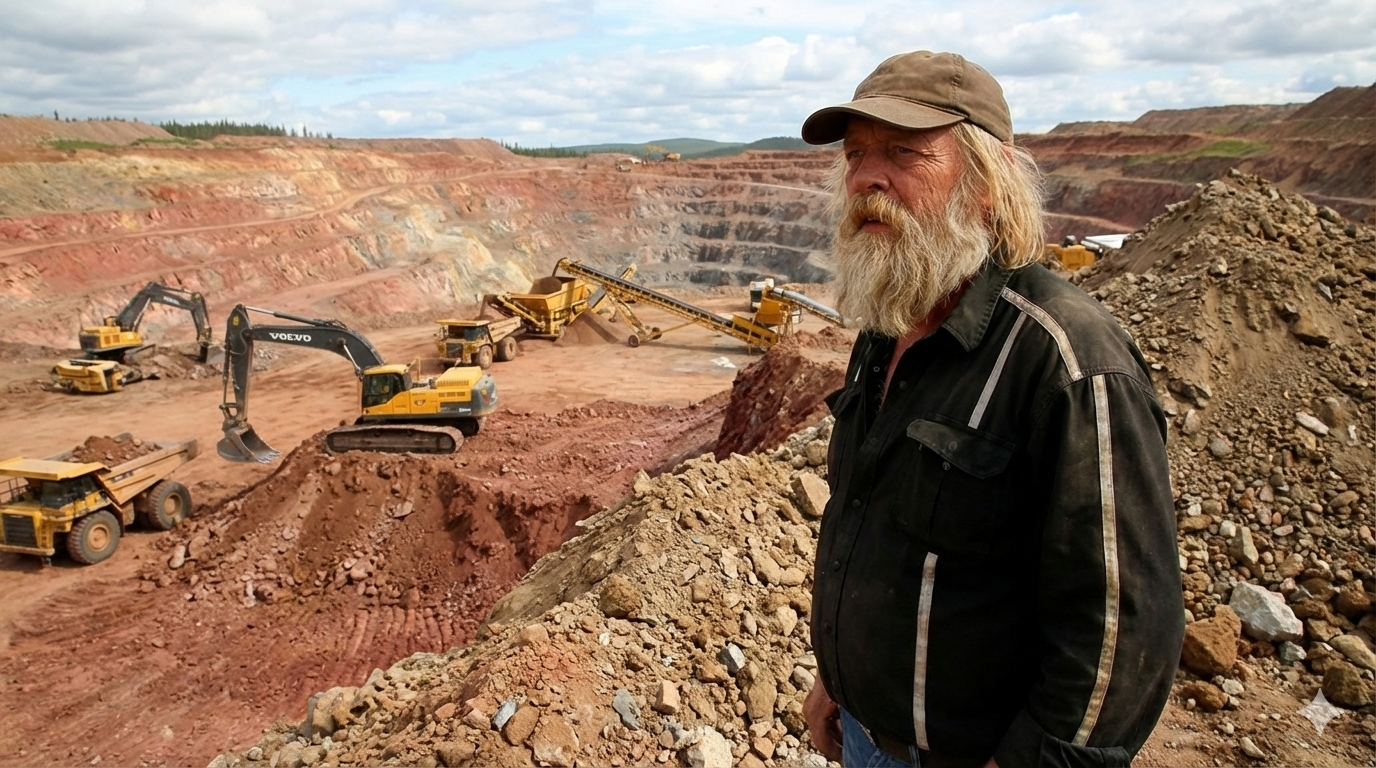
Taken together, these incidents illustrate an often-overlooked truth about Gold Rush. While the show delivers excitement and competition, the consequences are not scripted. Environmental laws, safety protocols, and physical risk remain very real, regardless of cameras or deadlines. When mistakes happen, they carry financial, legal, and emotional costs that extend far beyond a single episode.
For Tony Beets, the legal trouble became a rare public lesson in accountability. For Rick Ness, the accident reinforced the importance of knowing when to stop, even if it means falling behind. Both moments stripped away the mythology of mining just long enough to reveal the discipline required to do it responsibly.
As Gold Rush continues to evolve, these episodes stand as reminders that leadership is not only measured in ounces recovered, but in judgement exercised under pressure. The machines may be massive and the stakes high, but the margin for error is always smaller than it appears.