COLD COINS, HOT INTENT: Fellowship of the Dig Unlocks $400 Million Pure Gold Vault Under Lot 8 in Staggering Season 13 Finale
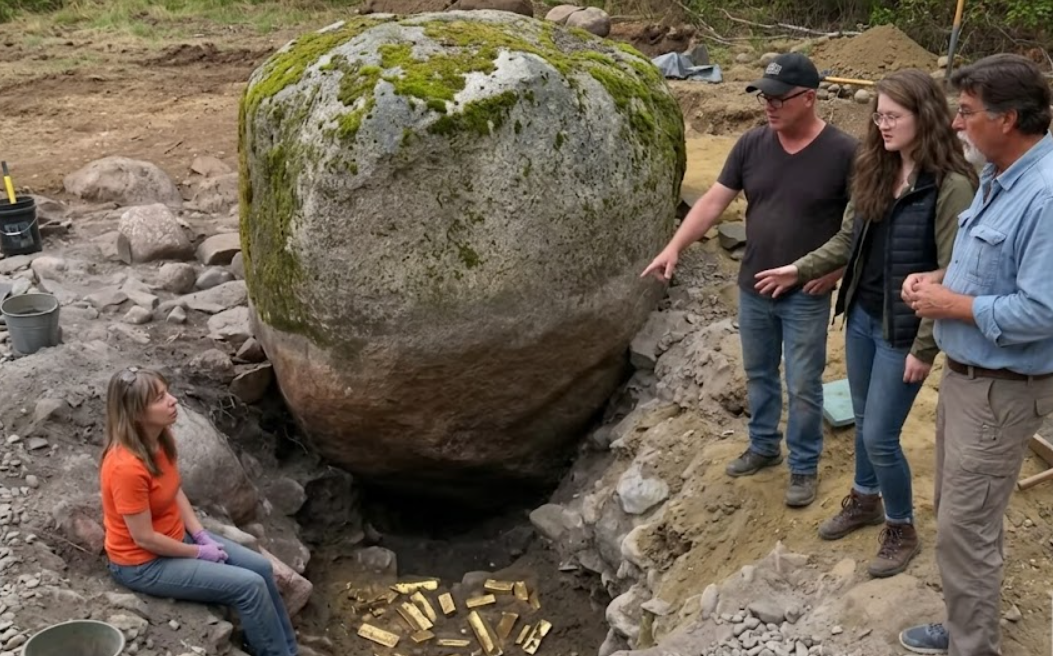
Mainstream historical orthodoxy has been shattered in the North Atlantic following the broadcast of The Curse of Oak Island’s Season 13 finale. In what is already being hailed as the most lucrative and historically disruptive archaeological breakthrough in television history, the Fellowship of the Dig has officially breached a sealed underground vault hidden beneath the high terrain of Lot 8, recovering an estimated $400 million in pure, ancient European gold.
The staggering discovery, coupled with a secondary artifact recovery from the absolute depths of the Money Pit, effectively terminates 231 years of skepticism, legal stalemates, and tragic obsession, confirming that the island’s legendary wealth is a tangible, golden reality.
The Offset Chamber Triumph
The historic breakthrough began on the dry, elevated plateau of Lot 8, validating the long-debated “offset chamber” theory. Operating under the strategic hypothesis that the original military architects would never deposit priceless relics inside the primary Money Pit—a structure deliberately engineered as a lethal, booby-trapped water decoy—the team shifted heavy machinery toward a colossal 40,000-pound boulder.
Upon displacing the massive stone, excavators bypassed an intricate artificial cradle sealed with waterproof blue clay and hardened medieval mortar. Previous subterranean soil testing by Dr. Ian Spooner had identified massive chemical footprints of elemental silver bleeding upward through this ancient protective cap.

Aggressively breaking through the centuries-old barrier, archaeometallurgist Emma Culligan and the recovery team successfully breached the subterranean vault. Initial forensic scans within the chamber revealed not merely scattered coins, but hundreds of millions of dollars in pure gold bullion, sacred relics, and heavy silver bars.
Intriguingly, the interior chamber displayed fresh tunnel fractures, structural abrasions, and a compromised internal locking mechanism, suggesting a secondary, secretive historical faction may have accessed the repository centuries after its initial construction but prior to the modern excavation.
Piercing the 200-Foot Death Zone
Simultaneously, the industrial-scale operation at the Money Pit sector achieved a separate milestone. Pushing the massive steel caisson known as Money Pit 1 down to the infamous 200-foot mark—a treacherous depth historically referred to as the “death zone” due to sudden shaft collapses that claimed the lives of six past treasure hunters—the team’s heavy oscillator punched directly into the subterranean solution channel.
As the wash plant crew sifted through the chaotic, deep-river muck pulled from this impenetrable depth, workers recovered a highly unusual, unclassified artifact. Senior researchers noted the object was entirely alien to any known colonial or Victorian era of North American history.
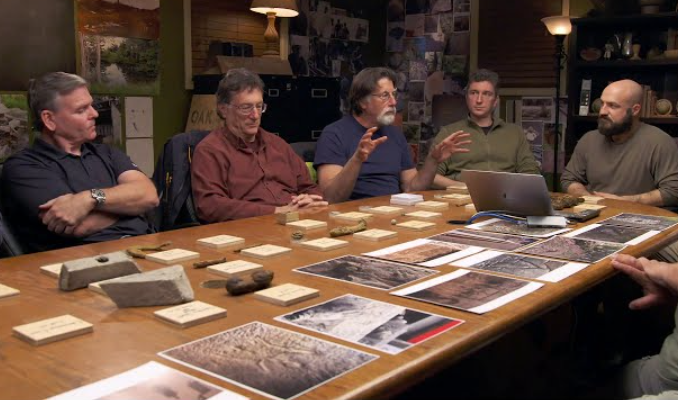
Crucially, the structural composition of the artifact shares direct geometrical markers with the 14th-century Order of Christ symbols documented during the team’s recent research expedition to the Portuguese Azores, providing ironclad physical evidence of a transatlantic Templar voyage occurring over a century before Christopher Columbus.
A New Era of Global Heritage
The emotional peak of the excavation occurred on the grading screens as the muddy spoils from the solution channel yielded verified, glittering treasure. The breakthrough completely shifts the structural management of Oak Island. With actual 14th-century gold resting in the hands of the Lagina brothers, the provincial government of Nova Scotia and lead archaeologist Laird Niven are stepping in to transition the property from a private television hunt into a protected, world-class archaeological heritage site.
Looking forward to the upcoming Season 14 campaign, the isolated drilling program will give way to the legendary “Big Dig.” Engineers are currently drafting plans to freeze the entire Money Pit perimeter using liquid nitrogen, creating an impenetrable ice wall to hold back the Atlantic ocean waters while crews safely extract the remainder of the historic vault.