Excavations Reveal Stone Road That May Unlock Clues About Oak Island’s Greatest Mystery
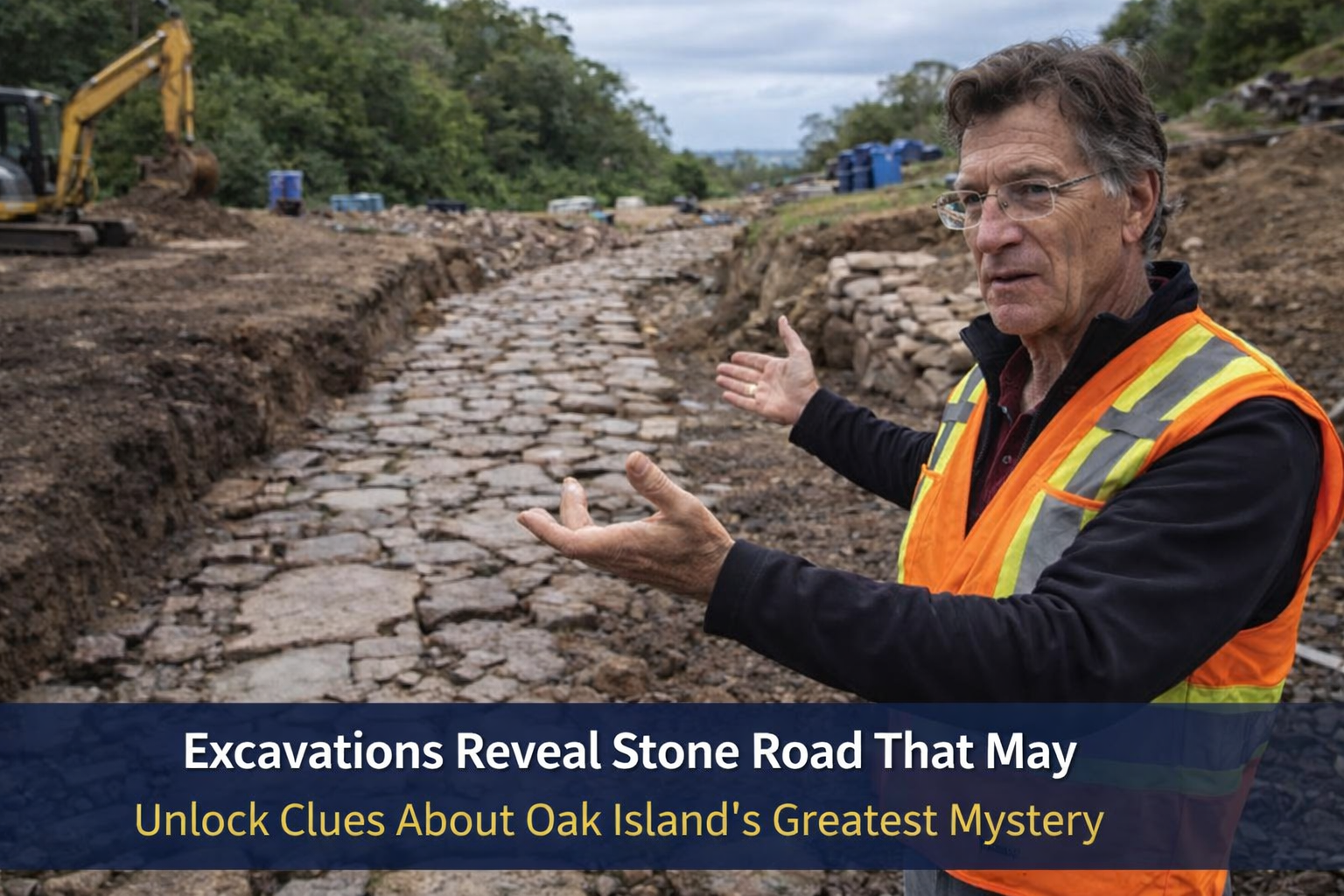
Oak Island, Nova Scotia — The mystery of Oak Island continues to deepen as Rick and Marty Lagina, along with a core team of archaeologists and metal detection experts, uncover a series of wooden structures and artifacts in the southern edge of the swamp near the historic stone road. Recent excavations suggest that these findings may represent more than isolated debris; instead, they could point to a carefully constructed system designed for the transport and handling of valuable cargo centuries ago.
At the heart of the latest dig is a large wooden construct situated beneath the stone road. According to Rick Lagina, the timbers appear to have been deliberately positioned, with two logs fitted together in a manner reminiscent of cabin construction. Supporting smaller logs and brush underneath indicate that the stone road was a significant engineering effort rather than a naturally occurring path. “Somebody put that road in for a specific reason, and I think they wanted it to not be found after they were done,” Rick said. The implication is clear: the road could have been part of a larger system used to move goods, possibly even treasure, from the swamp to other areas of the island.
The team’s work has already produced intriguing finds. A large, hand-wrought chain and hook dating back to the 16th century were recently recovered, with blacksmithing expert Carmen Legge suggesting that the artifact could have been used to offload cargo from ships onto the island. The three-point hitch design hints at a practical application for moving heavy loads across difficult terrain. These discoveries fit neatly into theories that Oak Island may have been used as a discreet transfer point for valuable materials, with the stone road providing a stable route through the swamp.
Adding to the intrigue, numerous barrel staves have been unearthed near the construct, echoing similar items found in previous excavations. These staves are believed to be part of containers used for storing or transporting goods. “That barrel certainly would fit with that,” noted Gary Drayton, the metal detection expert, emphasizing that the artifacts may reveal patterns of activity that align with historic offloading operations. This combination of chains, staves, and structural logs raises the possibility of a coordinated effort to move significant cargo in the area.
Further complicating the site’s historical narrative is the discovery of what appears to be a hand-shaped wooden tool. While its exact purpose remains speculative, the piece could have played a role in constructing or maintaining the swamp road and surrounding structures. Such artifacts provide not only insight into the craftsmanship of the era but also contextualize how previous occupants of the island may have interacted with the swamp environment.

The excavation team is continuing to probe deeper into the swamp, methodically clearing debris and analyzing each find. Gary Drayton and Alex Lagina have been conducting metal detection sweeps to ensure that no potential artifacts are missed, while Marty Lagina supervises and assesses the structural integrity of the uncovered timbers. “Every time we dig in and around the swamp, we find something,” Marty observed. “The stone road, the paved area, the ramp… lots of artifacts. We’re only beginning to understand the extent of these workings.”
Rick Lagina also highlighted the significance of aligning new discoveries with previous finds. Metal spikes, wooden platforms, and remnants of barrel staves have all been located along the stone road and adjacent swamp areas. By piecing together these elements, the team hopes to map the layout of a possible offloading system or engineered pathway leading to a key site such as the Money Pit. If these connections hold, they could offer critical insight into how cargo — and possibly treasure — was historically transported across the island.
Despite the progress, the swamp presents ongoing challenges. Unstable ground, thick muck, and unpredictable water levels complicate excavation, making careful planning essential. “Clearly, there are clues in the swamp,” Rick Lagina said. “I thought there was nothing here, but there’s a lot. We’re trying to approach it methodically so that we don’t miss anything.”
The broader implications of these discoveries cannot be understated. If the stone road and its supporting wooden structures were intentionally engineered, it may reinforce long-standing theories that Oak Island was more than a site of isolated treasure burials. Instead, it could have functioned as a logistical hub for moving goods securely across difficult terrain. Connections to nearby wharves or possible ship landing points are being actively investigated, and each artifact recovered offers another piece of the historical puzzle.
Looking ahead, the Oak Island team plans to continue systematic digs along the swamp’s southern edge, with an emphasis on unearthing additional wooden structures and related artifacts. Each find will be cataloged and analyzed to establish age, origin, and potential function. “The best dig is yet to come,” said Marty Lagina, emphasizing the careful, persistent approach the team is taking. The hope is that these efforts will provide definitive evidence linking the stone road, the swamp, and potentially the Money Pit to a coordinated system designed for high-value cargo handling.
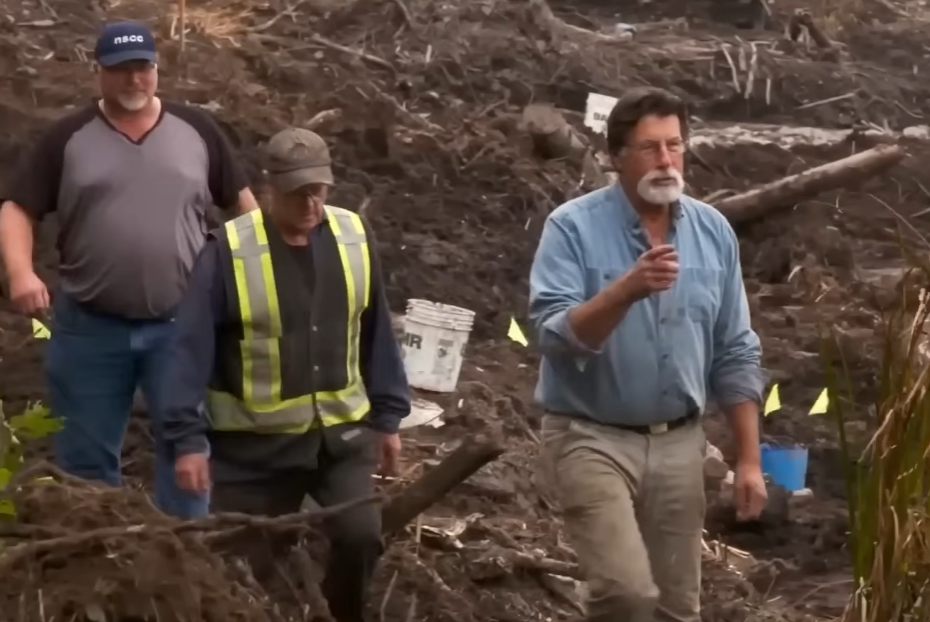
While certainty remains elusive, the pace and quality of the latest discoveries have injected new energy into the long-running investigation. Metal detection sweeps, combined with expert analysis of recovered timbers, chains, and barrel components, suggest that the Oak Island swamp is far richer in historical artifacts than previously appreciated. If the team can continue to trace the connections between these findings, they may finally begin to answer critical questions about the island’s purpose and the fate of its hidden treasures.
As excavation continues, the Oak Island team’s methodical approach, coupled with careful documentation and analysis, offers hope that some of the most enduring mysteries of the island may soon be clarified. With each layer peeled back, the potential to uncover significant historical structures — and perhaps even treasure — grows ever closer.