Folded Copper Coin Found on Oak Island Offers New Clues to a Centuries-Old Mystery

A small artifact discovered among the spoil piles on Oak Island is generating fresh discussion among researchers investigating the island’s long-standing mystery. The object, a folded copper coin or token uncovered during excavations on Lot 5, may provide a rare glimpse into the beliefs and activities of people who visited the island centuries ago.
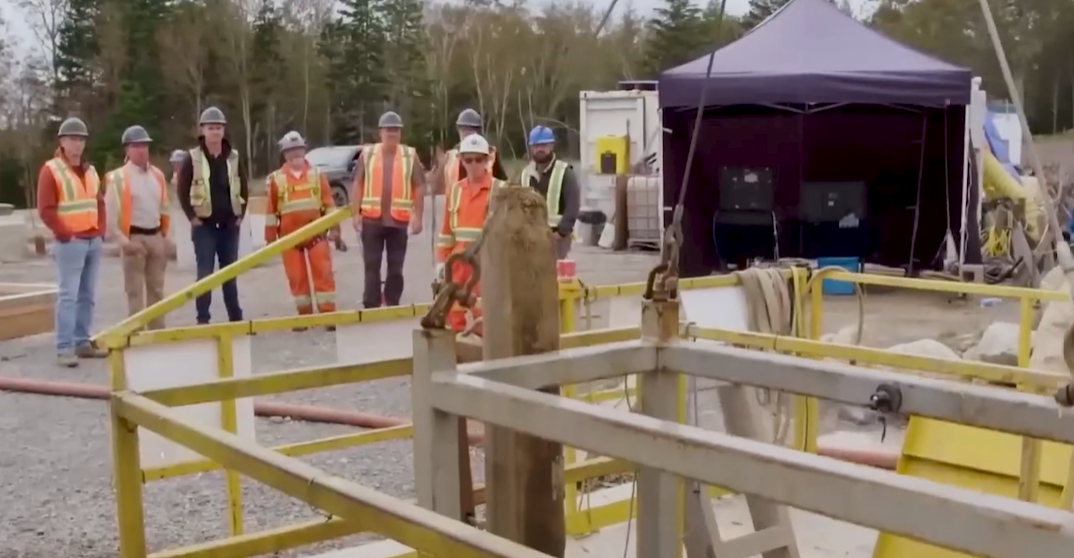
The unusual find was first recovered by metal detection expert Gary Drayton while scanning soil that had been removed from a circular feature previously excavated on Lot 5. Although the discovery initially appeared modest, its unusual shape immediately caught the attention of the team.
The coin had been folded three times, forming a compact copper object unlike typical currency finds.
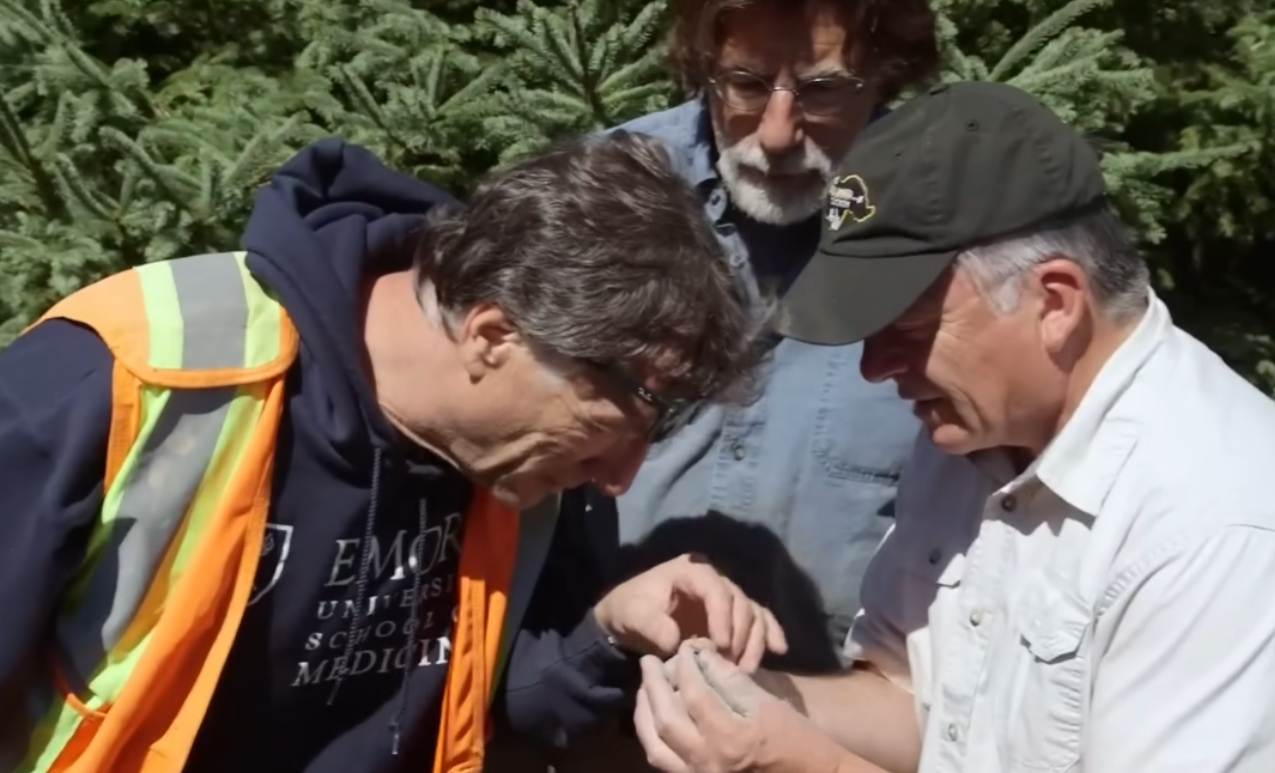
Recognising that the item might hold historical significance, members of the Oak Island team gathered in the research laboratory to examine the artifact more closely. Among those involved in the analysis were archaeologist Laird Niven, materials specialist Emma Culligan, and members of the Lagina investigation team.
Drayton explained that he had encountered similar objects while metal detecting in England. In many cases, folded coins were believed to function as talismans or good-luck tokens.
“These kinds of finds can be quite unusual,” Drayton noted during the discussion. “Sometimes they were folded intentionally and placed somewhere as a way to ward off bad luck.”
To gain a better understanding of the artifact without damaging it, the team conducted a CT scan. The goal was to determine whether the folded metal still contained identifiable markings that could confirm it had once been a coin.
The scan revealed no clear relief patterns that could definitively identify the original design. However, the absence of visible markings did not rule out the possibility that the object had once been a coin.
Emma Culligan’s analysis focused instead on the chemical composition of the metal.
Laboratory results indicated the artifact was made from a copper alloy containing zinc, along with trace amounts of arsenic and lead. These elements helped establish a potential timeline for the object’s creation.
According to Culligan, the composition strongly suggested the artifact dated from the post-medieval period, likely sometime between the late seventeenth century and the early nineteenth century.
The presence of arsenic and lead as alloying elements pointed particularly toward manufacturing methods that became more common around the late 1600s and early 1700s.
While this timeframe places the artifact centuries after medieval Europe, researchers say its cultural significance may still connect to traditions much older.
Historical records show that folding coins was a ritual practice dating back hundreds of years. In some cases, people folded coins as part of religious ceremonies, prayers for protection, or acts of devotion to saints.
The practice also appeared in maritime culture.
Sailors traveling across dangerous waters were often highly superstitious, and tokens believed to offer protection were sometimes carried or deposited at significant locations.
Given Oak Island’s location along historic Atlantic shipping routes, such traditions could explain how the artifact arrived on the island.
However, the object’s triple fold raised additional questions.
Most folded coins found in archaeological contexts are bent once or twice. The threefold design of the Oak Island artifact appears to be far less common, suggesting that the object may have carried particular symbolic meaning for whoever created it.
To gain further insight, the team consulted numismatic expert Sandy Campbell.
Campbell confirmed that the object was indeed a coin that had been intentionally folded three times. According to him, the tradition of folding coins can be traced back to early medieval practices.
In some historical interpretations, the act of folding a coin was believed to “trap evil” within the metal. Once the coin was folded and discarded or buried, the harmful influence was thought to be contained.
Other interpretations link folded coins to devotional rituals connected with Christianity.
During the era of the Crusades, religious orders such as the Knights Templar were known to honour certain saints through symbolic acts involving coins or tokens. While the Oak Island artifact likely dates from a later period, the ritual itself may have continued through the centuries.
Campbell suggested that the coin could plausibly date from the seventeenth or eighteenth century, a period when copper coins were commonly used for such practices.
Gold or silver coins were rarely folded because of their greater value, making copper the most likely material for ritual objects.
The discovery has also reignited discussion about one of the long-running theories associated with Oak Island: the possibility that European religious orders were connected to the island’s early history.
Some researchers have previously proposed links between artifacts found on Oak Island and the Knights of Malta, a Catholic order that emerged after the era of the Knights Templar.
Several objects recovered on Lot 5—including decorative buttons and glass trade beads—have already been tentatively associated with that historical period.
While no definitive evidence has confirmed the presence of such groups on the island, the folded coin adds another intriguing piece to the puzzle.
Team members also noted that the circular feature where the artifact was found appears to follow an east-west orientation. Interestingly, many buildings and structures historically associated with Templar architecture were constructed along similar alignments.
Whether this alignment has any direct connection to the coin or the broader site remains unclear.
Researchers emphasise that the artifact alone cannot prove any specific historical theory. Instead, it represents one small piece of evidence within a much larger archaeological investigation.
Because the coin has been folded multiple times, experts say it cannot be safely unfolded without risking damage to the metal and any potential markings hidden within.
As a result, further study will rely on non-invasive techniques and comparisons with similar artifacts found elsewhere.
For the Oak Island team, the discovery highlights the importance of continued excavation on Lot 5.
Each artifact recovered from the site contributes to a growing body of evidence that may eventually reveal who visited the island in earlier centuries—and why.
As Rick Lagina and his colleagues continue their search, the folded copper coin serves as a reminder that even the smallest discoveries can open new paths in one of history’s most enduring mysteries.