GIANT 40,000-POUND GATE FOUND: Rick Lagina discovered a massive, fractured granite vault 80 feet beneath Oak Island.
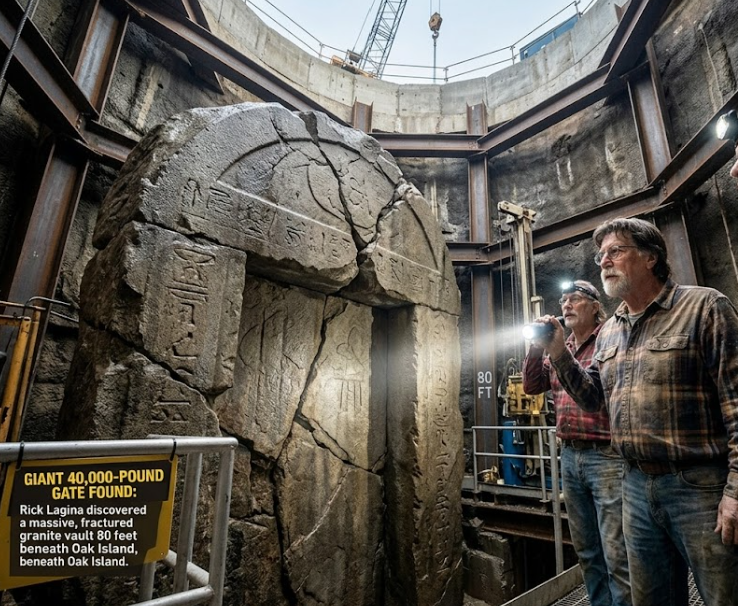
A dramatic new development has emerged from Oak Island’s ongoing excavation narrative, with reports claiming that Rick Lagina and his team have uncovered what is being described as a 40,000-pound granite “gate” associated with a fractured vault structure located approximately 80 feet below ground. If accurate, this discovery would represent one of the most structurally significant subsurface features ever identified on the island.
From an analytical standpoint, this finding immediately shifts the discussion away from isolated artifacts and toward large-scale engineered architecture—suggesting intentional construction at depths consistent with previously theorized flood systems, containment chambers, and possible buried vault networks.
A STRUCTURE THAT BEHAVES LIKE ENGINEERED ARCHITECTURE
In Oak Island investigations, mass and composition are often more revealing than the artifacts themselves. A 40,000-pound granite feature, particularly one described as a “gate,” implies deliberate placement rather than natural geological formation.
Granite of this scale does not fracture and align into coherent structural components under normal sedimentary processes. Instead, such formations typically indicate either:
- Human quarrying and repositioning
- Controlled structural collapse within a constructed system
- Engineered sealing mechanisms within a buried chamber
At approximately 80 feet deep, the reported discovery sits within a zone already associated with historical excavation activity, water intrusion systems, and previous theories of engineered vault protection.
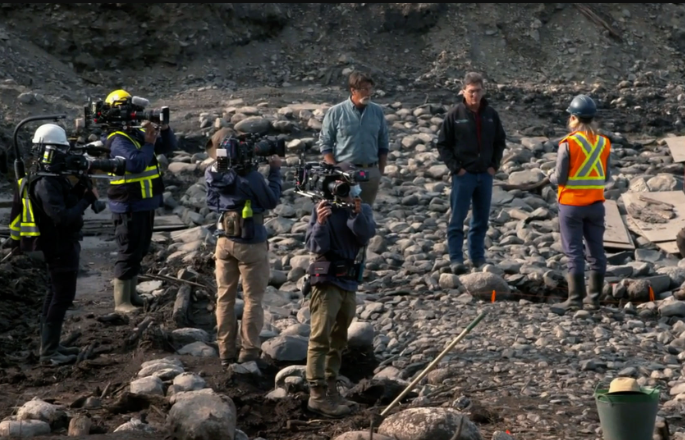


THE FRACTURED VAULT THEORY: WHAT IT COULD MEAN
The term “fractured granite vault” introduces a critical interpretive layer. If the structure is indeed a vault, then the implication is not simply buried material—but a constructed underground chamber designed for containment.
The presence of fractures suggests either:
- Structural failure under extreme pressure or flooding
- Intentional demolition or sealing to prevent access
- Long-term geological stress acting upon a man-made structure
From a systems perspective, vault-like structures beneath Oak Island have long been theorized in connection with layered defenses—possibly intended to protect or conceal valuables, documents, or symbolic objects.
If this interpretation holds, the 80-foot level may represent a transition zone between upper excavation layers and deeper engineered compartments.
THE “GATE” CONCEPT AND CONTROLLED ACCESS DESIGN
Perhaps the most intriguing element of the report is the description of the granite formation as a “gate.” In archaeological and engineering terms, a gate structure typically implies controlled access rather than accidental formation.
If this granite feature functioned as a barrier, it could suggest:
- A deliberate sealing mechanism for a lower chamber
- A load-bearing structural plug designed to resist excavation
- A multi-stage security system within a larger underground network
Such design logic is consistent with previously hypothesized layered protection systems on Oak Island, where multiple barriers may have been constructed to deter or delay entry into deeper zones.
DEPTH ANALYSIS: WHY 80 FEET MATTERS
Depth is a recurring theme in Oak Island analysis, and the 80-foot marker is particularly significant. This range often corresponds with:
- Historical excavation limits from earlier treasure theories
- Water intrusion transition layers
- Structural zones where engineered features have previously been identified
If a granite vault exists at this level, it may represent a midpoint structure rather than the final target. In other words, it could function as a barrier layer protecting deeper, as-yet-unseen chambers.
POSSIBLE CONNECTIONS TO PREVIOUS DISCOVERIES
Over the years, Oak Island has produced numerous indications of subsurface engineering, including stone layers, timber remnants, metallic artifacts, and void anomalies. The introduction of a large granite structure would integrate these findings into a more cohesive architectural narrative.
From an analytical perspective, this could suggest:
- A multi-phase construction system
- Repeated sealing and re-sealing of underground spaces
- A deliberately designed subterranean network rather than isolated deposits
The granite vault, if verified, may serve as a central structural anchor tying together multiple excavation zones.
ANALYTICAL SCENARIOS GOING FORWARD
Based on the current interpretation of the reported discovery, three primary scenarios emerge:
1. Natural Formation Misidentified as Structure
Geological processes created a fractured granite formation that mimics engineered design features.
2. Historical Human Construction (Most Intriguing)
A deliberately constructed vault system exists at 80 feet, possibly part of a larger engineered underground complex.
3. Hybrid Scenario
An original man-made structure has been altered over time by geological pressure, water movement, and partial collapse.
Each scenario carries vastly different implications for the broader Oak Island investigation.
WHAT COMES NEXT IN THE INVESTIGATION
If the granite feature is confirmed as structural rather than geological, the next phase of investigation would likely involve:
- Precision mapping of the vault geometry
- Ground-penetrating analysis of adjacent subsurface zones
- Controlled excavation of access points around the “gate” formation
- Material testing to determine quarry origin and tool marks
These steps would be essential to determine whether the structure is isolated or part of a larger interconnected system.
CONCLUSION: A STRUCTURE THAT COULD REDRAW THE MAP OF OAK ISLAND
The reported discovery of a 40,000-pound granite gate associated with a fractured vault at 80 feet represents a potentially pivotal moment in the Oak Island investigation narrative. Whether ultimately confirmed as man-made or natural, its scale and positioning demand serious analytical attention.
If engineered, it would strongly support long-standing theories of a deliberately constructed underground system beneath the island. If natural, it would still highlight how complex geological formations can fuel centuries of interpretation and investigation.
Either way, Oak Island’s subsurface mystery continues to deepen—layer by layer, structure by structure—moving ever closer to its most persistent question: what was built here, and why was it designed to remain hidden?