Massive U-Shaped Structure and Deep Timber Shafts Unearthed at Smith’s Cove
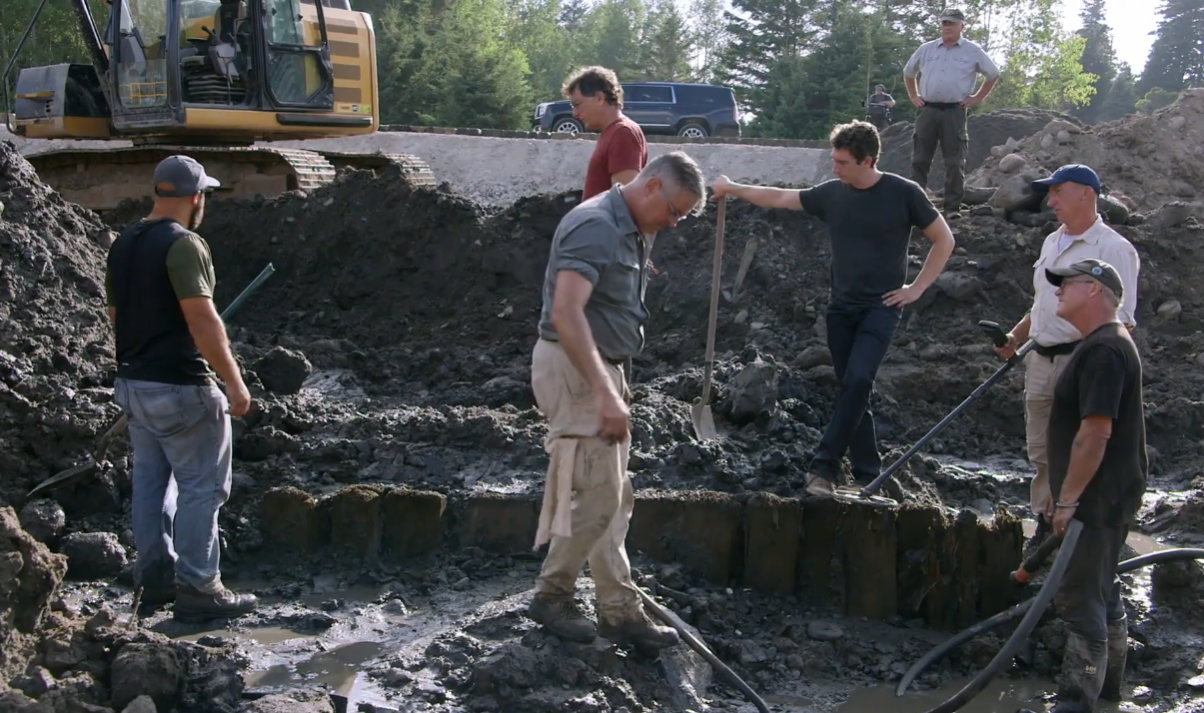
The mystery of Oak Island has long been a battle between human ingenuity and the relentless Atlantic Ocean. This week, the “Fellowship of the Dig,” led by Rick and Marty Lagina, has tipped the scales in their favor. In a massive excavation at Smith’s Cove, the team has uncovered an engineering marvel that defies colonial records: a sophisticated U-shaped wooden structure, an intricate sewer-like drainage system, and timber-lined shafts plunging dozens of meters into the earth.
These discoveries come during a high-stakes Season 13, already marked by the recovery of 14th-century Roman coins, ancient warfare shells, and even a prehistoric Mammoth tusk. But while those finds suggest who was on the island, these massive wooden structures finally reveal how they managed to keep the Money Pit protected for centuries.
The U-Shaped Enigma
The centerpiece of the recent Smith’s Cove operation is a massive, notched wooden structure shaped like a “U,” found buried beneath meters of beach sediment. Preliminary dendrochronology (tree-ring dating) suggests the logs were felled in the mid-1700s—or perhaps even earlier—predating the official discovery of the Money Pit in 1795.
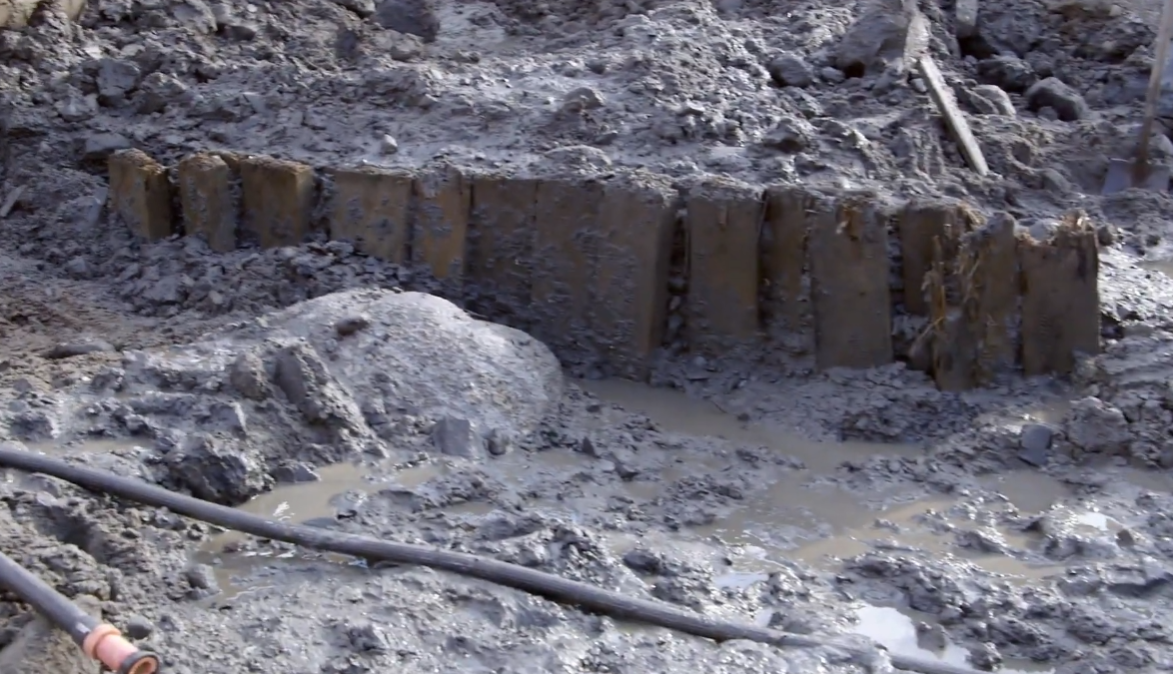
“This isn’t a simple wharf or a fishing pier,” Rick Lagina noted, running his hand over the preserved adze marks on the timber. “The joinery is precise, Roman-numeral-style ‘carpenter’s marks’ are visible on the beams, and the scale is industrial. It’s part of a massive hydraulic machine designed to control the flow of the ocean itself.”
The “Sewer” System of the Ancients
Adjacent to the U-shaped structure, the team unearthed a series of stone-lined channels and wooden box drains that resemble an ancient urban sewer system. However, on Oak Island, these “sewers” served a much more devious purpose.
-
The Finger Drains: These channels act like a giant hand, reaching out into the bay to collect seawater and funnel it with lethal efficiency toward the Money Pit.
-
The Filtration Layer: The drains were found packed with coconut fiber and eelgrass—materials not native to Nova Scotia—acting as a filter to prevent the system from clogging with silt over the centuries.
-
Hydraulic Warfare: Marty Lagina, the team’s engineering lead, believes this system is the “trigger” for the infamous flood tunnels. “Whoever built this understood fluid dynamics perfectly. They created a perpetual booby trap that drowns the treasure whenever someone gets too close.”
Plunging into the Deep: The Timber Shafts
Perhaps most shocking to the crew was the discovery of vertical timber-lined shafts located just inland from the cove. Utilizing heavy-duty oscillators and high-pressure water jets, the team cleared the debris to find shafts extending dozens of meters down.
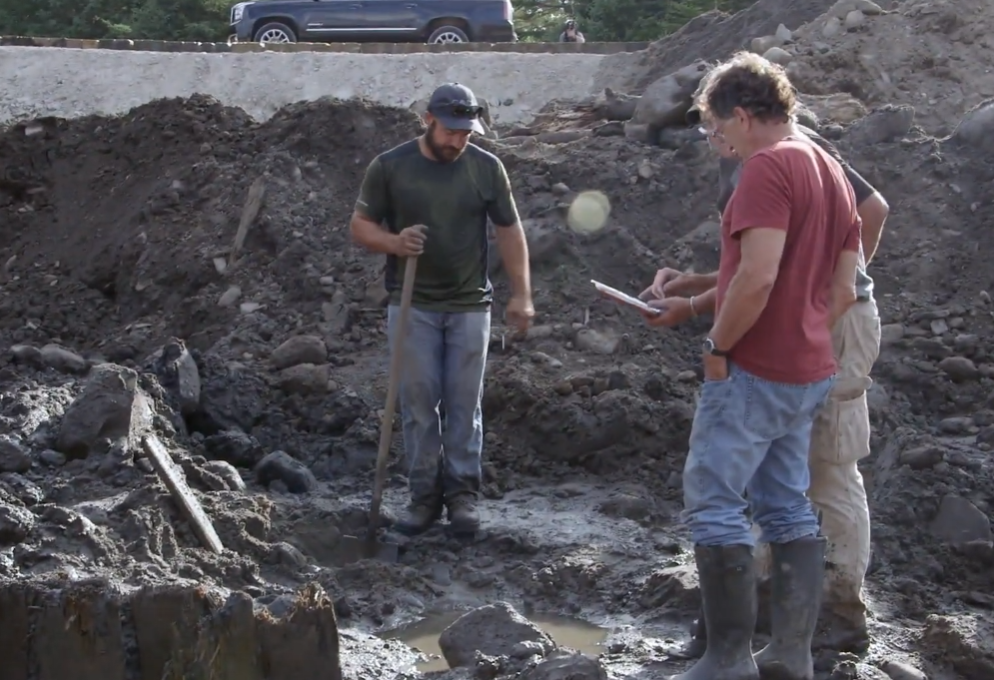
Unlike the rough-hewn shafts of 19th-century searchers, these structures feature interlocking notched logs and clay packing that remains watertight after hundreds of years. “To build something this deep, this close to the ocean, requires a level of mining expertise that simply shouldn’t have existed here in the 1700s,” remarked site geologist Terry Matheson.
The depth of these shafts suggests they may be “relief valves” or access points for the primary flood tunnel system, leading directly toward the recently discovered ancient tomb.
A Race Against the Tide
The discovery has placed the fellowship under immense pressure. As the Atlantic winter approaches, the cofferdam protecting Smith’s Cove is under constant threat from rising tides and storm surges. With the recent friction between Rick and Marty over safety and the ongoing absence of Alex Lagina, every hour in the mud is a test of the team’s resolve.
“We are looking at the ‘bones’ of the island’s defense system,” Rick Lagina said during a late-night briefing. “If we can dismantle the U-shaped structure and plug these drains, the Money Pit will finally be vulnerable. The secret is within our grasp.”
As Season 13 moves toward its finale, the focus has shifted from “finding gold” to “defeating the engineers of the past.” With these massive wooden structures now exposed, the fellowship is closer than ever to uncovering the truth behind the world’s most sophisticated subterranean fortress.