Mystery Deepens as New Viking Artifacts and Evidence Surface in Oak Island Search
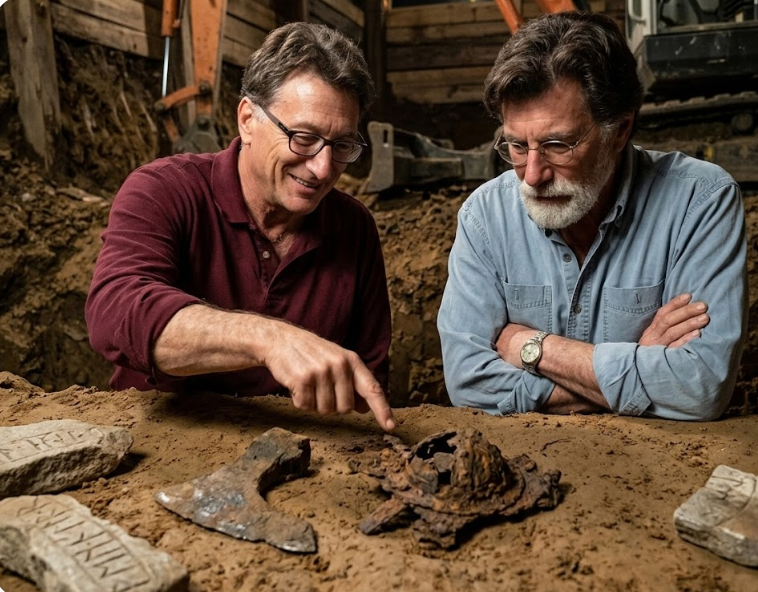
As the search for treasure continues on Oak Island, the mystery surrounding its history thickens with each passing season. Recently, the team behind the Oak Island excavation, led by Rick Lagina and his crew, embarked on an intriguing journey to L’Anse aux Meadows in Newfoundland, Canada. The goal: to uncover possible connections between the Vikings, the Knights Templar, and the legendary treasure hidden on Oak Island. What they discovered could potentially change everything we know about the island’s ancient secrets.
L’Anse aux Meadows, a historical Viking settlement dating back to around 1,000 AD, is the only confirmed Norse site in North America. The team’s visit to this remarkable location was inspired by an emerging theory suggesting that the Norse played a role in the mystery of Oak Island. With the presence of Viking artifacts and structures dating back to the 12th century, the connection between the Vikings and the Templars is becoming increasingly plausible. Could the Vikings have helped the Knights Templar transport sacred treasures across the Atlantic to Oak Island?
A Key Artifact: The Arrowhead
The trip to L’Anse aux Meadows proved to be a significant moment in the ongoing investigation into the Oak Island mystery. One of the key discoveries made by the team during their visit was a Viking-style arrowhead, which they believe could have a direct link to the island’s enigmatic past. The arrowhead, which was found on Oak Island in 1965 by the late Robert Dunfield, was analyzed by archaeologist Emma Culligan. X-ray fluorescence (XRF) scans indicated that the artifact dates back to a time before the 1600s. This finding aligns with the theories suggesting that the Vikings or their descendants may have been involved in the Oak Island mystery.
What makes the arrowhead particularly interesting is its connection to a material known as bog ore. The iron used in Viking tools and weapons was often sourced from bog iron, a naturally occurring iron deposit found in swamps or rivers. This material was common in Viking settlements, and its use on Oak Island could further solidify the theory that Vikings were active in the region centuries ago. The team’s ability to link the arrowhead to bog ore is a crucial piece of evidence that could finally unlock the mystery of Oak Island’s past.

New Evidence from L’Anse aux Meadows
The team’s exploration in L’Anse aux Meadows wasn’t just about one artifact. It was also about connecting the dots between different pieces of evidence that have emerged over the years. The researchers discovered that the Vikings may have traveled south to Oak Island and beyond. One key piece of evidence supporting this theory is the presence of butternut seeds, a plant that grows in the New Brunswick and Nova Scotia regions but is not native to the area around L’Anse aux Meadows. This suggests that the Vikings may have journeyed as far south as Oak Island, potentially using it as a base for treasure hiding.
The presence of bog iron at L’Anse aux Meadows further reinforces the possibility that Vikings, with their advanced metalworking techniques, played a role in crafting some of the artifacts found on Oak Island. The team is now planning to test the bog iron found at L’Anse aux Meadows to compare it with the bog iron found on Oak Island. If the results show similarities, it could indicate that the two locations are connected by more than just speculation.
The Templar Connection
As the team delves deeper into the mystery of Oak Island, they also continue to explore the role of the Knights Templar in the island’s history. The idea that the Templars may have used the Vikings to transport their treasure to Oak Island has been a key part of the investigation. The discovery of a Viking sail and symbols related to the Templar Order on the island has raised new questions about the connection between these two groups.
One of the most significant discoveries in recent seasons has been the so-called “goose paw” symbol, which appeared on a rock on the shore of Oak Island. This symbol, also associated with the Knights Templar, has been found in other locations across Europe, including Valkenburg Castle in the Netherlands. The Templars’ connection to Oak Island continues to be a focal point for the team, especially in light of their findings in L’Anse aux Meadows.
The recent discoveries in Newfoundland, combined with the ongoing research on Oak Island, have led to a growing consensus that the Templars and the Vikings were closely linked. The presence of Viking artifacts, such as the arrowhead and bog iron, coupled with the Templars’ history of hiding treasures, could mean that the treasure on Oak Island is the result of a joint effort between these two legendary groups.

What’s Next for Oak Island?
As the investigation continues, the team’s next steps will be critical in uncovering the true nature of the treasure hidden on Oak Island. With the new evidence linking the Vikings to the island’s past, the team is now focused on expanding their search. The potential discovery of Viking treasure, including sacred artifacts hidden by the Templars, is within reach.
The team will also continue to analyze the connections between the Vikings, the Templars, and the ancient symbols found on Oak Island. Each new discovery brings them closer to solving one of the most enduring mysteries in history. Whether the treasure is tied to the Templars’ lost artifacts or a Viking hoard, the findings in L’Anse aux Meadows provide a tantalizing glimpse into the past and may ultimately reveal the truth behind the Oak Island mystery.
As the team prepares for further exploration, one question remains: will they finally uncover the treasure that has eluded treasure hunters for centuries, or will the mystery of Oak Island continue to captivate the world for generations to come?