New Evidence Suggests Oak Island Was Built to Protect Something Else. Not Treasure?
After more than a decade of excavation, speculation and costly drilling, Season 13 of The Curse of Oak Island may have delivered something far more significant than treasure. According to late-season drilling data and camera footage, the team uncovered evidence of what appears to be a deliberately constructed underground chamber—one that challenges long-held assumptions about the Money Pit and raises new historical questions.
For brothers Rick Lagina and Marty Lagina, the season began with renewed determination. After years of fragmented shafts, partial tunnels and inconclusive artifacts, they introduced a new large-diameter caisson shaft nicknamed “Cerberus,” designed to penetrate deeper and more securely than previous attempts. The objective was clear: reach undisturbed ground and obtain definitive evidence of what lies beneath.
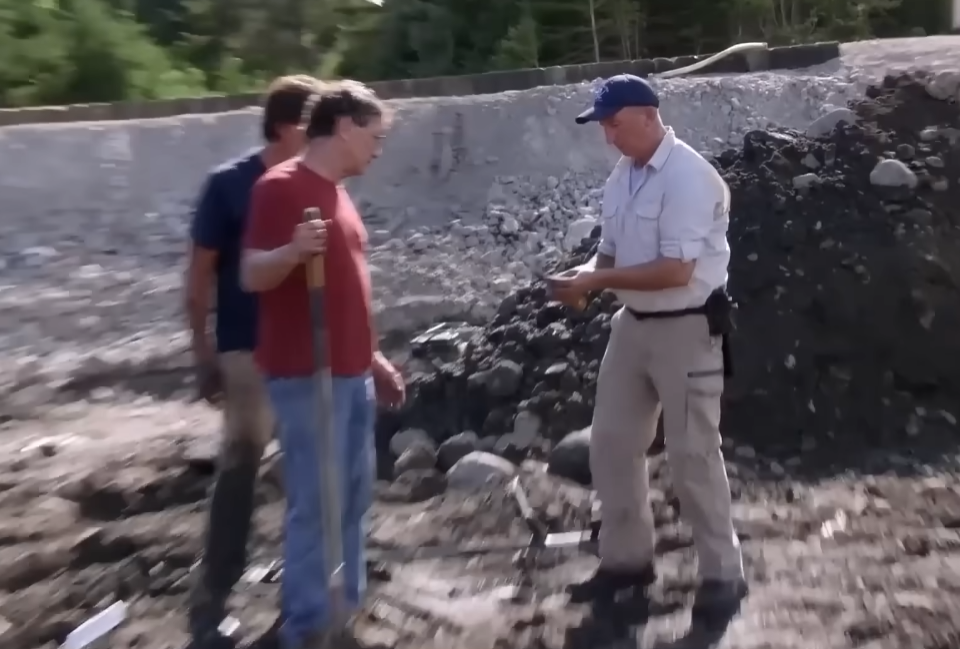
The early weeks were characteristically difficult. Water infiltration stalled operations, clay collapses slowed progress and the team processed countless buckets of soil for minimal return. Metal detection expert Gary Drayton recovered a small non-ferrous artifact dated to the late 1600s, while timber samples from deep clay layers suggested activity centuries before the island’s documented discovery in 1795. Intriguing—but not conclusive.
The turning point came late in the season.
Advanced sonic drilling scans detected an anomaly more geometric than natural. Instead of chaotic limestone voids typical of the island’s known “solution channels,” readings showed what appeared to be a defined, box-like cavity over 200 feet below surface level. Geologist Dr. Ian Spooner described the signature as inconsistent with natural erosion patterns.
A fibre-optic camera was deployed.
What appeared on screen stunned the war room. Rather than loose rock and sediment, the footage suggested smooth, fitted stone surfaces lining the cavity. The stone did not resemble local limestone. Instead, preliminary visual analysis suggested basalt—a volcanic rock not native to Nova Scotia. If confirmed, that would imply transportation from a distant source.
Even more striking was a circular metal plate embedded into one wall, accompanied by carved geometric and symbolic markings. The imagery included crosses, star-like shapes and structured motifs that did not immediately correspond to known colonial markings.
The implication was profound: if man-made, this chamber represented deliberate construction at depth—engineering, not accident.
Experts consulted remotely offered cautious interpretations. Architectural historians suggested the fitted stonework resembled fortified vault construction rather than crude shaft reinforcement. Symbol analysts noted that the carvings appeared structured, possibly coded rather than decorative. Metallurgical observers speculated the plate could be a copper-based alloy or even electrum, historically used in symbolic or ceremonial objects.
One theory quickly resurfaced: the Knights Templar.
The Templar narrative has long hovered around Oak Island, particularly the suggestion that a fleet departed La Rochelle in 1307 as the order faced suppression in France. Some researchers have hypothesised that Templar affiliates may have transported relics, archives or sacred objects across the Atlantic. While mainstream historians remain sceptical of pre-Columbian transatlantic Templar voyages, the new chamber—if authenticated—reintroduces the debate with fresh material evidence.
But here is where Season 13 may have subtly shifted the narrative.
The chamber’s alignment, according to drilling data, appears to correlate with other subsurface anomalies previously identified but not fully explored. Rather than a singular vault containing treasure, the configuration suggests coordinated underground planning. The spacing and depth could reflect defensive engineering—structures designed to protect or conceal, not simply to store wealth.
In other words, the Money Pit may not be the final destination. It may be an entry point, a barrier system or even a misdirection.
Historically, medieval military engineers constructed layered flood tunnels and diversionary shafts to deter intrusion. If similar principles were applied here, the elaborate flooding mechanisms reported in early search accounts might not have been accidental groundwater, but engineered deterrents.
The team’s proposed “honeycomb” strategy for future exploration—multiple interconnected shafts surrounding the Money Pit—reflects this evolving understanding. Rather than drilling vertically toward a presumed treasure cache, Season 13 suggests the need for lateral mapping and structural analysis.
Still, critical questions remain unanswered.
Are the stone walls conclusively basalt? Laboratory confirmation is essential. Are the symbols genuinely medieval, or do they reflect later colonial ritual or industrial marking? Has the chamber been fully surveyed, or could optical distortion exaggerate its geometry? And perhaps most importantly: is this cavity part of a larger network?
Sceptics argue that Oak Island’s complex geology frequently produces misleading formations. Natural voids can appear angular under artificial lighting. Historical searcher debris complicates stratigraphy. Without physical excavation of the chamber itself, interpretation remains speculative.
Yet even cautious observers acknowledge that the Season 13 footage stands apart from previous discoveries.
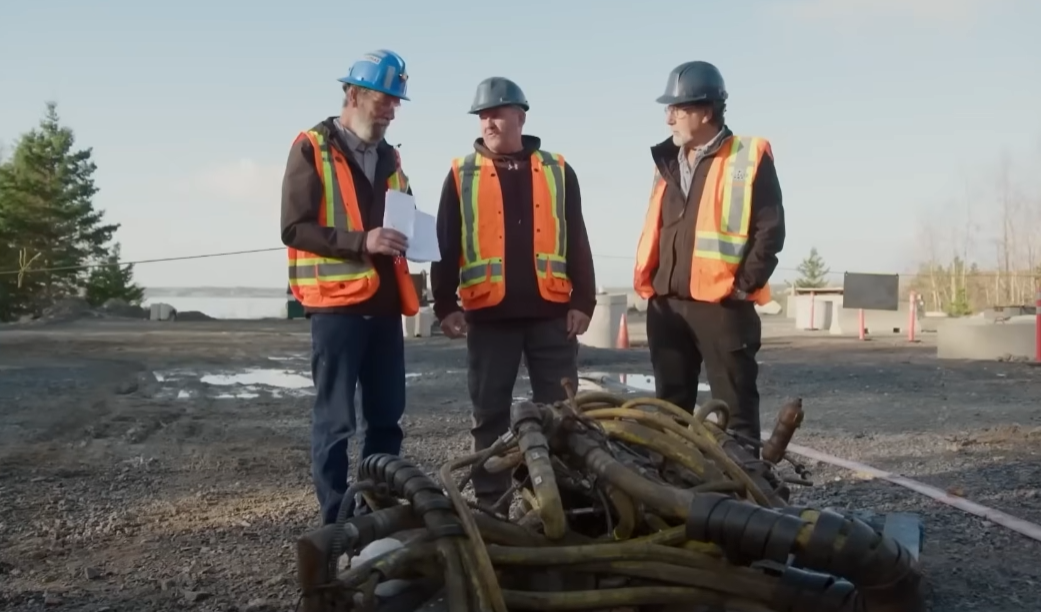
For Rick Lagina, who has devoted much of his life to the search, the emotional weight was evident. But beyond emotion lies a structural reality: if the chamber is authentic and deliberately engineered, the Oak Island mystery may not centre on pirate gold or royal jewels at all. It may concern preservation—of relics, archives or knowledge.
If so, the greatest shift in the island’s narrative is not about finding treasure, but about understanding intent.
Season 13 did not deliver coins spilling from a vault. Instead, it may have revealed something more consequential: a signpost pointing elsewhere. Whether linked to medieval orders, early European exploration or unknown colonial activity, the newly identified chamber reframes the search.
Oak Island has always been a puzzle layered in mud, myth and money. What Season 13 suggests is that the final piece may not lie directly beneath the Money Pit, but in the engineered pattern surrounding it.
As preparations begin for the next phase, one conclusion seems increasingly clear: the mystery is no longer just about what is buried. It is about why it was buried—and how deliberately it was meant to remain hidden.