Oak Island’s Hidden Door Finally Opened! Rick Lagina’s $90M Find Will Shock You!

For more than two centuries, Oak Island has been associated with persistent mystery, repeated excavations, and theories that stretch across continents and centuries. Yet recent developments beneath the island suggest that the long-running search may be entering a fundamentally different phase—one less focused on isolated finds and more concerned with intent, design, and historical purpose.
At the center of this renewed attention is Rick Lagina, who in the latest phase of work oversaw the opening of a sealed stone feature more than 140 feet below the surface. Unlike previous discoveries involving loose artifacts, collapsed tunnels, or displaced timbers, this structure appeared deliberate in both construction and placement. Initial scans and physical examination suggested it was not the result of natural geological forces or later colonial activity, but a built element designed to endure.
According to the team’s analysis, drilling equipment encountered a smooth, uniform stone surface inconsistent with surrounding geology. Ground-penetrating radar and sonar imaging confirmed the presence of a rectangular void behind it—an anomaly that immediately distinguished the find from earlier cavities discovered in the Money Pit area. Marty Lagina, reviewing the data, noted that the shape and orientation resembled an entry point rather than a collapsed chamber.
What followed was careful documentation rather than rapid excavation. Material analysis indicated traces of forged metal embedded in the stone, suggesting hinge mechanisms or reinforced fittings. Laboratory testing of nearby oak fragments placed their origin between the late 13th and early 14th centuries, a period that has long featured in Oak Island speculation but rarely with such converging evidence.
The significance of this dating lies not only in its age, but in what it implies. The period aligns with the suppression of the Knights Templar in Europe, a moment marked by the sudden disappearance of wealth, records, and personnel tied to the order’s extensive networks. While the Oak Island team has repeatedly stressed that no single discovery proves Templar involvement, the architectural precision and timeframe of the structure have reopened discussion about organized, pre-colonial activity on the island.

Further examination revealed carvings on the stone surface—geometric forms including concentric circles, crosses, and star-like patterns. Rather than decorative motifs, experts consulted by the team suggested the markings functioned as a cipher or alignment system. When digitally reconstructed, the patterns appeared to correspond with constellations visible in the early 1300s, raising the possibility that the structure served not only as a physical barrier, but as a chronological marker.
Advanced LiDAR scans reinforced the interpretation of intentional engineering. The stone feature was anchored into bedrock with interlocking joints, distributing weight in a way that resisted collapse despite centuries of groundwater pressure. Hydraulic modeling estimated the slab’s mass at more than 20 tons—an extraordinary undertaking for medieval builders, particularly in a remote Atlantic location.
Inside the newly accessed chamber, the environment differed sharply from surrounding tunnels. Walls were coated with a lime-based plaster known from Mediterranean construction, designed to repel moisture. Timber supports showed joinery techniques associated with trained craftsmen rather than improvised digging. The space did not resemble a simple cache or hurried concealment.
What emerged instead was the impression of a curated environment. Stone recesses lined the walls, some containing corroded metal objects, pottery fragments, and ritual vessels. The arrangement suggested categorization rather than storage for transport. While precious metals were present, they were not piled or scattered. Each item appeared placed with deliberation.
Notably, sensors detected traces of mercury vapor near the initial breach—an element historically used both in preservation and as a deterrent. This discovery prompted a temporary halt to physical entry and reinforced the interpretation that the chamber was meant to remain sealed, not merely hidden.
Beyond the first chamber, scans identified additional voids and sealed partitions, indicating a larger complex rather than a single room. One stone outline in particular suggested another entryway of greater scale, possibly leading to what the team has cautiously described as an archival space rather than a vault.
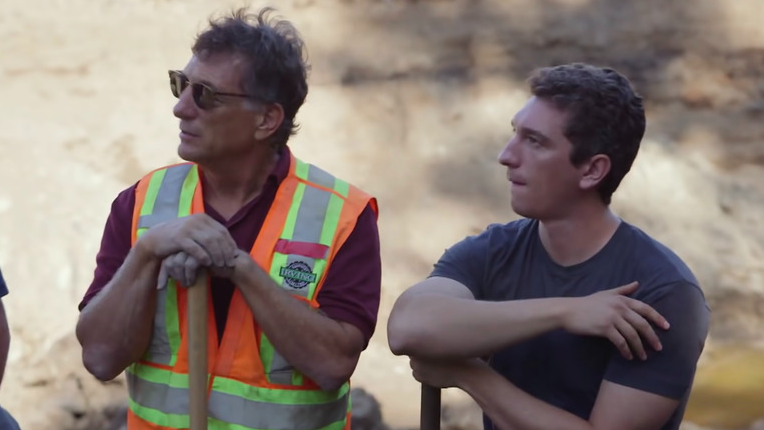
Rick Lagina addressed the implications carefully. He emphasized that Oak Island has always been about understanding why people came here, not just what they may have left behind. “Every time we uncover something like this,” he noted, “it points more toward planning, organization, and belief than simple wealth.”
That distinction matters. An archive implies knowledge, records, or relics preserved for reasons beyond monetary value. If confirmed, it would reposition Oak Island within a broader historical narrative involving secrecy, transmission of information, and long-distance movement well before conventional timelines suggest.
For now, the team is proceeding methodically. Artifact cataloging, atmospheric testing, and expanded sonar mapping continue, with no immediate plans to fully open deeper sealed areas. As past experience has shown, Oak Island rarely offers straightforward answers.
What this discovery has done, however, is narrow the range of explanations. The evidence increasingly supports the idea that Oak Island was not an accidental hiding place, nor solely the target of later treasure hunters. Instead, it appears to have been chosen, prepared, and protected.
Whether the island ultimately yields definitive proof of who built these structures remains to be seen. But with each carefully documented step, the search moves further away from folklore and closer to historical inquiry—where the true value of Oak Island may finally reside.