Oak Island’s Roman Coin Discovery Deepens the Island’s Most Confounding Mystery
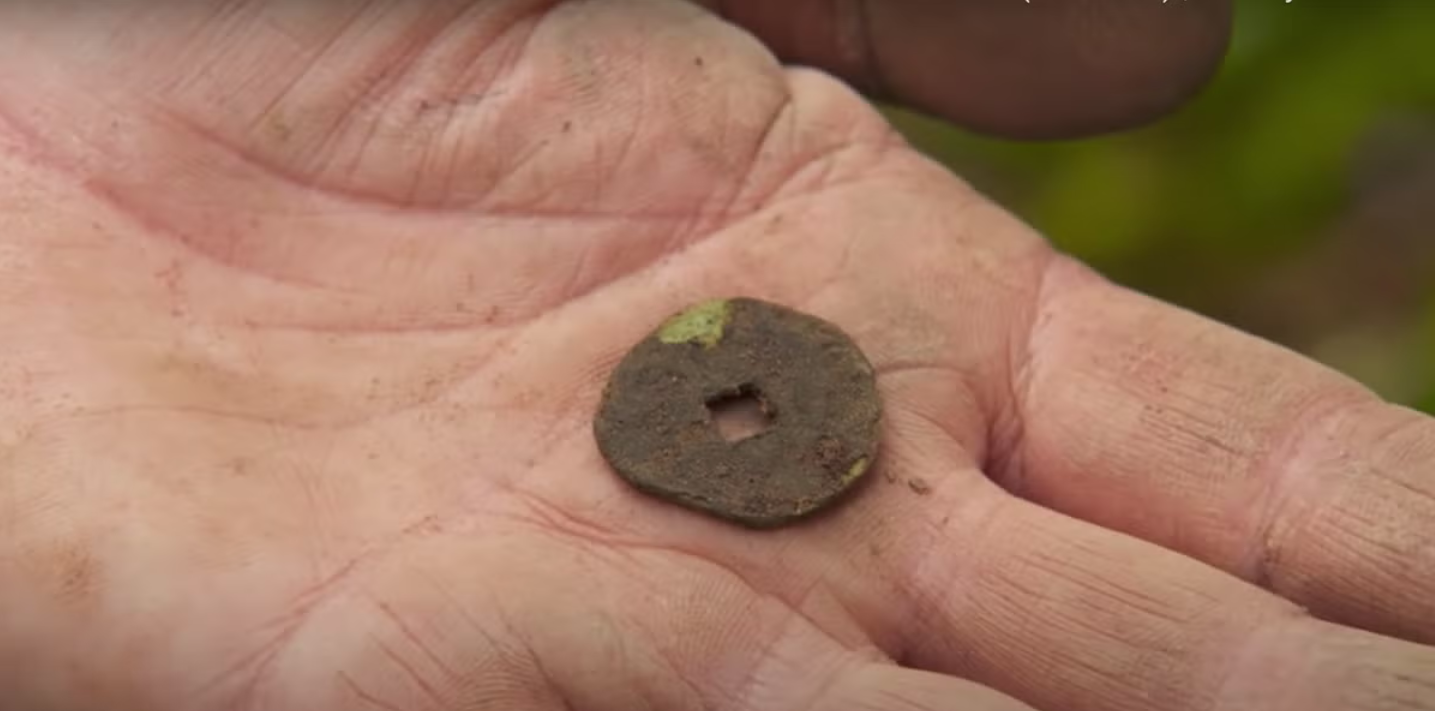
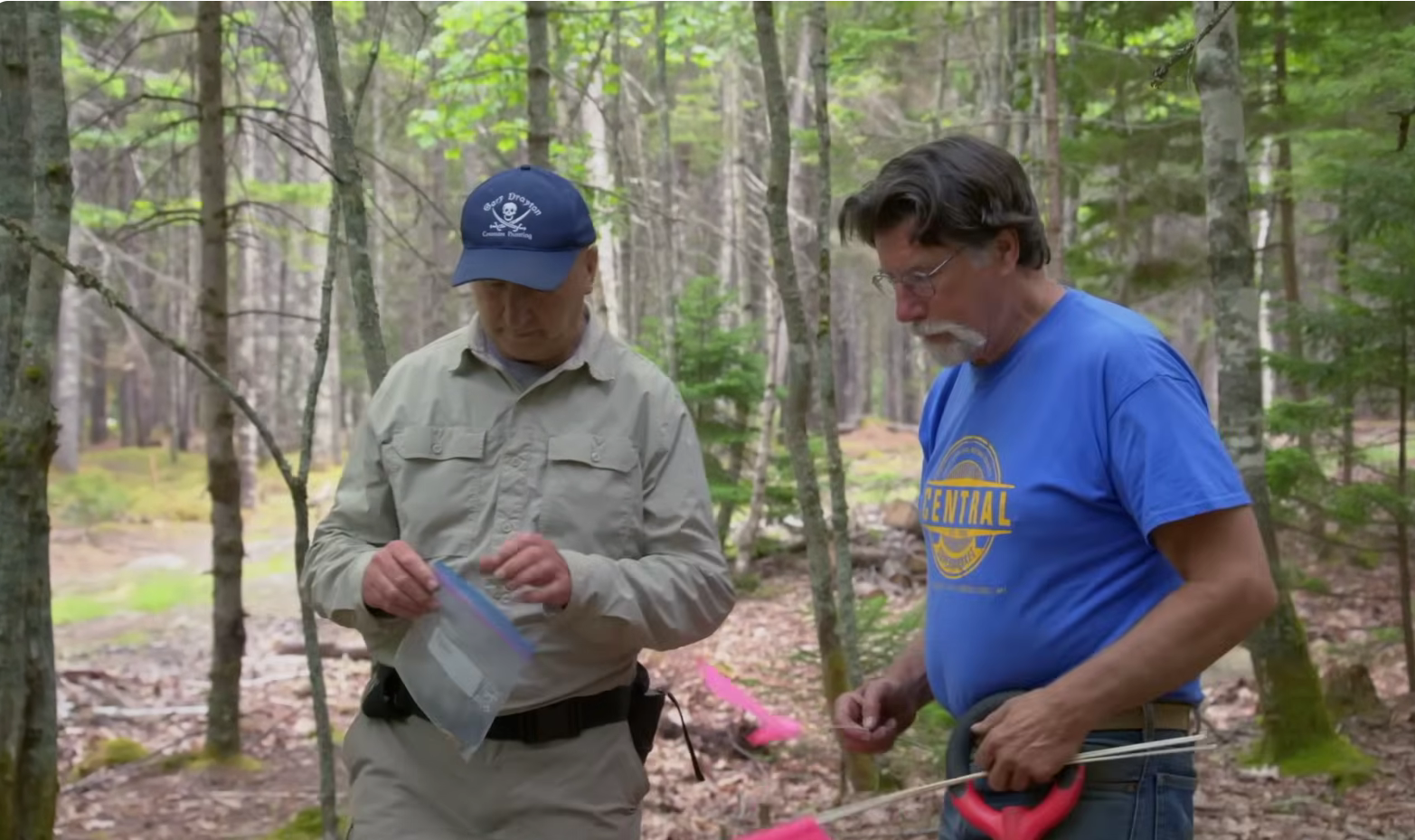
A bright morning on Oak Island has once again delivered a discovery that threatens to rewrite everything we thought we knew about the island’s past. The team behind The Curse of Oak Island has confirmed the recovery of an exceptionally well-preserved Roman coin—possibly dating back more than 1,700 years—unearthed on Lot 5 during a recent sweep conducted by Marty Lagina and metal detection specialist Katya Drayton.
While the series has revealed Roman artifacts before, this coin stands apart. Thanks to advanced CT-scanning and expert analysis, the team now has its clearest evidence yet of a third-century Roman connection to the island—an extraordinary claim in a region where no other Roman finds have ever been documented.
And, if the team’s early predictions are right, this discovery could steer the entire season toward one of its most consequential investigations in years.
A Third-Century Coin With an Extraordinary Story
Materials specialist Dr. Emma Culligan presented the team with high-resolution CT scans showing crisp iconography on both sides of the coin:
-
a crowned imperial bust with defined facial features
-
a standing figure on the opposite face, framed in classical Roman proportions
According to Culligan, the sharply angled nose and chin of the portrait strongly resemble coins minted during the short but eventful rule of Emperor Claudius II (268–270 AD).
“This is Roman, without question,” Culligan confirmed. “The composition, the workshop marks, everything fits.”
For Rick Lagina, who has spent years arguing that Oak Island’s mystery stretches much further back in time than colonial records suggest, the coin is more than an artifact—it is validation.
“I’ve always believed something very old happened here,” Rick said. “This may be one of the strongest indicators yet.”
No Nova Scotia Precedent — And That Changes Everything
To make sense of the object’s implications, the team consulted coin expert Sandy Campbell. Campbell verified the coin’s authenticity and third-century design. But one aspect stunned him:
“I’m not aware of any other Roman coins found anywhere in Nova Scotia,” he said. “To find six on a single island is remarkable.”
According to Campbell, Roman coins continued circulating in Europe as late as the 1500s. This means the coin may not represent Roman visitation—but rather the movement of coins through medieval merchants, explorers, or seafaring groups.
Still, the concentration of coins in one small area raises a powerful question:
If these coins arrived centuries after Rome, why were they brought to Oak Island—and by whom?
Lot 5: The Island’s New Hotspot for Clues
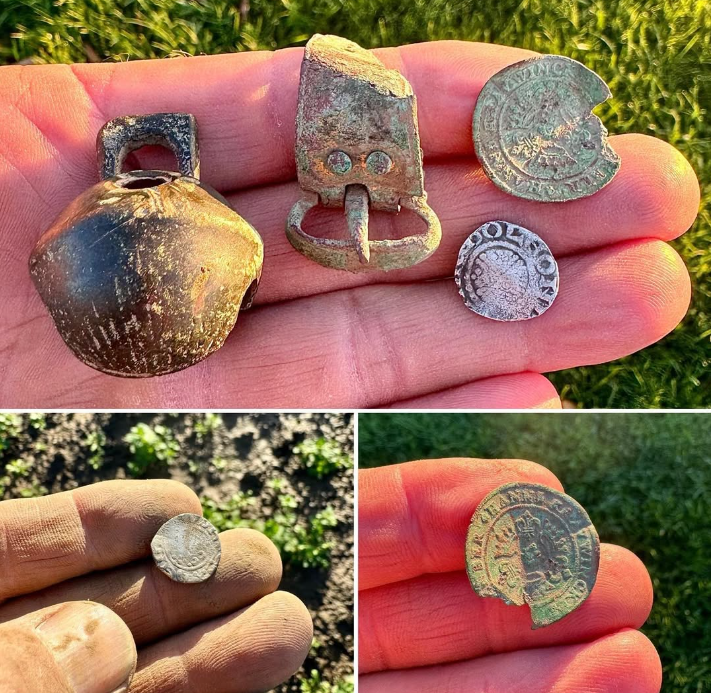
While the Roman find dominated the war room discussion, excavations on Lot 5 delivered even more evidence of early—and possibly secretive—activity. Archaeologist Fiona Steele uncovered fragments of ornate earthenware, possibly dating to between the 1600s and 1800s.
No records exist of permanent settlement on Lot 5, making the pottery’s presence puzzling. The artifact’s craftsmanship suggests everyday use, not ceremonial or elite activity.
“The material points toward multi-occupational use,” Steele said. “We’re seeing layers of human presence that don’t match historical documents.”
This combination—European pottery layered with Roman coinage—suggests Lot 5 may have served as a staging ground, a drop site, or a processing location for travelers spanning multiple eras.
Templar Theories Reignite With New Evidence
Whenever Roman artifacts emerge on Oak Island, one theory resurfaces immediately: the Knights Templar.
During earlier research missions, the Oak Island team documented Roman coins found at former Templar strongholds in Iceland and the Mediterranean. Some historians argue the Templars collected knowledge, wealth, and ancient objects—transporting them across continents during their expansion centuries.
While none of this proves a Templar presence on Oak Island, the pattern is intriguing.
Historian Doug Crowell noted:
“One of the interesting parallels is the recurrence of Roman coins at Templar sites. It isn’t proof—but it’s a pattern worth paying attention to.”
If Templar-associated groups transported these coins to Nova Scotia in the late medieval period, it could explain their presence on Oak Island without invoking direct Roman occupation.
What Comes Next: Three Predictions Based on the New Evidence
1. Expanded Excavation on Lot 5
With six Roman coins, pottery fragments, and multiple anomalies, Lot 5 is now one of the island’s richest investigative zones. Expect the team to:
-
widen metal-detection sweeps
-
conduct deeper trenching
-
compare soil stratigraphy for timeline matching
Lot 5 may become a season-defining site, similar to the Garden Shaft in recent years.
2. Renewed Focus on Cross-Atlantic Theories
The coin opens the door for renewed exploration of:
-
Norse routes
-
medieval trade networks
-
post-Templar migration paths
Any new find could tie into a broader narrative of pre-colonial transatlantic movement.
3. A Potential Link to the Money Pit
Given the proximity of Lot 5 to the Money Pit region, the discovery raises a tantalizing possibility:
these coins may have been brought by the same group responsible for the Money Pit’s elaborate engineering.
If further artifacts appear in the Money Pit shafts matching Lot 5’s timeline, the team may finally establish a unified occupation theory.
The Mystery Only Deepens
For now, the Roman coin is both a breakthrough and a question mark. It proves contact with ancient European objects—but not the identity of the people who carried them. It suggests purposeful deposition—but not the motive.
As Rick Lagina summarized:
“It’s incredibly interesting—and just a little bizarre—that Roman coins keep appearing here. We need to keep looking.”
And Oak Island has made one thing unmistakably clear this season:
every answer only opens the door to deeper questions.