Rare Agate Necklace Discovery Offers New Insights into Oak Island’s Ancient Inhabitants
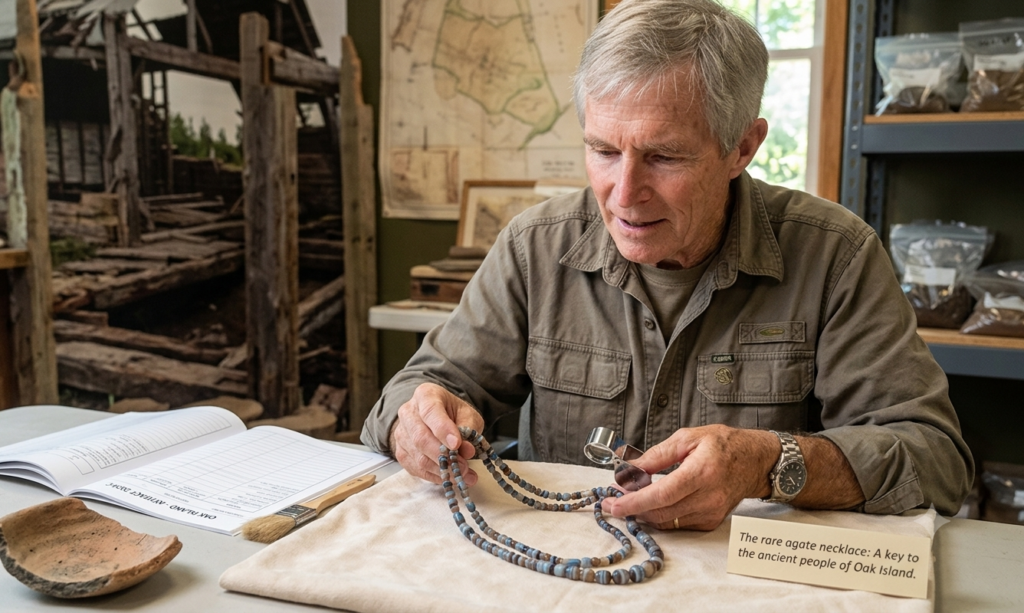
The latest season of The Curse of Oak Island has produced a development that could redefine our understanding of the island’s early occupants. A rare agate necklace, unearthed during a targeted excavation, has generated excitement not only among fans but also among archaeologists and historians following the show. Analysts of the series suggest that the discovery may provide critical insight into the people who once inhabited Oak Island, their cultural practices, and the island’s broader historical significance.
The necklace, composed of intricately polished agate beads and a distinctive clasp that hints at advanced craftsmanship, was found in a previously unexplored sediment layer near the Money Pit site. Its condition, remarkably well-preserved despite centuries of exposure, indicates it was intentionally buried, possibly as part of a ritual or as a form of wealth storage. Such artifacts are exceedingly rare on Oak Island, and their appearance prompts a series of questions regarding trade networks, technological capability, and societal structures among the island’s early residents.
From a program analyst’s perspective, this find is significant on multiple levels. First, it reinforces the notion that Oak Island’s history extends far beyond European settlement periods traditionally documented in historical records. The craftsmanship of the necklace suggests influences or techniques that predate commonly accepted timelines for regional occupation. Researchers and viewers alike are now examining whether similar materials or designs have been documented in surrounding regions, potentially linking the island to larger networks of pre-colonial or early-contact civilizations.
The context in which the necklace was found also offers clues about the ancient inhabitants’ activities on the island. Sediment analysis suggests the burial occurred in a secure, possibly ceremonial location, which aligns with other findings that indicate intentional modification of the landscape. Analysts predict that further excavation around the discovery site may reveal associated tools, domestic artifacts, or additional ornamental items, painting a more complete picture of life on Oak Island centuries ago.
Additionally, the find challenges previous assumptions about the social hierarchy and economic practices of the island’s early populations. The quality of the agate, its precise polishing, and the sophistication of the clasp all imply access to resources and technical skills that would have required a structured society. Unlike simple subsistence artifacts, ornamental pieces such as this necklace may indicate status differentiation, ceremonial practices, or long-distance trade. If corroborated by future discoveries, this could suggest that Oak Island was not merely an isolated outpost but part of a wider, interconnected cultural network.
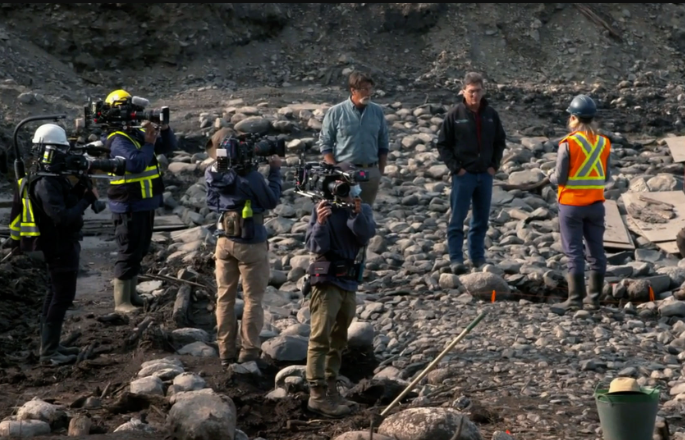
From a narrative standpoint, the discovery provides The Curse of Oak Island with a compelling new story arc. While much of the show’s drama revolves around the Money Pit and its rumored treasures, the presence of the necklace shifts some attention to cultural and historical investigation. Analysts anticipate that upcoming episodes will focus on the techniques used to create the necklace, the sourcing of the agate, and the implications for understanding early human activity on the island. This angle not only deepens the educational aspect of the series but also broadens its appeal to viewers interested in archaeology and anthropology.
Predicting future developments, several scenarios emerge. One possibility is the uncovering of additional artifacts in proximity to the necklace, suggesting a designated burial or ritual area. Alternatively, the team may uncover evidence of dwellings, tool-making sites, or agricultural activity contemporaneous with the necklace’s creation. Such findings could reframe Oak Island as a more complex settlement site, challenging narratives that have historically focused on treasure hunting and European colonial activity.
Moreover, this discovery may influence the interpretive approach of the Oak Island team. Past episodes have emphasized engineering challenges, treasure maps, and historical speculation. With the agate necklace providing concrete evidence of cultural sophistication, analysts predict that future expeditions will balance investigative mining with systematic archaeological methods. This may include detailed soil stratigraphy, radiocarbon dating, and comparative analysis with known pre-colonial sites on the mainland. The integration of scientific methodologies with traditional treasure hunting narrative could enrich the series, offering viewers both excitement and scholarly insight.

The necklace’s appearance also reignites discussions about the origin of other enigmatic findings on the island, such as stone chambers, wooden structures, and previously discovered artifacts whose provenance remains debated. Analysts suggest that establishing a chronological and cultural context for the necklace may help resolve some of these longstanding mysteries, potentially linking multiple discoveries into a cohesive framework of Oak Island’s prehistoric occupation.
For the viewing audience, the find strengthens the educational dimension of The Curse of Oak Island. While gold and legendary treasure remain central to the show’s drama, artifacts like the agate necklace remind viewers that Oak Island’s history is multi-layered. The narrative now encompasses archaeology, anthropology, and cultural history, offering a richer understanding of human activity and ingenuity in this geographically isolated setting.
In conclusion, the discovery of the rare agate necklace represents a pivotal moment in the ongoing exploration of Oak Island. Analysts predict that the artifact will catalyze further excavation, detailed scientific study, and potentially significant revelations about the island’s ancient inhabitants. As the team continues to probe the Money Pit and surrounding sites, viewers can expect a season that balances treasure-seeking suspense with thoughtful investigation into the people who shaped Oak Island long before modern fame and speculation. The necklace, with its craftsmanship and preservation, may well become the key to unlocking a deeper, more complex understanding of one of the most enigmatic locations in North American history.