Rick Lagina Opens the Door to History: Oak Island’s ‘Aladdin’s Cave’ Holds Surprises.

In an unprecedented moment that has stunned the archaeological community, Rick Lagina, along with his team, has reportedly breached a sealed, undocumented hatch on Oak Island that had remained untouched for over two centuries. This discovery, deep within a newly identified subterranean network, is the first visual confirmation of an entry point many historians believed was either a myth or had long been destroyed during earlier excavations. The significance of this find could be more profound than anyone had anticipated, with several clues suggesting a much more complex history to Oak Island’s mysterious past.
The Breach at 95 Feet
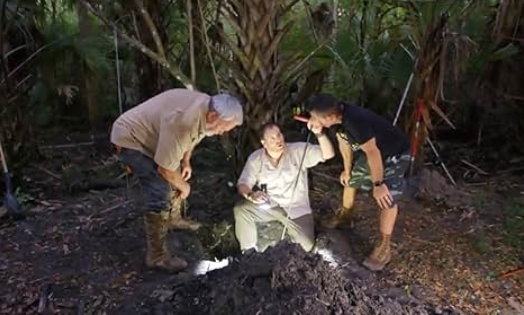
The breakthrough was achieved through a collaborative effort between Rick and Marty Lagina, their team, and Dumar Contracting. After months of battling persistent water ingress at the 65-foot level, the team deployed a pneumatic jackhammer to break through a stubborn layer of compacted glacial clay. When the drill bit struck something solid at approximately 95 feet, it was immediately apparent they had reached a significant point in their search. What they uncovered was a 7-foot-high tunnel, leading to the legendary “Garden Shaft,” where signs of 18th-century engineering were clearly visible.
Inside the tunnel, perfectly preserved wooden logs and round-timber construction techniques were identified. These construction methods, which mirror those found in the original Money Pit, suggest that Oak Island’s secrets may run much deeper than previously thought. For the Lagina brothers, this discovery was a game-changer, hinting that Oak Island could have been the site of much more than just a treasure hoard. Rick Lagina himself described the moment as a “solid strike” that has brought the search for the island’s secrets to a whole new level.
Aladdin’s Cave and the 3D Revelation
Following the breakthrough at the 95-foot level, the hunt for clues on Oak Island expanded into an area now dubbed “Aladdin’s Cave.” The team utilized advanced Eco Logger DSS710 sonar technology to generate a three-dimensional model of the cavern’s interior, revealing what appeared to be a man-made entryway and a hidden room beneath layers of sediment. The data from the 3D scans showed intricate details, suggesting that the cave could have functioned as a secondary deposit site or a crucial junction in a larger tunnel system beneath the island.
The revelations do not stop there. The surface team, led by metal detection expert Gary Drayton, recovered a lead trade token with intricate engravings on Lot 5, which underwent rigorous testing. The X-ray Fluorescence (XRF) and X-ray Diffraction (XRD) tests revealed that the lead matches the mineral composition of mines located in present-day Iran and Italy, providing significant evidence of trade routes far older than previously understood. Furthermore, a Roman coin dating back to 300 BC was found earlier this season, adding weight to the theory that Oak Island may have been a hub for intercontinental trade long before documented European arrivals in North America.
A New Era for the Oak Island Mystery
The recent finds have sent shockwaves through the world of Oak Island research, dramatically shifting the narrative of the treasure hunt. What was once believed to be a pursuit of a single chest of gold has now evolved into the exploration of an entire network of subterranean engineering systems, potentially spanning from the Roman Empire to the medieval Crusades. The discovery of the sealed hatch, the trade tokens, and the Roman artifacts suggests that Oak Island was not merely a storage site for treasure, but a location of strategic and possibly military significance.
At the “Great Quadrilateral,” another part of the island where excavations have continued, the team uncovered 18th-century clay fragments, glass, and a heavy metal fragment that is suspected to be part of a cannonball. This discovery, combined with earlier findings of a stone foundation near the shoreline, suggests that Oak Island may have been a fortified site once occupied by a disciplined force, further complicating the mystery of its history.
Implications for the Laginas and Future Excavations
For Rick and Marty Lagina, this discovery represents the culmination of over 15 years of effort. With the unearthing of the sealed hatch and the recent influx of evidence linking Oak Island to ancient and medieval historical periods, the mystery has expanded far beyond the original scope of treasure hunting. As Rick Lagina stood at the newly opened hatch, he remarked that the “smell of old earth” was a constant reminder of the hidden truths lying beneath the surface.
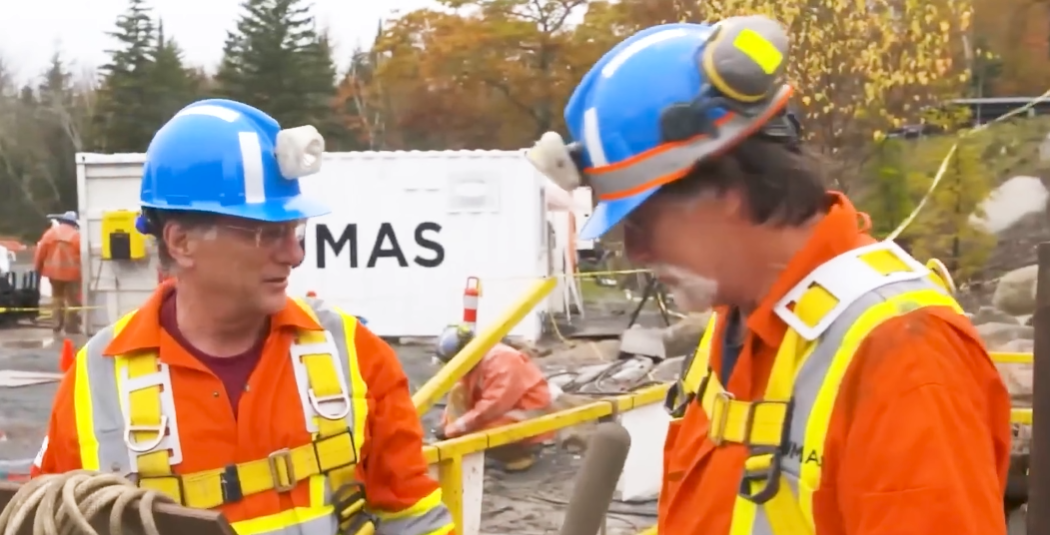
“This is not just another step,” Rick said. “It’s the truth hidden in the soil.”
While no definitive conclusions have been drawn about the specific purpose of the structures and artifacts found so far, it is clear that Oak Island’s mystery is far from over. The team has already made plans to explore further, and more discoveries may follow in the upcoming seasons of The Curse of Oak Island.
As the Laginas and their team continue to dig deeper, the discoveries on Oak Island are likely to challenge long-held assumptions about history itself, turning what was once considered a treasure hunt into a groundbreaking archaeological investigation. For historians, archaeologists, and viewers alike, the stakes could not be higher. What lies beneath Oak Island could rewrite entire chapters of history, offering clues not just about treasure, but about the lost civilizations that may have once passed through this remote corner of the world.
As the investigation presses on, the future of Oak Island remains uncertain, but the promise of even greater revelations makes the upcoming chapters of this saga all the more tantalizing. Could this finally be the year the team uncovers the truth that has eluded so many for over two centuries? Time will tell.