RICK LAGINA’S TEAM BLOCKED OFF AND BANNED OUT OAK ISLAND AFTER DISCOVERING A MYSTERIOUS UNDERGROUND TREASURE.
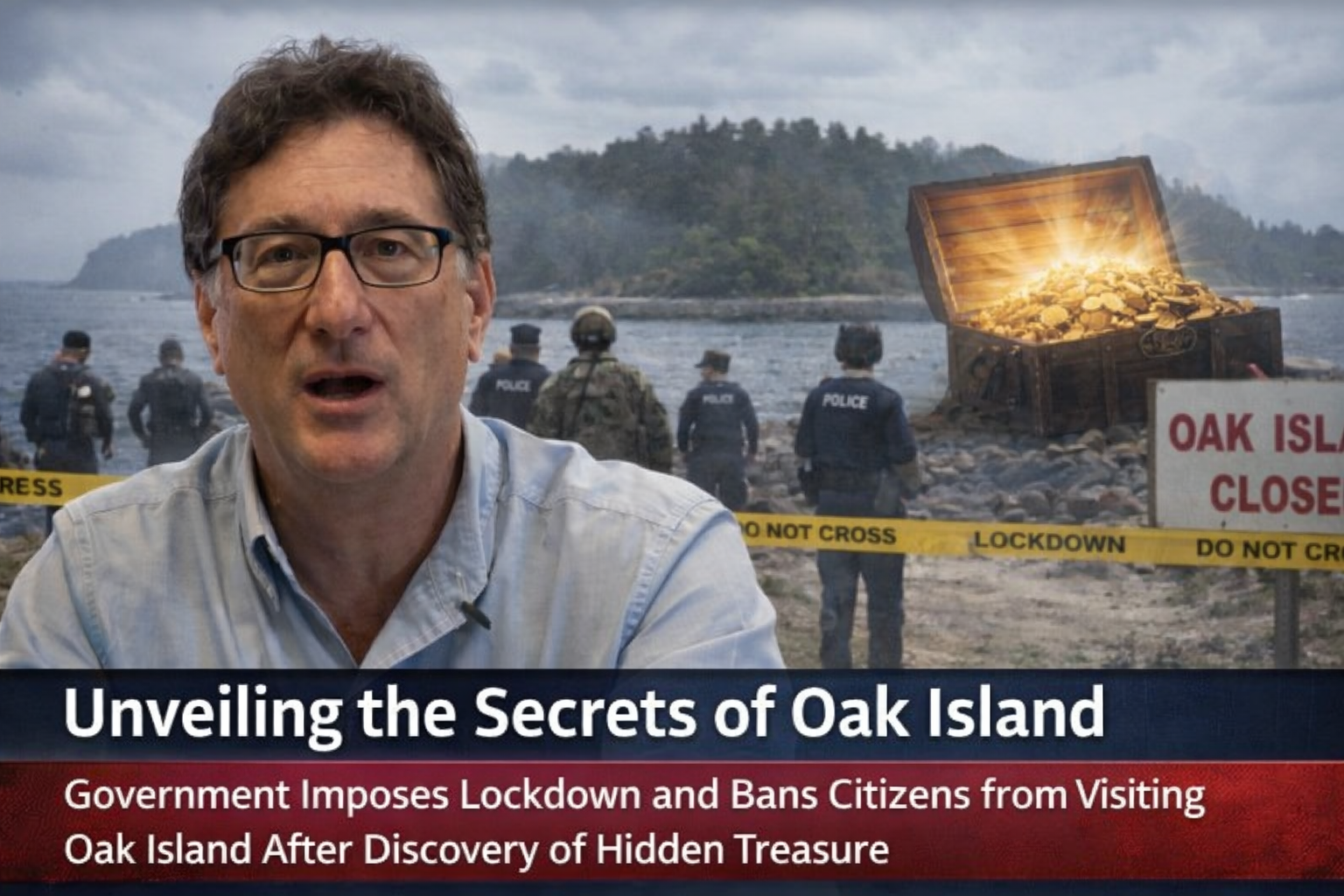
A dramatic sequence of events reportedly unfolding beneath Oak Island has triggered what analysts are calling the most consequential breakthrough in modern treasure-hunting history. According to newly surfaced operational footage and transmission logs, an underground chamber of extraordinary complexity has been opened, revealing not only vast material wealth but also engineered structures, coded artifacts, and a secondary sealed system still waiting to be explored.
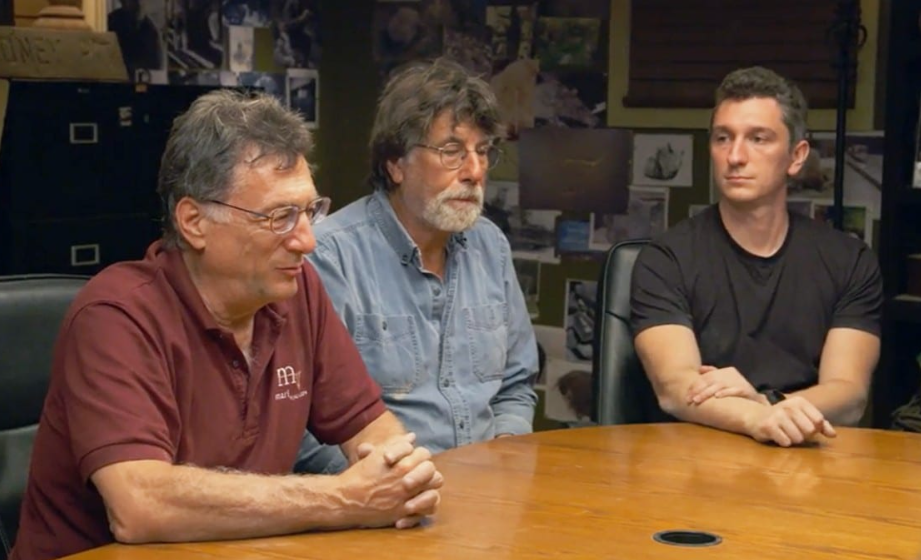
At the center of the operation are the long-standing investigators featured in The Curse of Oak Island, including Rick and Marty Lagina, who now find themselves navigating not just excavation challenges—but escalating political, financial, and institutional pressure as the scale of the discovery becomes increasingly difficult to contain.
A CHAMBER THAT CHANGED EVERYTHING
The breakthrough reportedly occurred during a late-night excavation when a sealed underground chamber was breached, triggering what witnesses described as an immediate global broadcast interruption and emergency-style alert messaging. Within moments, remote-operated cameras entered the space, revealing a vast constructed environment containing arches, carved stonework, and symbol-laden surfaces that appeared intentionally engineered rather than naturally formed.
As exploration continued, the chamber expanded into a labyrinthine system of mechanical structures—iron gears, wooden frameworks, pressure systems, and counterweighted mechanisms—suggesting a purpose far beyond simple burial or storage. Analysts reviewing the footage note that the design indicates a “functional underground system,” possibly built to protect or operate something deeper within the island.
The implications immediately shifted the narrative from treasure hunting to something closer to archaeological engineering mystery.

TREASURE CONFIRMED—BUT NOT EXPLAINED
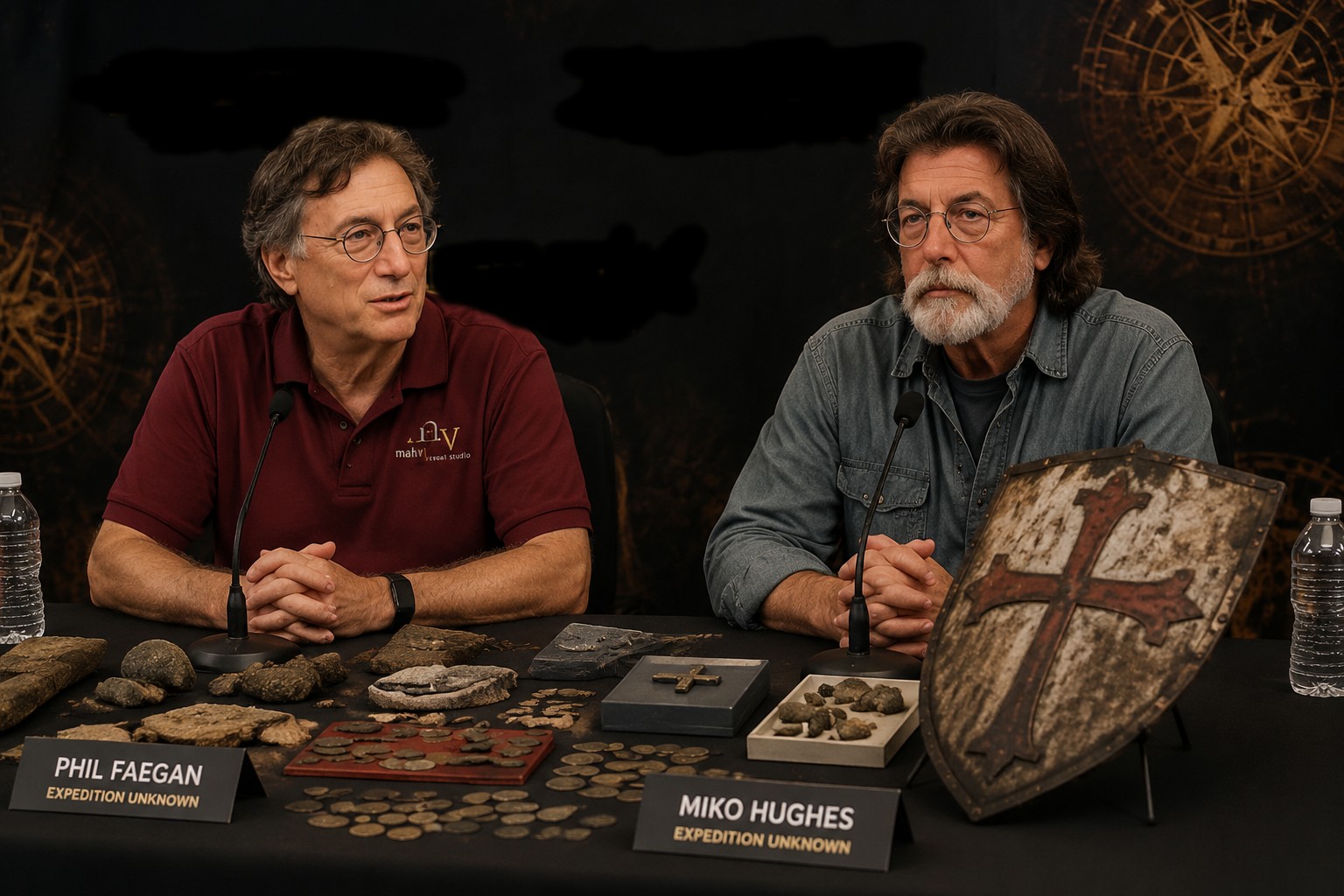
Inside a secondary chamber accessed via mechanical activation, investigators reportedly uncovered sealed containers filled with precious materials. Gold bars, ancient coins from multiple civilizations, and ceremonial artifacts were scattered across the floor in what one analyst described as a “controlled but abandoned wealth repository.”
Early estimates circulating among the research teams suggest a valuation in the hundreds of millions, though experts caution that the real significance may not be monetary. Instead, attention is increasingly focused on the unusual markings found on the gold itself—engraved symbols and coded inscriptions that do not match known minting systems or royal insignias.
Some researchers now believe the material may have served a dual purpose: wealth storage combined with encoded archival data embedded into physical currency.
THE WARNING THAT CHANGED THE MISSION
Shortly after the discovery, the excavation reportedly received an unidentified transmission: a direct warning stating that the site had been “never meant to be found.” The message has not been officially attributed to any known organization or authority.
Simultaneously, unfamiliar figures were observed around the perimeter of the site, prompting speculation of external enforcement or protective monitoring. Their presence has not been confirmed by official agencies, but their appearance has intensified fears that the discovery has geopolitical implications beyond archaeology.
For Rick Lagina, the situation reportedly represents a fundamental shift—from controlled excavation to contested territory.
GLOBAL INSTITUTIONS ENTER THE FRAME
As footage and leaked documentation spread online, major institutions reportedly began reviewing historical archives. Early comparisons have identified possible links between recovered artifacts and restricted Vatican inventories referencing relics, manuscripts, and ceremonial objects long believed lost since medieval conflicts.
Although no official confirmation has been issued, internal discussions among historians suggest that the artifacts may align with Crusader-era movements and potentially even networks associated with the Knights Templar.
A carefully worded statement attributed to high religious authority emphasized caution in handling “discoveries connected to sacred history,” though it notably avoided direct acknowledgment of Oak Island or the excavation findings.
Analysts interpret the silence not as denial, but as strategic containment.
THE FINANCIAL SHOCKWAVE
Beyond historical and archaeological implications, the discovery has reportedly begun affecting global markets. Economists warn that confirmation of large-scale hidden treasure systems could destabilize assumptions about rare metal scarcity, particularly if additional vaults are uncovered elsewhere in the suspected network.
Speculation about multiple connected sites has fueled volatility in commodity trading circles, with investors reacting to each new leak or alleged artifact identification. While no material has entered circulation, the psychological impact on markets has already been described as “non-trivial.”
The idea that buried medieval wealth could exist in structured global deposits has introduced unprecedented uncertainty into long-term financial modeling.
A SECOND VAULT AND A SECOND SYSTEM
Perhaps the most significant technical development involves the identification of a second subterranean tunnel, reportedly extending beyond the main chamber and terminating in a heavily sealed barrier reinforced with lead. Inscribed upon it is a symbol associated with imperial and secretive historical orders, further deepening the mystery.
Preliminary scanning suggests that the space beyond the barrier may exceed the size of all previously discovered chambers combined. Even more unusual are the recorded low-frequency vibrations detected throughout the bedrock—consistent, rhythmic pulses that appear to originate from deep underground.
Researchers remain divided on whether these signals are geological, mechanical, or artificial in origin.
CONTROL, OWNERSHIP, AND ESCALATION
As the scope of the discovery expanded, governmental involvement intensified. Maritime security zones were reportedly established around Oak Island, restricting access and initiating preservation protocols. Diplomatic discussions soon followed, with questions of ownership extending beyond national jurisdiction into international legal debate.
For the Lagina team, the situation has evolved into a conflict not just of excavation, but of authority. Competing claims from institutions, governments, and private stakeholders have transformed the site into a contested cultural and historical asset.
Rick Lagina is reported to have warned publicly that restricting access could erase the meaning of decades of work—an argument that has since gone viral among supporters of the investigation.
ANALYST CONCLUSION: THE BEGINNING OF A LARGER SYSTEM
From an analytical perspective, the most compelling aspect of the Oak Island event is not the treasure itself, but the structure surrounding it. The mechanical systems, coded materials, layered chambers, and interconnected tunnels suggest a deliberately designed network rather than an isolated burial site.
If verified, the implications are profound: Oak Island may represent not a destination, but a node within a broader engineered system spanning multiple regions and historical periods.
The final recorded statement from within the excavation summarizes the current sentiment among investigators:
“This isn’t the end of the story. It’s only the beginning.”
And if the evidence continues to escalate at its current pace, Oak Island may soon be reclassified—not as a mystery site—but as the opening chapter of something far larger than anyone anticipated.