THE 140-FOOT SUBTERRANEAN VOID: Advanced Seismic Mapping Reveals Interconnected Mega-Tunnel Network Beneath Oak Island
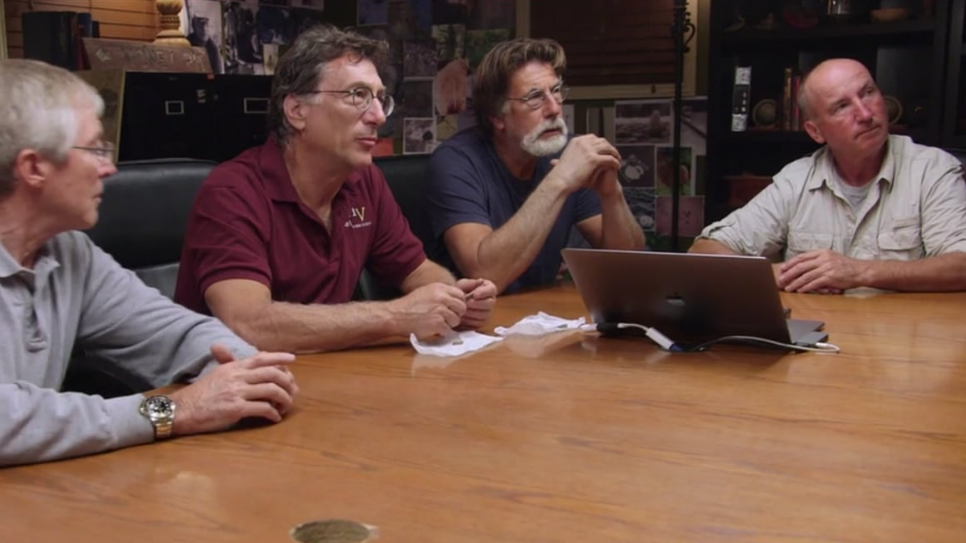
A stunning technological breakthrough has fundamentally rewritten the 230-year-old Oak Island mystery. In the latest stage of the multi-million-dollar expedition, advanced subterranean imaging has bypassed isolated search areas to reveal what experts are calling an engineered, interconnected underground tunnel network stretching hundreds of feet beneath the island’s surface.
The revelation, which sent a profound silence through the command center war room, shifts the narrative away from a traditional hunt for isolated buried relics toward the exposure of a massive, sophisticated pre-colonial engineering system.
The 40% Density Disruption
The paradigm shift occurred when data analyst Emma Culligan compiled a massive layered analysis, merging 12 years of drilling records and over 200 documented boreholes with newly acquired deep-earth seismic data.
The software immediately flagged extreme density variations of up to 40% at depths ranging between 110 and 145 feet underground. Rather than the scattered, irregular cavities typical of natural glacial geography, the anomalies materialized as highly symmetrical, geometric corridors cutting straight through the subterranean strata.
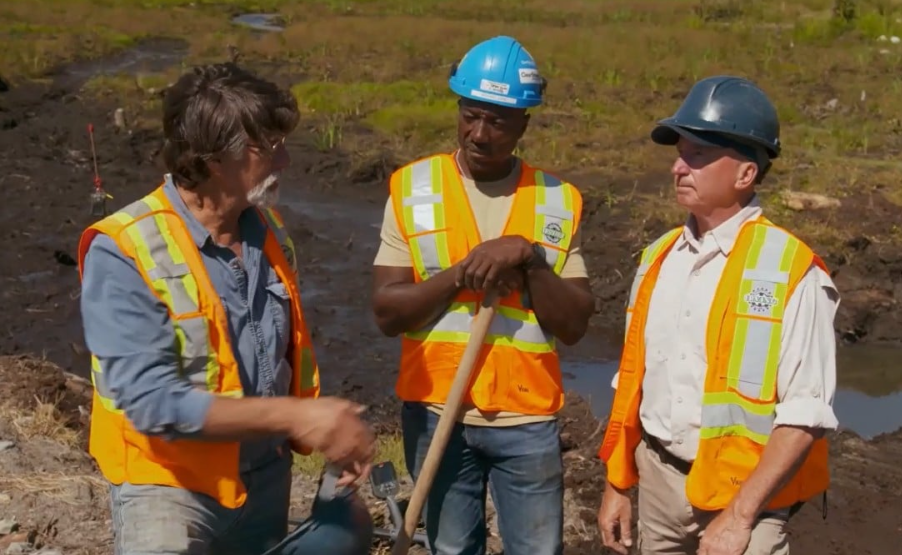
“If these formations are natural, this would be one of the rarest geological anomalies ever discovered,” admitted a consulting engineer on site. The extreme geometric precision has forced veteran searchers Rick and Marty Lagina to abandon purely natural explanations in favor of large-scale, intentional ancient construction.
Chilling Borehole Footage
The seismic models were given startling visual confirmation during a high-risk borehole camera descent targeting a major void 120 feet beneath the surface. Expecting the usual slurry of mud and fragmented limestone, investigators instead captured a massive hollow chamber measuring roughly 12 feet wide and 15 feet high.
More unsettling still was the composition of the chamber itself. The lens captured unnaturally smooth, vertical rock faces and sharp angles that strongly resemble man-made, stone-lined masonry.
During the descent, a bright reflection flashed across the camera monitor. Integrated sensor sweeps immediately recorded localized metallic activity measuring a staggering 68% higher than the island’s baseline environment. A second camera angle later identified a distinct, curved tunnel-like opening branching laterally off the chamber, suggesting the vault is merely a junction point within a broader underground labyrinth.
A Central Hub and the Flood Trap
For centuries, historians have debated whether the island’s notorious “flood tunnels”—which have historically breached and drowned excavation shafts within minutes—were genuine defense mechanisms or simply natural seaside fissures. Culligan’s master map appears to have settled the debate.
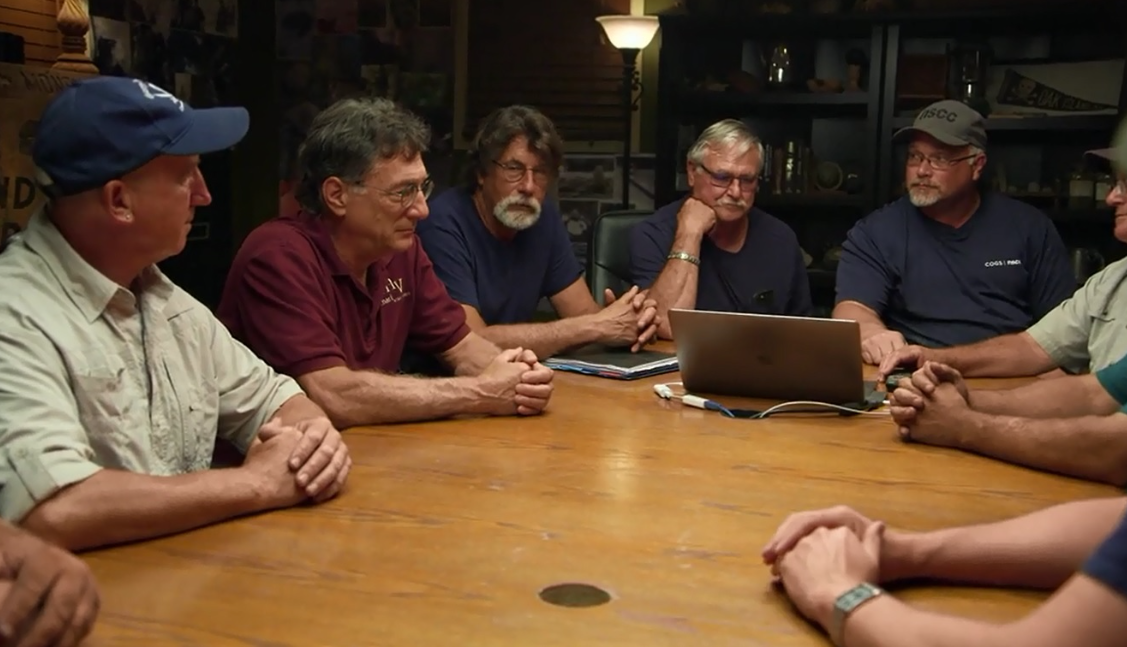
When the newly mapped corridors were tracked across the island’s grid, the hidden pathways from the swamp and outlying lots were shown to converge symmetrically at a single focal point: the original 1795 Money Pit.
The data suggests that early searchers were not digging into an isolated treasure shaft, but into the heavily fortified central hub of a giant defensive network. Investigators are now treating the system as an intentional, ancient booby trap designed to protect something of immense historical or material value.
Turning Back is Impossible
With estimates of the potential underground hoard surging between $170 million and $500 million, the team is executing a high-stakes, 24-hour operational strategy. Heavy drilling apparatus and heavy-duty steel casings are being deployed to target depths exceeding 150 feet.
The risks are unprecedented; striking a pressurized flood corridor could trigger a catastrophic, systemic tunnel collapse, erasing decades of progress in minutes.
“It’s no longer a simple treasure hunt,” Marty Lagina quietly acknowledged as the team finalized the deep-trench logistics. The brotherhood now faces a far more profound historical question: not just what is buried at the center of the network, but what forgotten civilization possessed the staggering engineering capability to build it.