The Lagina brothers have unearthed an ancient tomb that could unlock a new chapter in the mystery of the Oak Island Curse.
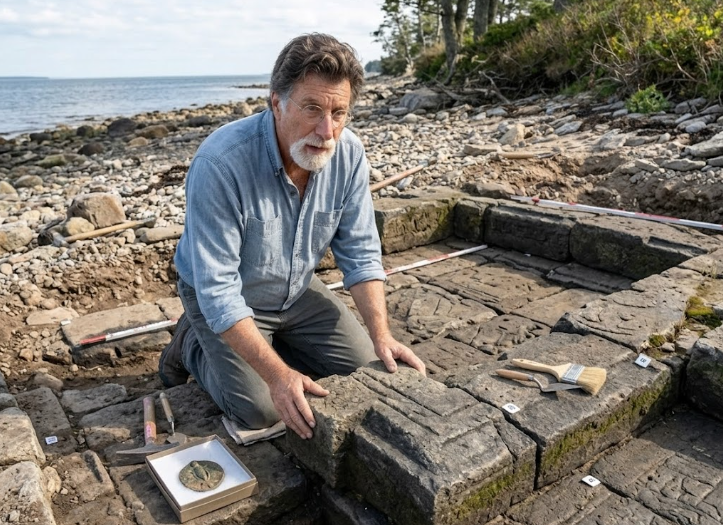
For more than two centuries, Oak Island has drawn treasure hunters, historians and viewers into one of North America’s most enduring mysteries. The search has often focused on the legendary Money Pit, hidden vaults, strange symbols and the possibility of buried riches. But a new discovery may shift the investigation in a different direction: the possible uncovering of an ancient tomb beneath the island’s soil.
For Rick and Marty Lagina, the reported find could mark one of the most significant moments in their long-running search. The brothers have spent years following clues across the island, from swamp features and stone roads to metal artifacts and underground anomalies. Each discovery has added another piece to the wider puzzle. Yet the possibility of a tomb suggests that Oak Island may not simply be a treasure site. It could also be a place connected to ritual, settlement, secrecy or a forgotten chapter of early exploration.
From an analytical standpoint, this is the kind of development that can reshape the structure of The Curse of Oak Island. The series has always balanced scientific investigation with historical theory, but a tomb would demand a more careful archaeological approach. Unlike a loose artifact or a buried piece of timber, a tomb-like structure could contain context: placement, construction methods, materials, markings and possible contents that may help determine who built it and why.
The first major question is whether the structure is genuinely ancient. Oak Island has seen many waves of activity, from early searchers to modern excavation teams. The island’s ground has been disturbed repeatedly, which means any new discovery must be studied carefully before conclusions are drawn. If the tomb can be dated to a period before the known treasure-hunting era, it would immediately become one of the most important finds in the show’s history.
The second question is who may have been responsible for it. Theories around Oak Island have long included pirates, the Knights Templar, European explorers, Freemasons and other organized groups. A tomb would not prove any one of these theories on its own. However, if it contains carvings, inscriptions, pottery, metalwork, coins or human-made construction materials, those details could help experts narrow the cultural and historical origin.
For Rick Lagina in particular, the discovery would carry emotional weight. Rick has always approached Oak Island as more than a search for treasure. His interest lies in solving the story itself. A tomb would fit that broader mission, because it may offer evidence about people, purpose and timeline. It could point toward why Oak Island was chosen, not merely what may have been hidden there.
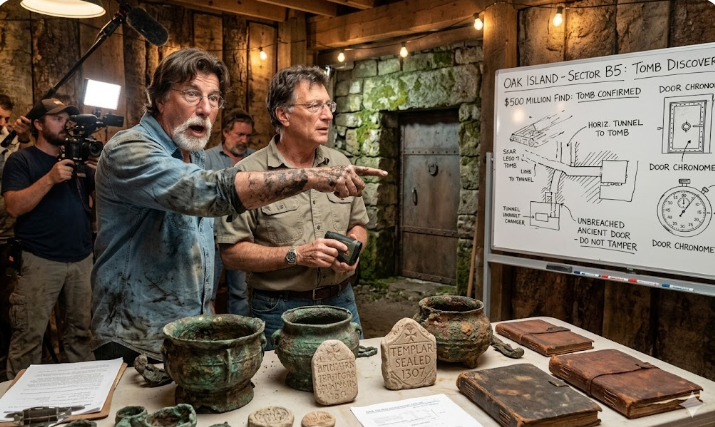
Marty Lagina’s perspective may be more cautious. As the project’s practical strategist, he will likely want hard data before embracing any major theory. Viewers can expect the team to bring in archaeologists, historians, geologists and forensic specialists to examine the site. Ground-penetrating radar, 3D scanning, careful excavation and laboratory testing would likely become central to the next phase of the investigation.
The discovery could also change the team’s priorities. If the tomb lies near a known feature such as the Money Pit, the swamp, Lot 5 or the stone road system, the team may begin looking for a wider pattern. Oak Island has often appeared to contain scattered clues. A tomb could become the anchor point that connects those clues into a more coherent map.
There is also the possibility that the tomb may contain no treasure in the traditional sense. That would not make it less important. In fact, for historians, a sealed or semi-preserved structure could be more valuable than gold. It might contain objects that reveal trade routes, religious practice, burial customs, construction techniques or contact between cultures. If Oak Island has a hidden historical layer, the tomb may be the clearest path toward understanding it.
Future episodes would likely build around three major questions. First, can the team prove the tomb’s age? Second, can they identify the people connected to it? Third, does it point toward the location or purpose of the island’s larger underground system? These questions would give the show a powerful new direction and may move the narrative beyond the familiar search for a single treasure vault.
Still, caution is essential. Oak Island has produced many promising leads that later became more complicated. A structure that appears tomb-like could turn out to be a storage chamber, a searcher feature, a collapsed room or a natural formation altered by human activity. The strength of the discovery will depend on physical evidence, not speculation.
Even so, the potential is enormous. If the Lagina team confirms that an ancient tomb exists on Oak Island, it could become a turning point for the series. The mystery would no longer be only about what is buried underground. It would become a deeper investigation into who came to the island, what they built, and what they were trying to protect.
For viewers, that is exactly why Oak Island remains compelling. Every new clue appears to answer one question while creating several more. The reported tomb discovery may not end the mystery, but it could open one of its most important chapters yet. Whether it leads to treasure, historical artifacts or a new understanding of the island’s past, it gives Rick and Marty Lagina another reason to keep digging — and gives fans another reason to keep watching.