THE OBSESSION AT MAHONE BAY: 231 Years of Mystery on Oak Island

For more than two centuries, a small, fog-shrouded island off the coast of Nova Scotia has stood as a monument to human obsession. Oak Island, a place where legends of pirate gold, Knights Templar relics, and engineered traps collide, is currently witnessing what may be its most transformative chapter since the mystery began in 1795.
Rick and Marty Lagina, the Michigan brothers who have spearheaded the modern search since 2006, reportedly saw the “complete picture” form this year. With over $10 million invested and 65 boreholes drilled, the brothers are no longer just treasure hunters; they are the curators of an archaeological puzzle that spans seven centuries.
The Decoy and the Deep
The legend of the “Money Pit” began with three teenagers—Daniel McGinness, John Smith, and Anthony Vaughn—who discovered a circular depression beneath an oak tree. As they dug, they struck wooden platforms every 10 feet. By 90 feet, they found a stone slab allegedly inscribed with the message: “Forty feet below, two million are buried.”
However, the pit was a masterclass in ancient engineering. As soon as searchers reached the 93-foot mark, the shaft flooded with seawater. This triggered a 200-year battle against a hydraulic “booby trap” that has already claimed six lives. According to local lore, a seventh must die before the island surrenders its secret.
Breaking the Timeline
While the Money Pit remains a dangerous vortex, the most startling recent evidence has emerged from the island’s swamp and Lot 5.

In a breakthrough discovery, the team uncovered a 75-foot-long stone pathway buried beneath the swamp’s muck. Geologists and archaeologists, including Ian Spooner and Aaron Taylor, suggest this was no natural formation. Instead, it appears to be part of a sophisticated 14th-century transportation system used to move heavy cargo—perhaps from ships once moored in a now-vanished cove.
Further complicating the timeline, a polished gemstone was recovered from Lot 5. Experts suggest the gem’s refined craftsmanship points to European origin, predating the 1795 discovery. This find, alongside a medieval lead cross previously found at Smith’s Cove, suggests that the island was host to a high-status, wealthy presence as early as the 1300s—over a century before Columbus.
The Templar Connection
The evidence is increasingly pointing away from the “pirate stash” theory and toward something more institutional. Scientific testing on the lead cross revealed that its metal originated from a French mine associated with the Knights Templar.
Historians speculate that the island may have served as a repository for the order’s most sacred relics following their persecution in 1307. The presence of Middle Eastern human bone fragments found 100 feet underground supports the theory of a transatlantic journey by an organization with global reach.
The Road Ahead
As the search enters its next phase, the Lagina brothers are utilizing seismic scanning and ground-penetrating radar to map what appear to be massive underground vaults. Rick Lagina maintains that the search is no longer just about the “gold,” but about honoring the generations of explorers who came before—including a young Franklin D. Roosevelt, who remained obsessed with the island until his death.
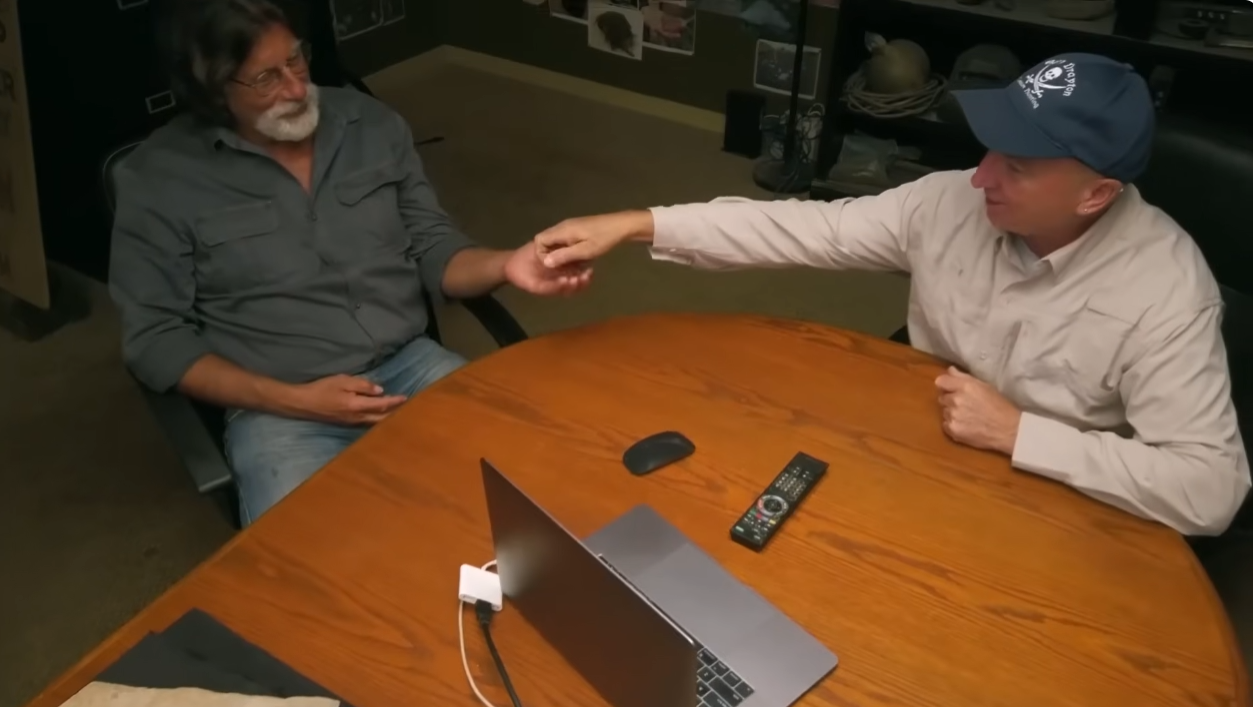
The mystery of Oak Island is no longer a question of “if” something happened there, but “who” did it and “why.” As the team prepares for Season 13, the world watches to see if the seventh death is a myth, or the final price for history’s greatest secret.