The Strange Object Sealed For Over 300 Years In Lot 8: What lies beneath the thousand-ton rock is truly surprising!
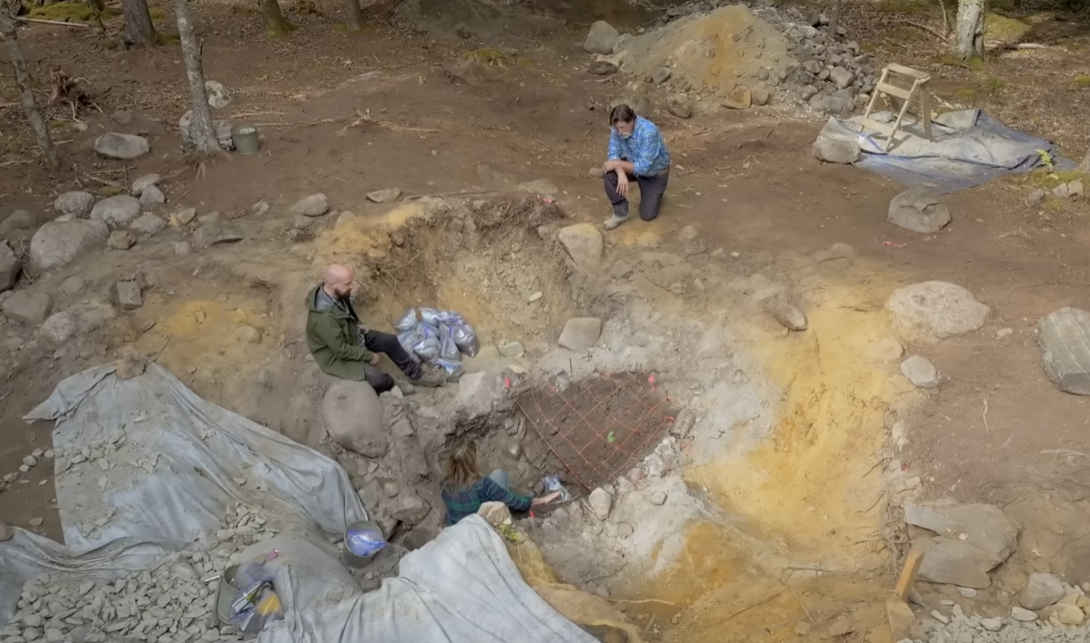
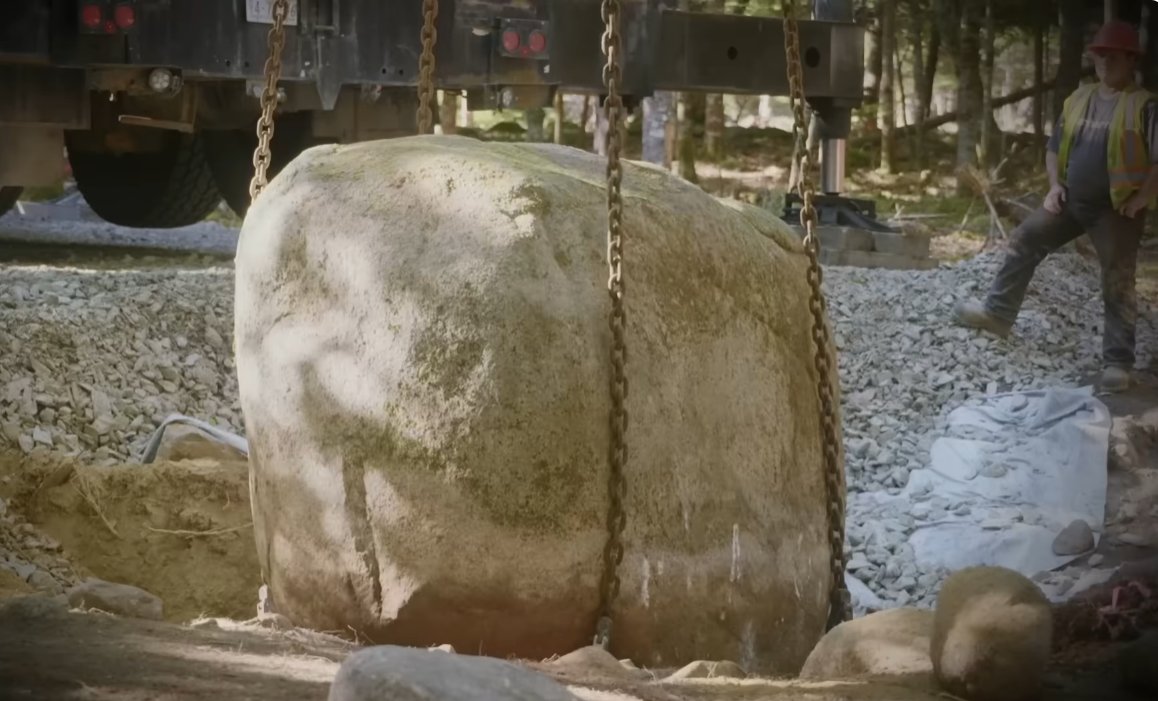
The search for the legendary Oak Island treasure has taken a turn toward the megalithic. On Lot 8, a sector of the island long ignored by modern searchers, the Lagina brothers and their team have uncovered what geoscientists and archaeologists describe as a “culturally significant” and “absolutely intentional” stone feature hidden beneath a 40,000-pound boulder.
The discovery follows the recent removal of the massive rock, which sat atop an artificially placed ring of smaller stones. What lay beneath has stunned the crew: a backfilled, man-made shaft or “cradle” of tightly packed stones that shows no signs of interference from previous 19th or 20th-century treasure hunters.
“Not Natural At All”
Archaeologist Fiona Steele and geoscientist Dr. Ian Spooner, who are leading the excavation of the Lot 8 feature, confirmed this week that the structure is a deliberate construct.
“It’s not natural, first of all,” Dr. Spooner noted while examining the circular formation of rocks. “It just can’t be, because of the organic matter all around those stones. I’ve never seen anything like this here.”
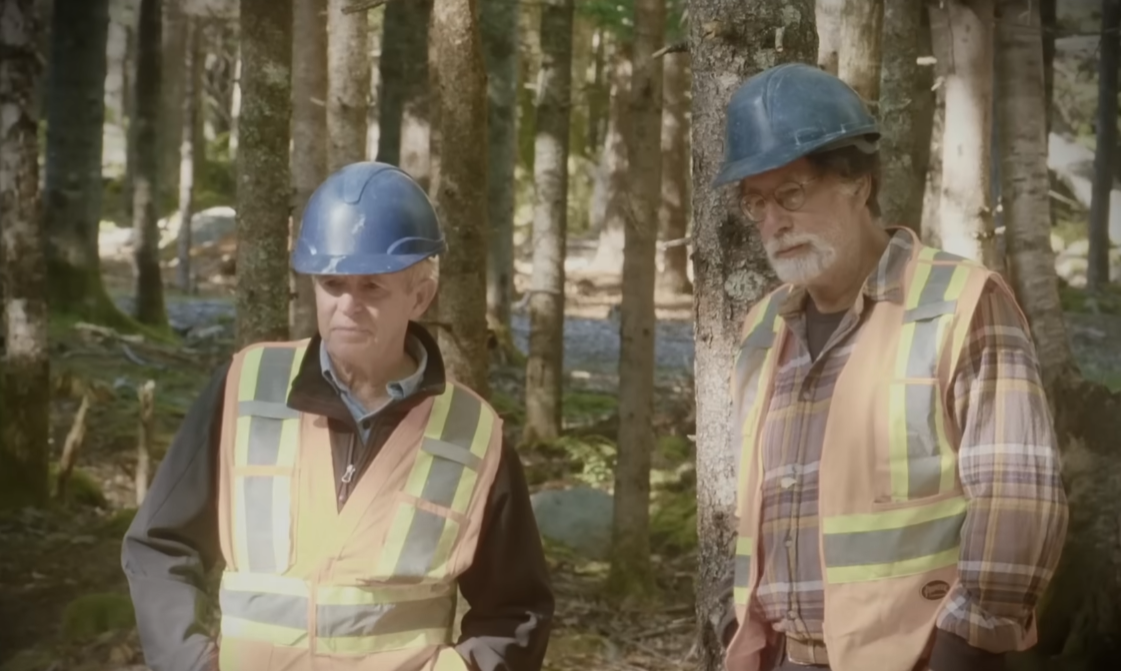
The intrigue deepened when Dr. Spooner utilized a handheld X-ray fluorescence (XRF) device to analyze soil samples from the site. The scans revealed high traces of lead and, more importantly, silver. The presence of lead in deep soil often points to ancient mining practices, specifically the use of fire to circulate air within underground tunnels—a technique common in Europe centuries ago.
A European Connection?
The team’s primary theory suggests the structure is of European origin, predating the 1700s. Fiona Steele, who has researched megalithic structures across North America and Europe, argues that the physics and geometry required to place such a massive boulder atop a rock-lined cradle suggest a sophisticated “European megalithic construction.”
“The Indigenous people, I don’t think, would have the technology to do it,” Steele explained. “Nor would they bother to move a boulder like that. It has to be a European construct.”
This aligns with Marty Lagina’s observation that the Lot 8 feature shares a design philosophy with the 500-year-old Portuguese stone road uncovered in the island’s swamp in 2020. If the structures are linked, it could point toward a massive, coordinated effort by European mariners—possibly the Knights Templar or Portuguese explorers—long before the “official” discovery of the Money Pit in 1795.
The Search for the “Money Pit” Connection
The absence of modern artifacts—such as 19th-century pottery or iron tools—suggests the site has remained undisturbed for centuries. For Rick Lagina, this “pristine” nature of the site is its greatest value.
“There’s got to be something under that boulder,” Rick said, watching the crew carefully brush away layers of backfilled soil. “Why would you do that if you’re not going to inter something underneath it? It’s done by somebody who has sufficient resources that they can pour everything into it in terms of manpower.”
While the team remains hopeful for a “breakthrough” cache of treasure, they are proceeding with extreme caution. Archaeologist Laird Niven is currently preparing a detailed cross-section of the feature before the team removes the next layer of stones to reveal what, if anything, lies in the dark void below.
As the team prepares to go deeper, the question remains: Is this a simple marker, a ceremonial site, or the capstone to a vault containing the elusive Oak Island silver?