Uncovering the Tools Behind the Hunt: What Oak Island’s Tech Reveals About the Future of The Curse of Oak Island
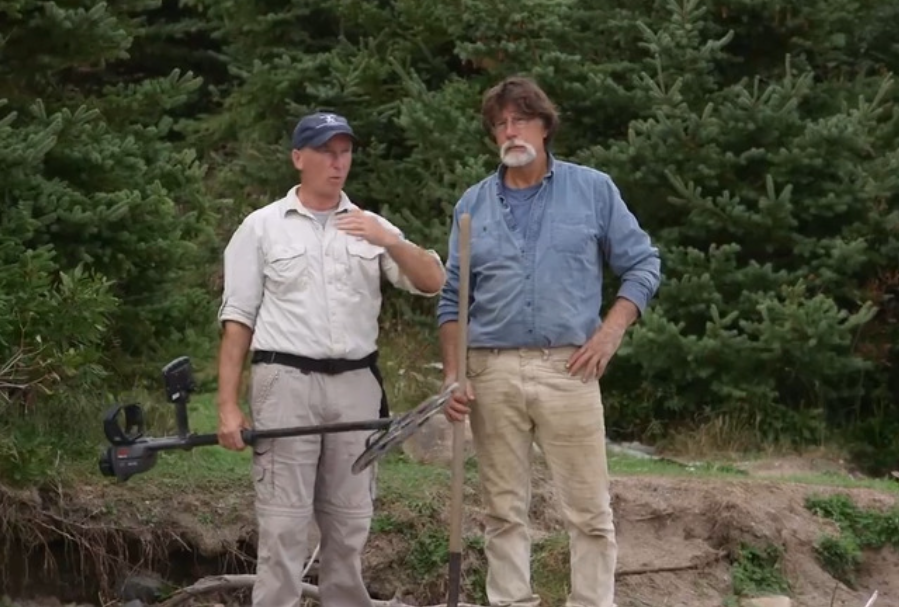
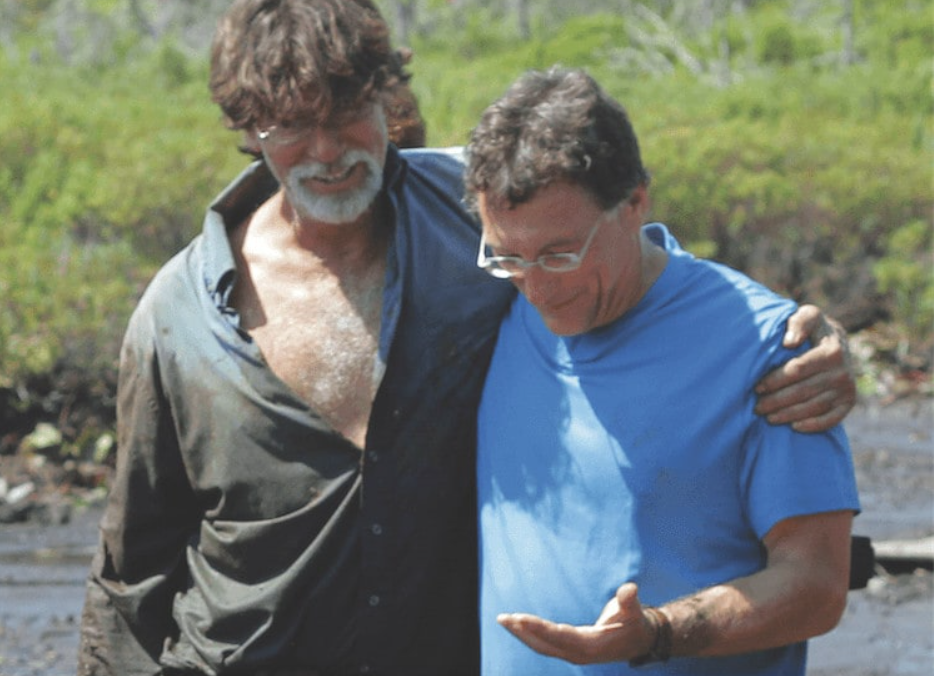
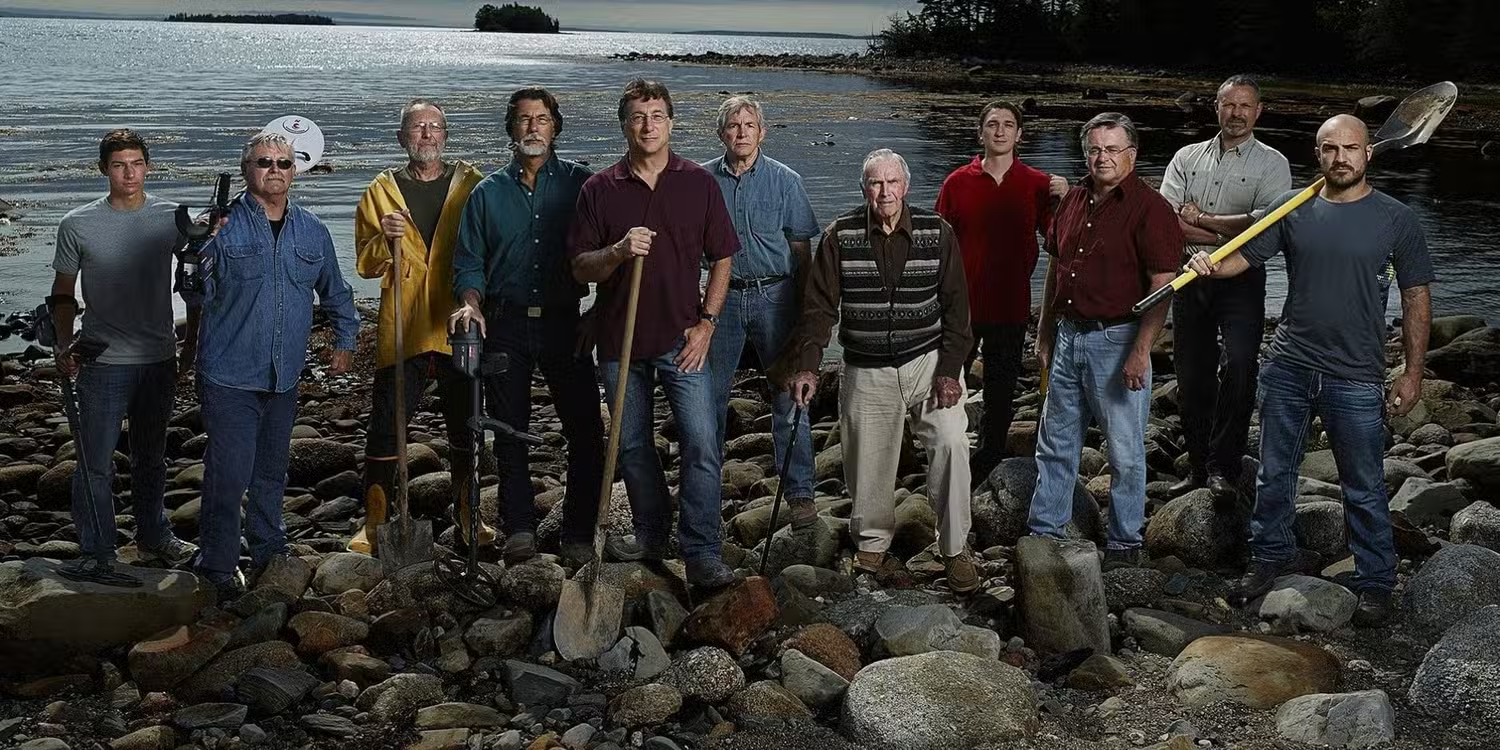
For more than twelve seasons, The Curse of Oak Island has followed Rick and Marty Lagina and their team—known collectively as the Brotherhood of the Dig—as they inch closer to solving one of the world’s most enduring treasure mysteries. And while the show may revolve around relics dating back centuries, its overwhelming reliance on advanced detection technology paints a picture of where the series is heading. As an analyst accustomed to studying strategic decisions and technological evolution on Gold Rush, I see clear patterns that point toward deeper, more data-driven exploration ahead.
One of the most defining elements of the Oak Island team’s approach is the indispensable role of Gary Drayton, their resident “Metal Detecting Ninja.” His methods—and more importantly, his tools—not only drive the team’s progress but also reveal how technology is transforming the treasure-hunting genre much the same way machinery and analytics have reshaped gold mining operations in the Yukon.
A Detector Expert at the Core of the Operation
Since joining in season two, Drayton has become one of the Brotherhood’s most valuable assets, responsible for many of the show’s most compelling “top pocket finds.” His philosophy, as he often reminds viewers, is that his sharp eyes are his primary detectors, while the machines simply enhance what he already sees. Still, the technology he uses is far from basic.
Drayton’s go-to equipment includes the Minelab CTX 3030, paired with an 11” Double-D Smart Coil—a professional-grade detector known for depth, precision, and sensitivity to historical metals. Over the seasons, he has also deployed the Minelab SDC 2300, GPX 5000, and Equinox series, as well as the high-end OKM eXp 6000 Professional Plus, a detector capable of 3D underground imaging.
This progression mirrors what we see in Gold Rush: as operations scale, reliance on increasingly advanced tools becomes not optional but essential. The Oak Island team’s arsenal is no longer symbolic of hobbyist treasure hunting—it reflects industrial-level surveying more akin to modern mining exploration.
From Handheld Detectors to 3D Mapping
Beyond metal detectors, the team uses ground-penetrating radar systems such as okm’s Gepard GPR 3D. Large-scale technologies like LiDAR—used to construct detailed topographical models—have become particularly valuable as the team shifts from isolated artifact discovery toward a broader understanding of the island’s underground architecture.
For twelve seasons, viewers have watched the Brotherhood uncover tunnels, timbered shafts, voids, artificial waterways, and subterranean structures. This evolution is not accidental. In mining, when physical samples raise more questions than answers, companies scale upward into larger, data-rich surveying systems. The Oak Island team appears to be following this same trend, indicating that excavation in future seasons will rely more heavily on predictive modeling.
Theories Driving the Technology Push
Every discovery adds fuel to a growing list of theories: Templar knights fleeing persecution in 1307, pirates like Blackbeard hiding stolen gold, or the possibility that Francis Bacon’s manuscripts were sealed underground. Whether or not any of these are true matters less than the pattern they reveal: the team is pursuing older, deeper, and more technically challenging targets.
The turning point came in Season 5, Episode 10, with the discovery of a lead cross at Smith’s Cove. Dated as early as 900 AD, the artifact represents one of the strongest pieces of evidence suggesting medieval European activity on the island—centuries before any recorded North American settlement. This was the kind of find that shifts an operation from broad exploration to high-precision targeting.
In Gold Rush terms, this is comparable to discovering a “pay streak indicator.” A cross that predates the Templars by four centuries suggests multiple phases of human activity—and therefore more layers of buried history still unaccounted for.
What This Means for Future Seasons
From an analyst’s perspective, three major trends predict how the series may evolve next:
1. Escalation Toward Deep Subsurface Exploration
Given their increasing use of 3D imaging and geophysical scanning, the Brotherhood is likely preparing to commit resources to deeper drilling campaigns. Large-scale borehole mapping—similar to what mining companies use to model ore bodies—may become the show’s central methodology.
2. A Shift from Artifact Hunting to Structural Excavation
Many of Oak Island’s most perplexing clues point not to isolated treasure, but to engineered systems: tunnels, flood traps, filtration layers, and stone constructions. The technology now available makes systematic excavation far more feasible.
Expect future seasons to focus on verifying the existence of major underground structures such as the fabled “Chapel Vault” or potential Templar chambers.
3. Integration of Multisensor Analysis
Just as modern gold miners use drone imaging, GPS-assisted mapping, and water flow analytics, the Oak Island team is moving toward technology fusion. The combination of LiDAR, GPR, metal detection, and chemical soil analysis could produce a composite map far more accurate than anything seen in earlier seasons.
With each advancing tool, the Brotherhood’s chances of finally confirming or disproving Oak Island’s most enduring theories grow stronger.
A Mystery Still Deepening
After more than two centuries of digging and twelve seasons of television, no singular treasure has been recovered. But like large-scale gold mining, the value of the operation has shifted: the infrastructure, discoveries, and data collected may be leading to a climax that requires technology the early diggers could never have imagined.
If the patterns hold, fans should brace for a season where history, science, and engineering converge as never before—and where the island’s final secrets may finally be within reach.