“Why haven’t we seen this before?”: Recent searches have uncovered a buried gem on Oak Island.
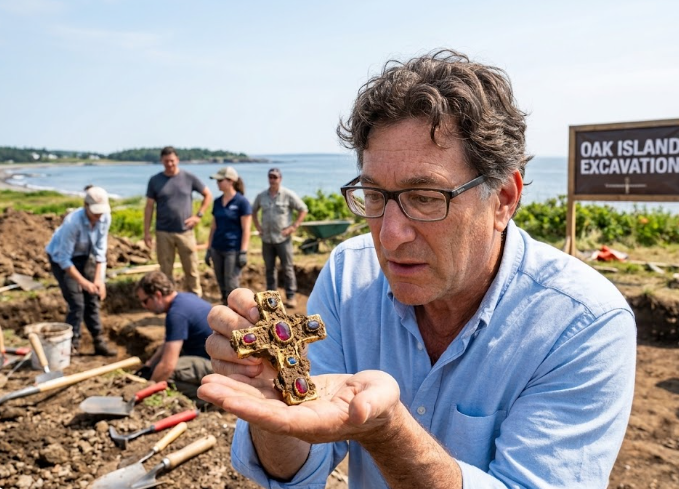
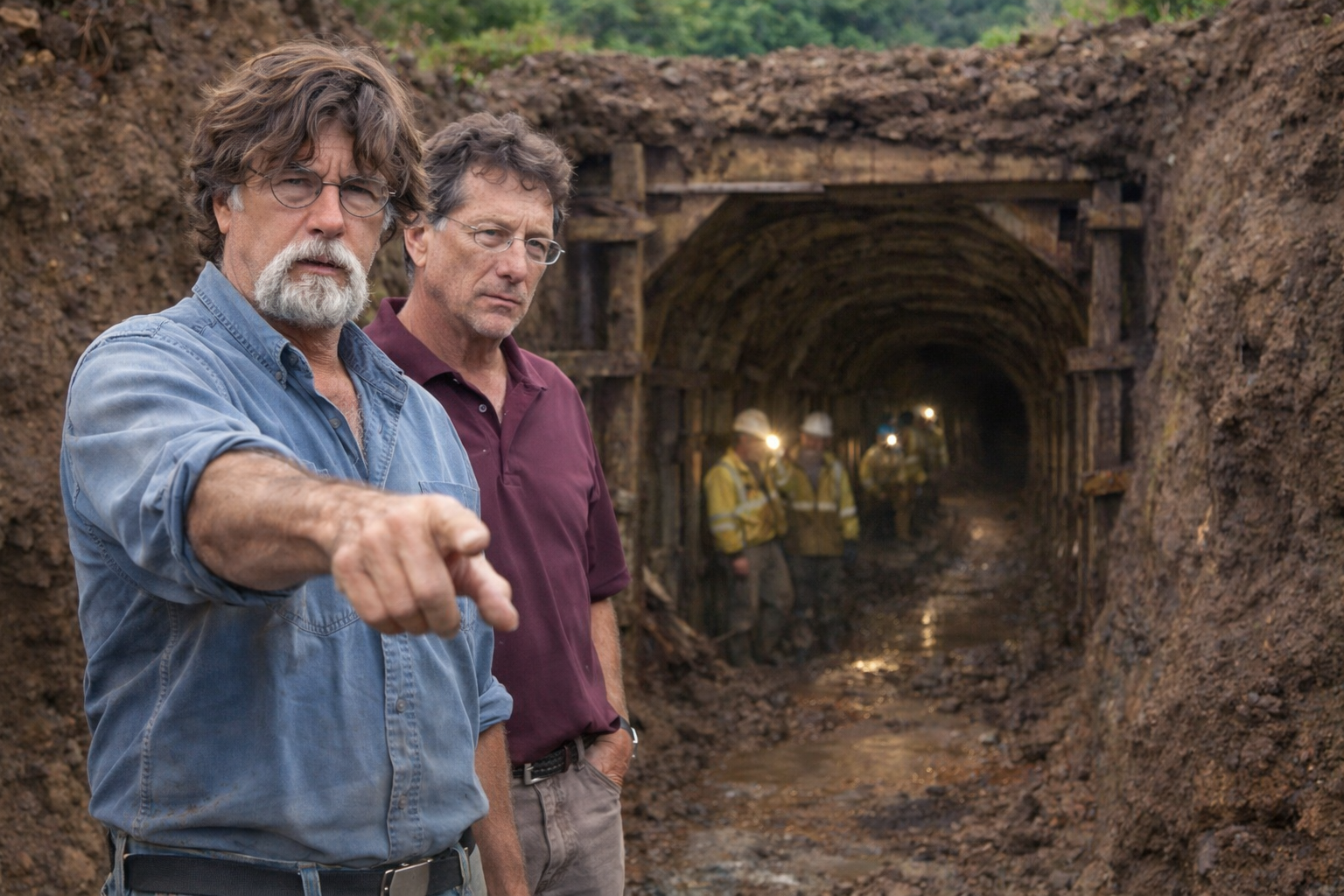
For more than a decade, The Curse of Oak Island has trained viewers to look downward. The Money Pit, the swamp, the stone roads, the boreholes and the buried wooden structures have all pointed the team toward one idea: whatever happened on Oak Island was hidden beneath the surface. But the reported discovery of a giant gemstone behind Oak Mountain would push the story in a different direction entirely. It suggests that the island’s mystery may not only be about tunnels, treasure chambers or engineered flood systems. It may also be about what the landscape itself was designed to conceal.
From an analyst’s point of view, the most interesting question is not simply what the gemstone is. It is why the team has never seen anything like it before. Oak Island has produced metal fragments, coins, pottery, wood, stone features and traces of human activity across several historical periods. A large gemstone, however, would stand apart from the usual pattern of finds. It would be visually powerful, hard to ignore and potentially loaded with symbolic meaning. That is exactly why such a discovery would create a major turning point for the series.
The phrase behind Oak Mountain is especially important. Oak Mountain has often felt like a quieter part of the broader Oak Island map, less iconic than the Money Pit and less visually mysterious than the swamp. If a remarkable object has been located there, producers and researchers would likely frame it as evidence that the team may have underestimated the surrounding terrain. The mountain could shift from background geography into a central investigation zone.
One possible explanation is that the gemstone was not part of a treasure deposit at all, but a marker. In historical treasure lore, rare stones, unusual boulders and deliberately placed objects have often been interpreted as directional signs. If the gemstone is found in a suspicious location, near worked stone, disturbed soil or an old pathway, the team may begin asking whether it was meant to point toward something else. That would create a new investigative branch: not just What is it worth? but What was it meant to identify?
Another possibility is ceremonial or symbolic use. Oak Island theories have long touched on secretive groups, early explorers, religious orders and coded landscapes. A giant gemstone would naturally fit into that type of storytelling because precious stones have historically been associated with status, ritual and authority. If laboratory testing suggests the stone was transported from far away, that would raise even bigger questions. Who brought it there? Why would anyone carry such an object to a remote island? And why place it behind a mountain rather than inside a known deposit area?
The team’s first move would almost certainly be scientific verification. Viewers should expect mineral testing, magnified inspection, geological comparison and possibly outside expert analysis. The most important detail would be whether the stone is naturally occurring in the local environment. If it matches regional geology, the discovery may still be visually impressive but less historically significant. If it does not belong there, the mystery becomes far more compelling.
That is where the show could become especially interesting. Oak Island often builds momentum when a physical object connects to a wider map. A gemstone alone may be intriguing, but a gemstone linked to nearby stone features, unusual terrain, old survey lines or previous artifacts would become a genuine narrative engine. The team may return to earlier maps, re-check old survey data and compare the location with known search zones. What once seemed like a side area could become part of a larger pattern.
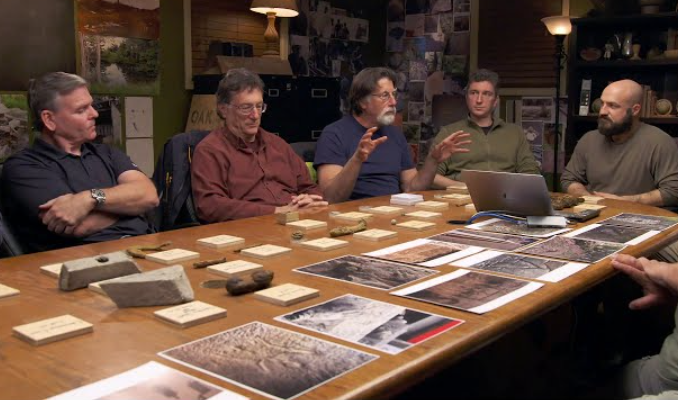
The discovery could also revive debate inside the War Room. Marty Lagina would likely approach the find with caution, asking whether there is enough evidence to connect it to the main mystery. Rick Lagina, who has often been drawn to the historical and emotional weight of unusual finds, may view it as another sign that Oak Island’s story is broader than anyone expected. Gary Drayton would likely focus on the object’s uniqueness, while the archaeologists would push for context before making any large claim.
From a production perspective, the gemstone would give the season a strong visual centerpiece. Oak Island discoveries are often fragments: bits of metal, small coins, pieces of wood or soil samples that require expert explanation. A giant gemstone is different. It is instantly understandable to viewers. It gives the audience something they can see, react to and remember. That makes it the kind of object that could dominate an episode and perhaps shape the final stretch of a season.
The biggest prediction is that the gemstone will not immediately solve the Oak Island mystery. The show rarely moves in straight lines. Instead, it will likely open a new set of questions. The team may discover that the area behind Oak Mountain contains more signs of human activity than previously believed. There may be additional stones, a buried alignment, traces of excavation or clues suggesting the area was deliberately modified. The gemstone could become the first piece of a new puzzle rather than the final answer.
It may also lead the team to rethink how they define treasure. On Oak Island, treasure has often been imagined as gold, silver, manuscripts or religious artifacts. But a gemstone would introduce a different category: portable wealth with symbolic value. If it was intentionally placed, it may represent status, code or ceremony as much as money. That would fit the show’s long-running tension between financial treasure and historical truth.
The title Why haven’t we ever seen this before captures the exact feeling Oak Island depends on. The island has been searched, drilled, mapped and debated for generations, yet it still seems capable of producing something that feels completely new. Whether the giant gemstone proves to be a major historical clue or a misleading anomaly, it would force the team to widen the investigation beyond the familiar zones.
The most likely outcome is not a simple revelation, but a new direction. Oak Mountain may become more important. The landscape may be studied with fresh urgency. Old maps may be reinterpreted. And the team may begin to ask whether the island’s most visible features have been hiding clues in plain sight all along.
If The Curse of Oak Island has taught viewers anything, it is that every discovery matters most when it changes the next question. A giant gemstone behind Oak Mountain would do exactly that. It would not end the search. It would make the search larger, stranger and more difficult to ignore.