The Curse of Oak Island Under Fire: Are the Discoveries Too Good to Be True?
After more than a decade of uncovering mysterious artifacts, exploring ancient structures, and chasing the legend of hidden treasure, The Curse of Oak Island has found itself at the center of a controversy that could shake its credibility.
Recently, allegations have emerged suggesting that certain artifact discoveries featured in the long-running History Channel series may have been staged or re-shot to heighten dramatic effect. While such claims are not uncommon in the world of reality television, they have triggered heated debate among both fans and critics, raising questions about how much of Oak Island’s “curse” is real—and how much is television magic.
The Scene That Sparked the Debate
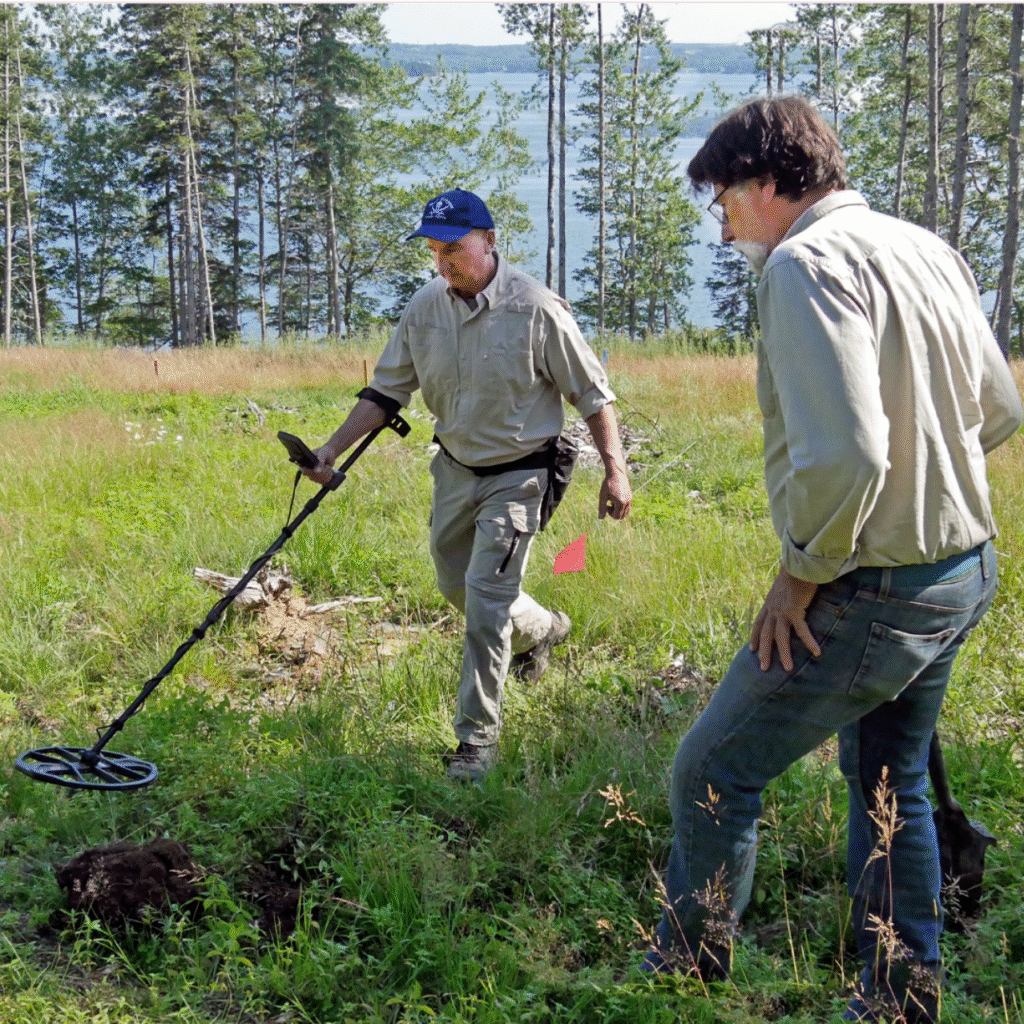
The controversy began with Season 12, Episode 11, when treasure hunter Katya Drayton appeared to retrieve a small lead artifact from a swamp area believed to be near a potential treasure vault. At first glance, it was a routine Oak Island moment: a murky dig, tense background music, and the promise of another “game-changing” clue.
But some eagle-eyed viewers noticed odd inconsistencies. In one shot, Drayton’s gloves appeared differently positioned, and in another, the artifact—pulled from thick, muddy ground—looked unusually clean. The continuity errors were subtle, but they were enough to spark suspicion that the artifact may have been placed in the mud for the cameras or that the discovery had been re-shot for cinematic effect.
Fans Divided: Filming Glitch or Fabrication?
On fan forums and Reddit threads, reactions were split. Some defended the show, arguing that reshoots are a normal part of television production.
One user wrote:
“Yeah, as a guy with filming experience, I’m sure it was a glitch in capture that had to be reshot. Stuff happens. It doesn’t mean it’s fake.”
Others were less forgiving, calling out what they saw as deceptive editing. Another fan argued that such inconsistencies—no matter how small—damage the show’s credibility, especially for viewers who tune in for historical accuracy rather than entertainment.
Another Redditor offered a middle ground:
“They probably didn’t get a good shot of it coming out the first time. It’s common. But I doubt they planted that piece of lead—it’s too dull an object for that kind of effort.”
As of now, neither The Curse of Oak Island producers nor the Lagina brothers have publicly commented on the controversy. The History Channel has also remained silent.
Reality TV and the Ethics of “Reality”
The Oak Island debate underscores a growing tension within reality-based television, especially in archaeological and historical programming.
While dramatic editing and reenactments are often used to maintain viewer engagement, the question arises: Where should the line be drawn between storytelling and manipulation?
Critics argue that the use of reshoots or staged discoveries—if true—could distort the public’s understanding of genuine exploration. When artifacts are presented as authentic first-time finds, even minor misrepresentations can undermine the educational value of the series.
Moreover, the Oak Island story carries cultural and historical significance. It’s not just about gold; it’s about connecting centuries of exploration, colonization, and maritime history. As such, authenticity matters deeply to both scholars and long-time fans.
A History of Skepticism
This isn’t the first time The Curse of Oak Island has been accused of embellishing its narrative. Since its debut in 2014, the series has faced criticism from academics who describe it as a form of pseudo-archaeology—entertaining, yes, but often speculative and lacking in verifiable evidence.
Harvard professor Richard Joltes, an outspoken critic, has referred to the Oak Island mystery as “just one tale in a long-running mania for treasure legends along the eastern seaboard.” Others have gone further, calling it “pseudohistory disguised as science.”
Despite this, the show has maintained a loyal following, largely because of its human element—the passion and persistence of Rick and Marty Lagina, who have invested millions and decades of their lives into solving the mystery.

What Might Come Next
If history is any guide, this controversy is unlikely to sink the Oak Island juggernaut. In fact, it might do the opposite—fuel even more viewer curiosity. Reality television thrives on drama, and skepticism often drives engagement rather than discourages it.
That said, producers may face increasing pressure to prove transparency going forward. Future episodes might feature more unedited footage, behind-the-scenes commentary, or even third-party verification of key discoveries. Such steps could restore trust without sacrificing the mystery that makes the show so addictive.
There’s also the question of how this affects the ongoing Season 12 narrative arc. Will the show address the allegations directly, perhaps through an on-camera explanation? Or will it continue business as usual, letting speculation swirl online?
Another possibility is that the controversy could push the Laginas and their team toward a more evidence-driven approach—perhaps inviting independent archaeologists to validate finds, or emphasizing the research side of their operation over dramatic reveals.
Given that the Oak Island team has recently expanded operations into deeper excavation zones and underwater scanning, the next few episodes could offer opportunities to reinforce credibility—assuming, of course, the discoveries hold up under scrutiny.
The Bigger Picture
Whether this latest storm dies down or intensifies, it speaks to a larger truth: The Curse of Oak Island has transcended its role as just a treasure-hunting show. It has become a mirror reflecting our cultural fascination with mystery, belief, and the fine line between fact and fiction.
As one viewer put it in a fan forum:
“Even if it’s staged sometimes, the magic of Oak Island isn’t in what they find—it’s in the hope that maybe, just maybe, they’ll be right.”
That sentiment captures why, even amid controversy, millions still tune in each week. Oak Island isn’t just a dig site—it’s a story about human curiosity itself.
And as long as that mystery remains unsolved, audiences will keep watching—waiting for that one discovery that finally turns skepticism into certainty.