Emma Culligan’s Solid Gold Bowl Discovery Could Mark a Turning Point in The Curse of Oak Island.
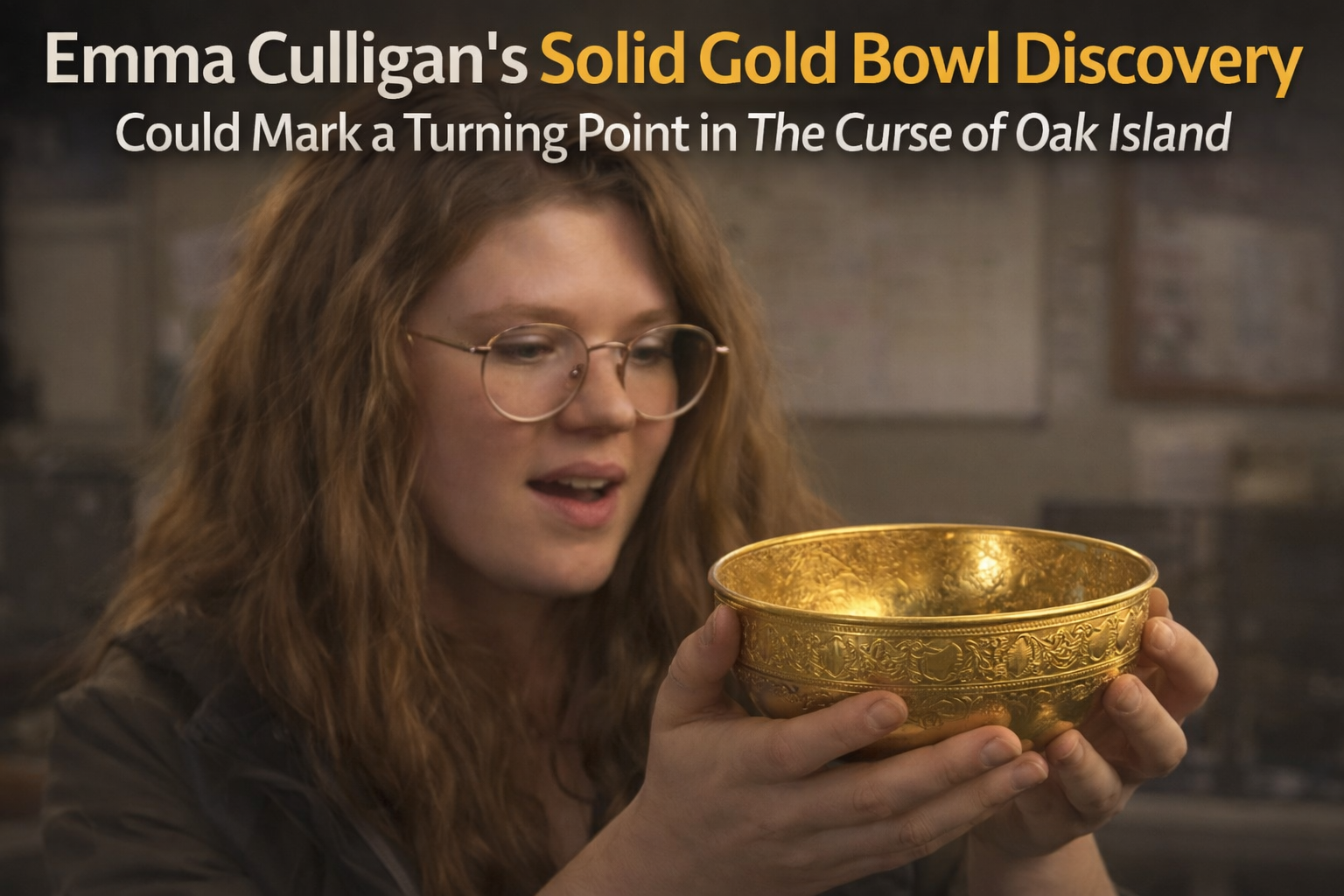
The search on The Curse of Oak Island has always been driven by fragments: a coin here, a timber there, a trace of metal in the water, or a strange structure buried beneath layers of mud and history. But the reported discovery of a solid gold bowl by Emma Culligan near the foot of Oak Island would represent something very different. Unlike many previous finds, this would not be a clue that needs to be interpreted from a distance. It would be a direct, physical object of immense value — and possibly a major key to understanding who used the island, what they brought there, and why they may have hidden it.
From an analyst’s perspective, the importance of this discovery depends on three questions. First, is the bowl genuinely made of solid gold? Second, how old is it? Third, was it lost by accident, buried deliberately, or placed as part of a larger underground system? The answers to those questions could determine whether this becomes just a spectacular artifact or one of the most important finds in the history of the Oak Island investigation.
Emma Culligan’s role is especially important here. On the show, Emma has often represented the scientific side of the search. Her lab work, metal analysis, scanning, and artifact interpretation have helped move the series away from pure theory and toward evidence-based investigation. If she is the one to identify the bowl, the discovery would likely begin with careful testing rather than immediate celebration. That distinction matters. Oak Island has produced many exciting objects, but the most meaningful ones are those that can be dated, traced, and connected to a broader historical pattern.
A solid gold bowl would immediately raise the stakes of the investigation. Gold objects are not ordinary travel items. They are symbols of wealth, power, status, ritual, or sacred use. If the bowl is finely crafted, it could suggest ownership by someone of high rank or by a group with significant resources. If it contains inscriptions, markings, decorative patterns, or unusual metal composition, it could point toward a specific culture or time period.

The location of the discovery — described as being near the foot of Oak Island — could also be significant. Finds near shorelines often raise questions about transport, landing sites, ship activity, or hidden access routes. If the bowl was discovered near an area linked to old stone roads, swamp features, Smith’s Cove, or possible loading zones, the team may begin to connect it with the movement of valuable cargo onto the island. That would support one of the long-running theories that Oak Island was not merely a hiding place, but a carefully planned operation.
The first likely step would be non-destructive analysis. Emma would probably use XRF testing to determine the bowl’s metal composition. If the gold is mixed with silver, copper, or trace elements, those details could help identify where the metal may have originated. Gold from different regions can carry different chemical signatures. Even small impurities may become crucial clues. A European, Spanish, Portuguese, African, or Middle Eastern metal profile would lead the investigation in very different directions.
The team would also study tool marks and manufacturing style. Was the bowl hammered by hand? Was it cast? Does it show signs of medieval craftsmanship, early modern European work, or something older? A simple gold object is valuable, but a gold object with identifiable craftsmanship is historically powerful. If experts can match the bowl’s style to a known period, the Lagina team could finally have a stronger timeline for at least one layer of activity on the island.
Several theories would immediately return to the War Room. The first would be the Templar or medieval European theory. A ceremonial gold bowl could fit narratives involving sacred objects, hidden religious material, or treasures moved across the Atlantic for protection. The second would be the Spanish or Portuguese treasure theory, especially if the bowl resembles colonial-era wealth connected to maritime routes. The third would be a searcher-related explanation: perhaps the bowl was brought to the island much later and lost or planted during earlier treasure-hunting activity. That possibility may be less exciting, but the team would have to examine it carefully.
If the bowl is confirmed to be old and not connected to modern searchers, the implications would be enormous. Oak Island has long struggled with one central difficulty: many finds suggest activity, but few prove the presence of major treasure. A solid gold bowl would change that conversation. It would show that high-value material was physically present on the island, not just hinted at through water samples or fragmentary evidence.
However, the discovery would also create new complications. A gold bowl found alone does not automatically reveal the location of a vault. It could be a dropped item, a ceremonial deposit, part of a cache, or material displaced by earlier digging. The team would need to search the surrounding area carefully. If the bowl came from disturbed ground, it may have been moved from its original position. If it was found in undisturbed layers, the context becomes far more important.
My prediction is that the team would use this discovery to justify a highly focused investigation of the surrounding zone. They would likely expand metal detection, conduct ground scans, take soil samples, and review historical maps for nearby structures or old searcher activity. If more high-value metal signals appear nearby, the bowl could become the first piece of a larger deposit. If no additional signals appear, its importance would shift toward symbolism and historical interpretation.
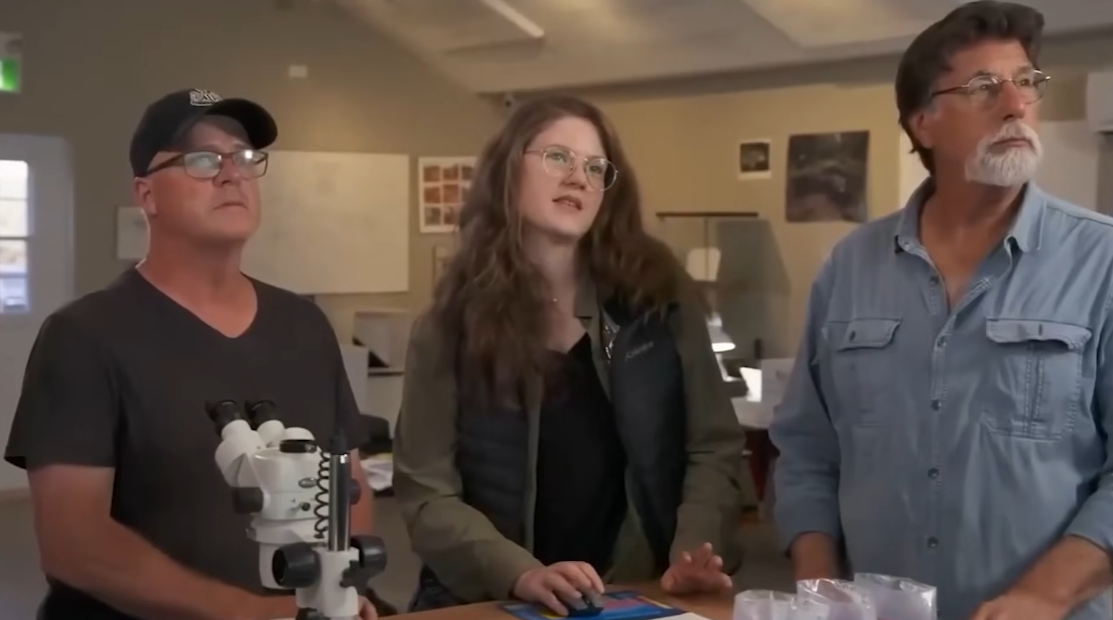
The discovery could also affect the emotional direction of the show. Rick Lagina would likely see the bowl as validation of the team’s persistence. Marty Lagina would probably focus on whether the science supports the excitement. Gary Drayton would treat it as a top-level find, while archaeologists would urge caution and proper documentation. That tension between excitement and discipline is exactly what makes The Curse of Oak Island compelling.
For future episodes, the biggest question would be whether the bowl leads downward or outward. Does it point toward an underground chamber beneath the island? Or does it connect to surface activity, such as a landing site, ritual area, or old structure? Either direction could reshape the investigation.
If confirmed as an authentic ancient or early historical artifact, Emma Culligan’s solid gold bowl discovery could become one of the most significant finds ever linked to Oak Island. It would not solve the mystery by itself, but it would raise the level of evidence. For the first time, the team would not simply be chasing the possibility of treasure. They would be holding a piece of it.