Oak Island Team Finds New Clues Beneath 40,000-Pound Boulder as Templar Theory Gains Momentum
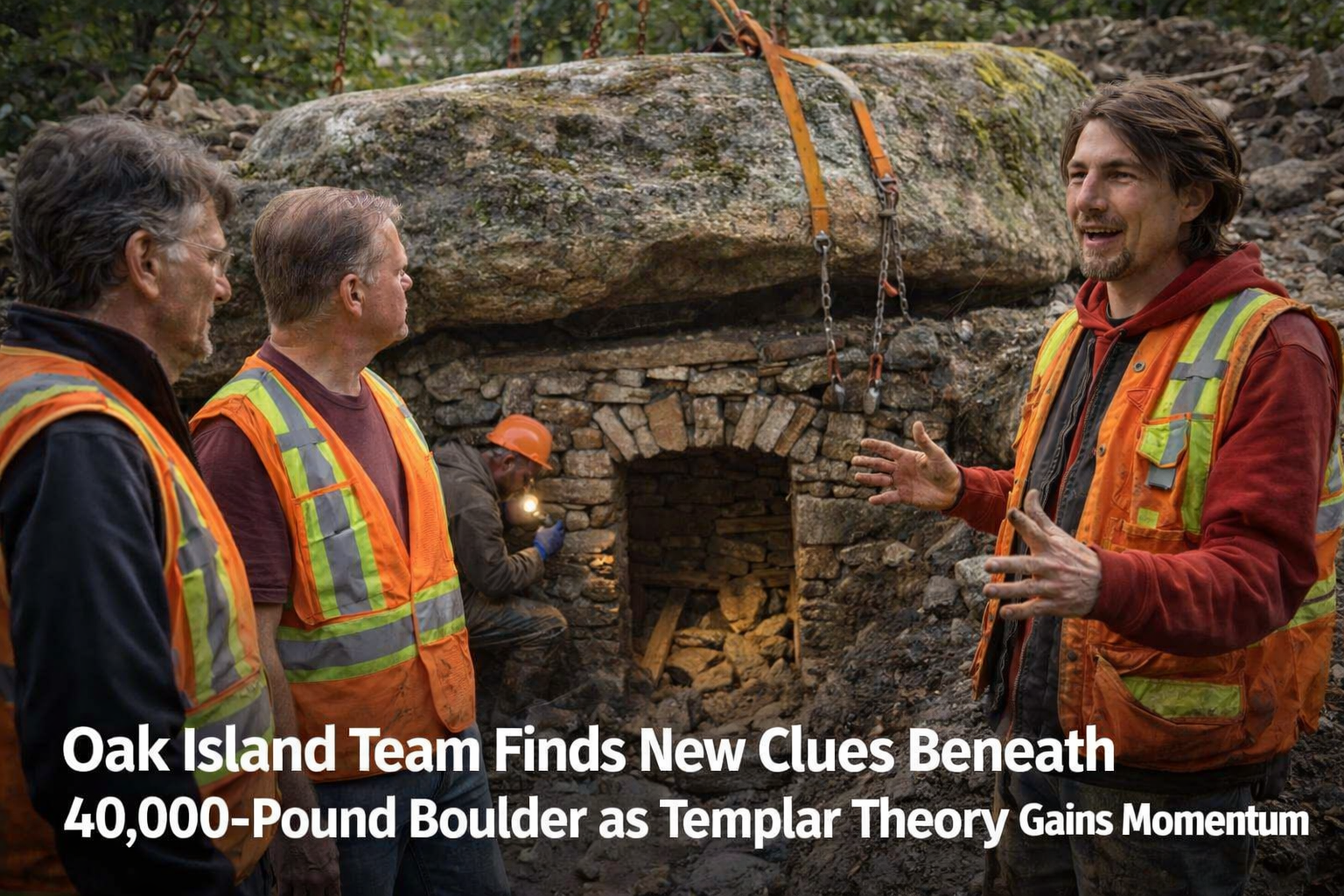
A new investigation on Oak Island has brought fresh attention to one of the island’s most unusual stone features, as the team continues to search for evidence that could explain who built the mysterious underground systems and why they were created.
In the latest development, members of the Oak Island team returned to Lot 8, where a cradle-shaped formation of stones had previously been revealed beneath a massive 40,000-pound boulder. What they found beneath the surface has raised new questions about whether the structure was naturally formed or deliberately engineered by people working on the island long ago.
The excavation, led in part by Fiona, focused on removing layers of stone from the feature while carefully documenting the materials found between and beneath them. Once a third layer of rocks was removed, the team came across a substance that looked similar to mortar or cement. That discovery immediately changed the tone of the investigation.
For years, Oak Island researchers have searched for signs of human construction below ground. Rocks alone can sometimes be explained by natural processes, but stones sealed together with a cement-like material suggest something more intentional. Fiona noted that the rocks appeared to have been held firmly in place, giving the impression that someone wanted the structure to remain stable for a specific reason.
The team also identified multiple types of material within the feature. One was described as a very fine powder. Another appeared to be a blue-gray clay, while a third had a more cement-like texture. The blue-gray clay drew particular interest because it appeared similar to clay previously associated with the Money Pit area.
That possible connection is significant. The Money Pit remains the central mystery of Oak Island, and any material on another part of the island that resembles substances found there could suggest a wider pattern of construction. Samples were taken for comparison, with the hope that laboratory analysis might determine whether the materials came from the island itself or were brought in from somewhere else.
If any of the material proves to have been imported, it would strengthen the argument that the Lot 8 structure was deliberately built. That would make the feature more than a strange arrangement of stones. It could become part of a larger engineered system, possibly even connected to a shaft, tunnel, or entrance point.
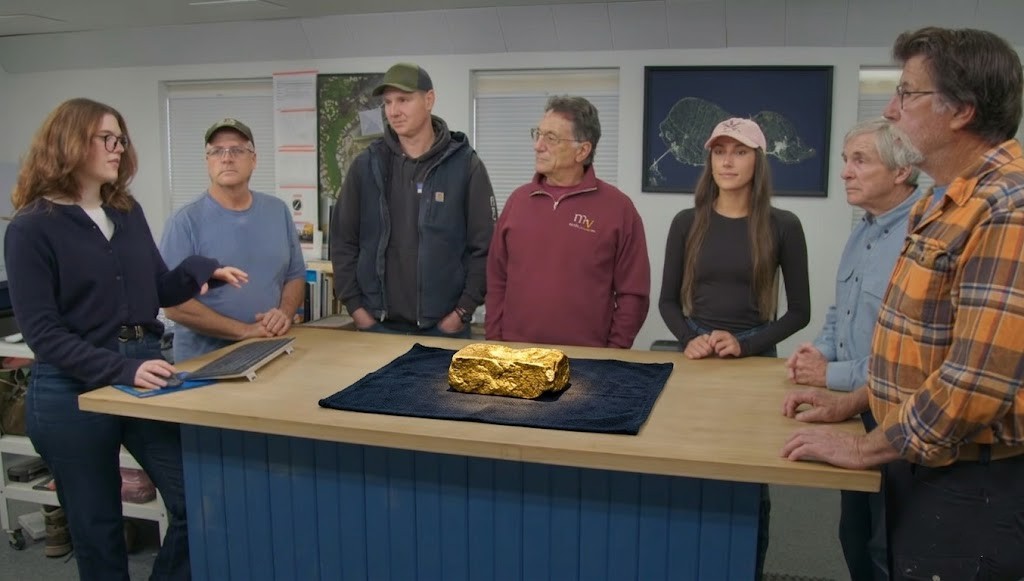
The idea that the feature may go deeper has added another layer of interest. The team discussed cutting through one side of the formation to better understand how it was constructed. This kind of careful bisection could reveal whether the stones were placed in an organised sequence or whether the feature developed naturally over time.
While work continued on Lot 8, another investigation was unfolding on Lot 5. Archaeologist Laird Niven and other team members continued examining a rounded stone foundation that has already produced several intriguing finds. The area has become important because of previous discoveries, including beads, buttons and a mysterious lead artifact.
During the search, the team uncovered another small metal object with a visible pattern. Although it was too early to identify it fully in the field, the find was considered promising because a previous button found nearby had been linked to recycled arsenical bronze from the medieval period. That earlier result had already pushed the team to treat Lot 5 as a high-activity area where people may have lived, worked or gathered.
The significance of Lot 5 lies not only in the artifacts themselves, but in the pattern they may represent. If repeated objects from different periods continue to appear in the same area, the team may be looking at evidence of long-term human activity. That could help answer one of Oak Island’s oldest questions: who was here first?
Later, the team shifted focus to a war room discussion that connected the island’s physical discoveries with a broader historical theory. Researcher Charlotte Wheatley had previously identified three medieval churches on the west coast of France that appeared to align toward Oak Island. These churches were located near Talmont-sur-Gironde, a place also referenced on Zena Halpern’s controversial Oak Island map.
The map has long been associated with the idea that members of the Knights Templar, or people connected to them, may have had knowledge of Oak Island. While such theories have often been treated with caution, the latest analysis gave the team new material to consider.
Professor Adriano Gaspani, an archaeoastronomy expert, reviewed the alignments and compared them with specific features on Oak Island, including the rounded feature on Lot 5. His analysis suggested that the axes of the three churches did intersect with Oak Island. He also noted possible stellar alignments involving Sirius, the Pleiades and Hamal.
For the team, this did not prove the Templar theory outright. However, it added another point of convergence. The churches were believed to date roughly from the late 1100s to early 1200s, placing them in a period often linked to medieval religious orders and transatlantic speculation. When combined with earlier finds and the reference to Talmont on Zena Halpern’s map, the research gave the team a stronger reason to continue exploring the French connection.
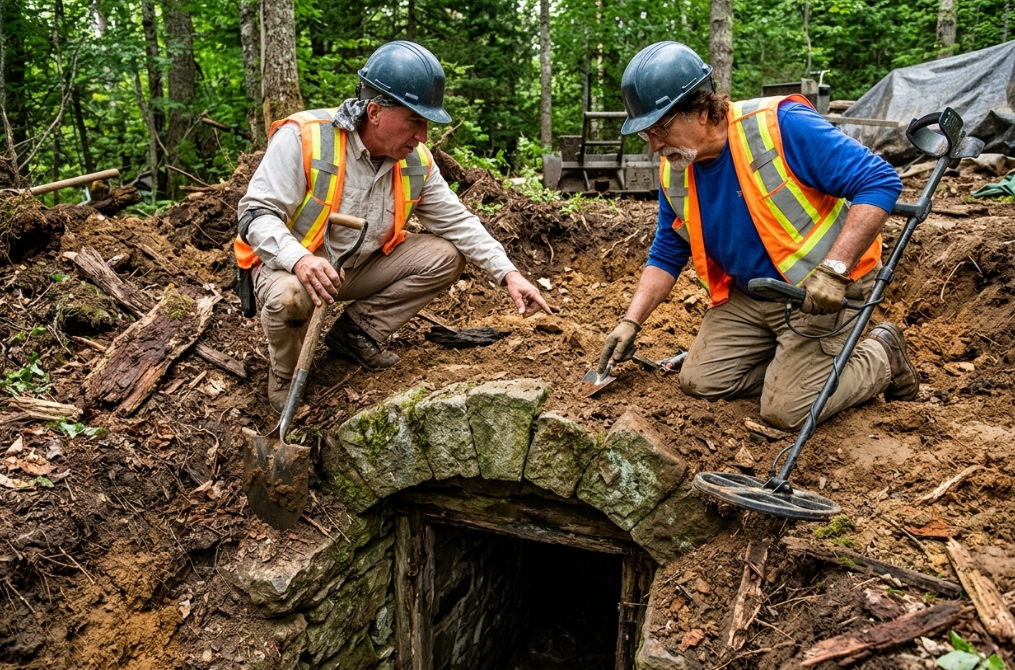
The most important development may be the way separate parts of the island now appear to be overlapping in the investigation. Lot 8 has produced possible evidence of construction beneath a massive boulder. Lot 5 continues to reveal signs of human activity. The Money Pit remains central because of its clay, shafts and possible underground works. Meanwhile, the French church alignment theory attempts to connect these physical clues to a wider historical framework.
From an analyst’s perspective, the next phase of the search may depend heavily on laboratory results. If the mortar-like material, blue clay or organic matter from Lot 8 can be dated or sourced, the team may gain a clearer picture of whether the feature was built by human hands. If the new metal object from Lot 5 proves to be old or unusual, it could add weight to the theory that the area was used long before modern treasure hunters arrived.
Oak Island has always advanced through fragments rather than final answers. A stone formation, a clay sample, a button, a map reference and a church alignment may not solve the mystery individually. But together, they create a trail that is becoming harder for the team to ignore.
For Rick Lagina and the fellowship, the latest findings appear to offer something valuable: not a final discovery, but a stronger reason to keep digging.