Clues from ancient maps led the Oak Island research team to a vault that may contain treasure.
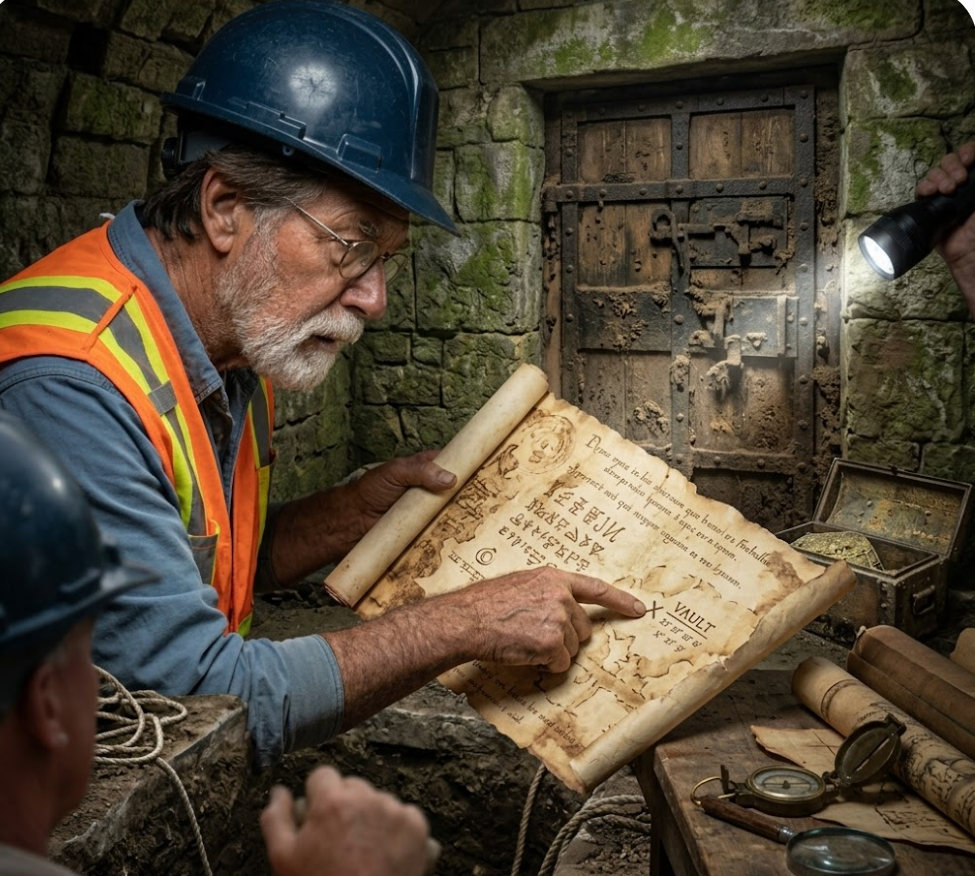
The Oak Island investigation has taken another intriguing turn after the team located what may be a second anchor stone along the island’s northern shore, raising fresh questions about whether an old map could still point toward the legendary treasure vault.
Marty Lagina, his son Alex, Jack Begley, Gary Drayton and surveyor Steve Guptill were searching near the so-called Boulderless Beach after geographic information specialist Erin Helton suggested that several marked stones could form part of a wider system of clues. According to the theory, these stones may correspond to anchor points shown on an old map believed by some researchers to contain directions toward the Money Pit area and possibly the final vault.
The team had already identified one suspected anchor stone. Finding a second one in the predicted location gave the theory new momentum. Guptill guided the group along the northern shoreline before identifying a large boulder that appeared to match Helton’s expectations. The stone was similar in size and shape to the previous anchor stone, and team members noted what looked like markings near its upper surface.
Alex Lagina suggested that one mark appeared slightly like a T or cross, although he also admitted it could be natural. Others compared the shape to symbols linked to the mysterious Boat Stone in Westford, Massachusetts, a boulder some theorists believe contains carvings connected to a possible medieval map. That comparison immediately pulled the investigation back toward one of Oak Island’s most persistent theories: that a hidden treasure was placed on the island by medieval or early transatlantic visitors.
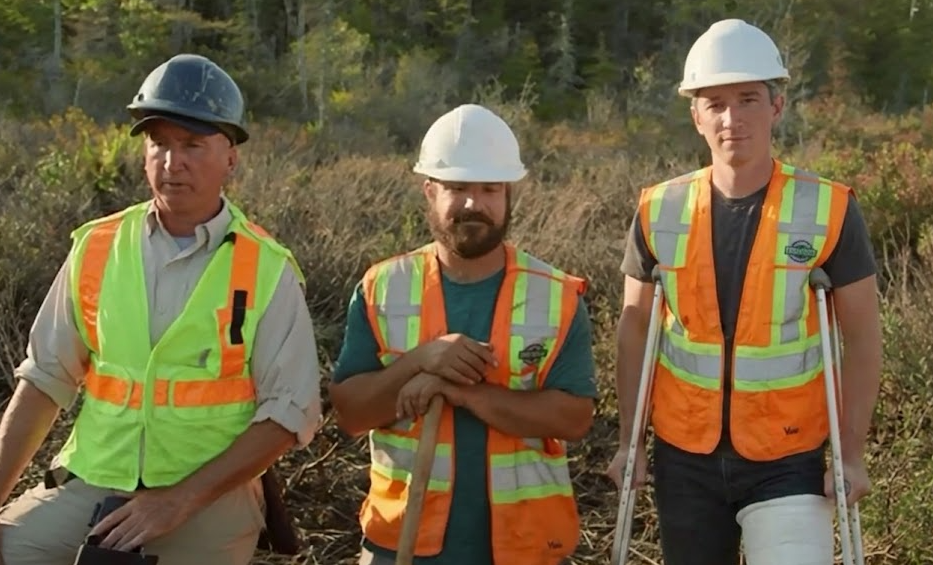
The possible connection to Henry Sinclair, a Scottish nobleman often linked by theorists to a voyage to Nova Scotia in the late 1300s, remains unproven. However, the Oak Island team has never ignored theories when they are backed by physical locations that can be checked. In this case, the fact that Helton appeared to identify both suspected anchor stones from data before the team confirmed them on the ground gave her work added credibility.
The larger question is not simply whether the boulders are unusual. It is whether they form a deliberate geometric system. In the war room, Helton previously explained how lines drawn from several mapped stones could triangulate toward the Money Pit area. She used a 1939 Popular Science map, Lidar data, and known boulder positions to propose that certain alignments may point to a specific underground target. Most strikingly, her proposed Money Pit location reportedly lined up within just a few feet of the team’s own chosen caisson target.
For a mystery that has consumed searchers for more than two centuries, that degree of overlap is difficult to ignore. The Oak Island story is built on uncertainty, but the strongest developments usually come when folklore, geography and excavation data begin to support one another. Helton’s anchor stone theory now appears to offer exactly that kind of overlap.
The investigation also revived interest in research presented by the late Zena Halpern, who had shared maps and a cipher that she believed could help explain the island’s hidden design. One map, said to contain French labels, appeared to mark features that seemed to correspond with real locations on Oak Island, including the swamp, a possible dam area and an entry point near the Money Pit. More mysterious labels included references to anchors, a valve and a hatch.
The mention of a hatch quickly became one of the most compelling parts of the search. After comparing the old map with modern satellite imagery, Jack Begley and the team investigated a strange depression near Dave Blankenship’s property. Blankenship had previously noticed the anomaly, and its location appeared close enough to the projected hatch area to justify a closer look.
When the team reached the site, they found a square-shaped depression that did not look like an ordinary natural feature. Area archaeologist Laird Niven examined the location and noted that rocks appeared to have been removed and that the ground had been cut into. He also observed that the loose fill seemed to continue in one direction, raising the possibility that the feature might connect to something below or beside it.
For Marty and Rick Lagina, the hope is obvious. A hatch could represent an entry point, perhaps into a tunnel system, or at least another piece of evidence showing that the island was deliberately modified. However, the brothers also made clear that they intended to follow proper archaeological procedures. Rather than immediately digging into the feature, they chose to disclose the discovery to the relevant authorities and work through permitting requirements.
That decision reflects the modern approach that has increasingly shaped the Oak Island project. Earlier generations of searchers dug aggressively, often damaging the ground in their pursuit of answers. The Lagina team has tried to balance curiosity with documentation, using archaeologists, surveyors, scientific analysis and government oversight where required.
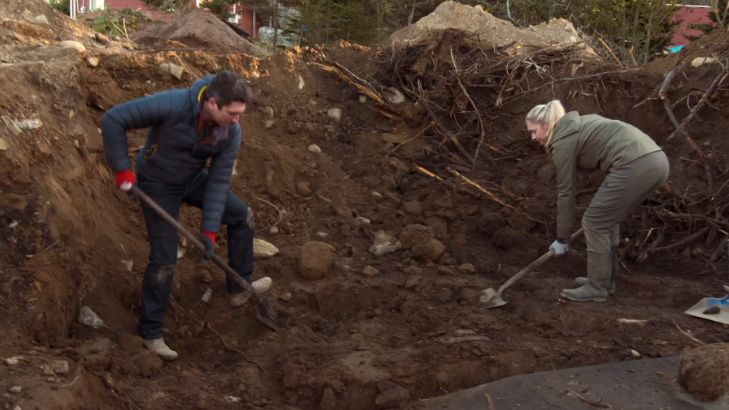
From an analyst’s perspective, the latest discoveries could shape the next phase of the series in three major ways. First, the anchor stones may become part of a renewed mapping campaign, with the team trying to confirm whether the boulders form a deliberate navigational grid. Second, the hatch area could become a priority target once permits are secured. Third, the possible connections between the old French map, the Money Pit and shoreline features may push the team to look beyond single dig sites and instead treat Oak Island as a coordinated system.
The most likely development is that future episodes will focus less on one isolated treasure shaft and more on a network of markers, access points and engineered features. If the anchor stones, hatch and map alignments continue to match real locations, the team may be closer to understanding how the island was meant to be read.
Whether these clues lead to treasure remains uncertain. But Oak Island has once again produced something more valuable than a simple object in the ground: a pattern. And on this island, patterns are often where the biggest breakthroughs begin.